
Will EPA’s Repeal Reshape US Emissions and Energy Policy?

The US Environmental Protection Agency (EPA) under Administrator Lee Zeldin has proposed to revoke the 2009 Endangerment Finding, a key legal instrument that has enabled the federal regulation of GHG emissions from vehicles and engines.
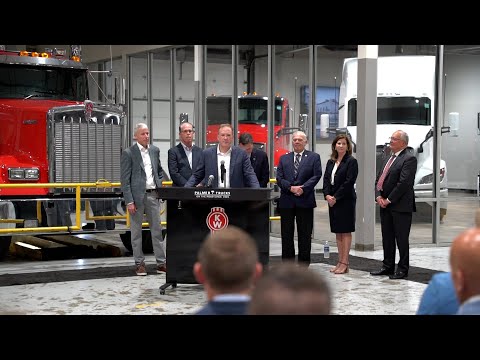
Announced at an Indiana car dealership alongside Secretary of Energy Chris Wright and Governor Mike Braun, the proposal represents a sharp reversal in the country's climate and energy regulatory framework.
It marks a move away from emissions controls and toward expanded fossil fuel use in transport and industrial sectors.
Understanding the Endangerment Finding’s role in energy and transport
The Endangerment Finding, issued in 2009 during the Obama administration, concluded that six pollutants, including CO₂, posed a danger to public health and welfare.
This determination gave the EPA authority, under the Clean Air Act, to regulate GHG emissions.
That ruling has underpinned more than US$1tn in climate regulations, including those targeting fuel efficiency, vehicle standards and the push for EV adoption. The Biden administration's EV mandate also stems from this legal framework.
Lee Zeldin argues that its scientific basis is flawed and economically damaging. "With this proposal, the Trump EPA is proposing to end sixteen years of uncertainty for automakers and American consumers,” says Lee.
“The Obama and Biden EPAs twisted the law, ignored precedent and warped science to achieve their preferred ends.”
According to the EPA’s new analysis, repealing the finding would reverse what Zeldin describes as “US$1tn or more in hidden taxes on American businesses and families.”
The agency contends that this will lower goods prices, restore consumer choice in vehicles and reduce supply chain friction, particularly for logistics and trucking.
Chris Wright, Secretary of Energy comments: “Thanks to President Trump’s leadership, America is returning to free and open dialogue around climate and energy policy... policies that expand access to affordable, reliable, secure energy and improve quality of life for all Americans.”
Industry and political responses to the rollback
The proposal has drawn strong support from state leaders and industry figures.
Governor Mike Braun praises the decision: “Today’s announcement is a win for consumer choice, common sense and American energy independence.”
Attorney General Todd Rokita comments: “Over the last four years, conservative state attorneys general were the last line of defence... now we are on the front lines helping to unleash American energy.”
Chris Spear, President and CEO of the American Trucking Associations, welcomes the rollback of GHG Phase 3 rules: “This electric-truck mandate put the trucking industry on a path to economic ruin... we need policies rooted in real-world conditions."
Kelly Loeffler, Small Business Administration Head comments: “Thanks to President Trump, the Obama-Biden green new scam era is finally coming to an end."
"EPA’s reconsideration of the endangerment finding will eliminate burdensome regulations and save small businesses at least US$170bn.
"I’m excited to work alongside Administrator Zeldin to cut red tape and unleash President Trump‘s new golden age for Main Street.”
Energy policy, emissions and legal consequences
While the EPA claims that the repeal is supported by updated science and economic modelling, including estimates of US$54bn in annual savings, environmental advocates warn of long-term risks.
The Department of Energy’s 2025 Climate Work Group study has been cited as part of the revised rationale.
However, eliminating the Endangerment Finding would strip federal agencies of their authority to set GHG standards for new light-, medium- and heavy-duty vehicles.
Measures such as fuel-saving start-stop systems, controversial but effective, could also be dropped.
Transport remains one of the largest contributors to US GHG emissions.
Removing national limits on vehicle emissions risks slowing the country's decarbonisation effort and impacting international credibility.
Legally, the proposal draws strength from the Supreme Court’s decision in West Virginia v. EPA, which determined that major regulatory actions must be backed by clear Congressional approval.
Lee believes the 2009 ruling bypassed that requirement: “The Obama Administration ignored Congress’ clear intent... using unprecedented logic to expand EPA’s power.”
This argument is likely to face strong legal opposition from states, environmental groups and scientific bodies who argue the repeal prioritises politics over climate science.
The EPA is now inviting public comment, with details to be published on its website and in the Federal Register.
Parallel to this, it is reviewing vehicle emissions standards beyond 2027 and preparing to revoke the EV mandate.
The outcome will depend on the regulatory process, judicial interpretation and broader political shifts.
But as it stands, the repeal would mark one of the most substantial rollbacks of federal environmental policy, affecting how the US defines energy security, mobility and climate responsibility.
A broader realignment of US energy and climate policy
President Trump’s administration has already reversed more than 100 environmental rules, including those related to vehicle emissions, water quality and clean air standards.
The withdrawal from the Paris Agreement and expansion of fossil fuel production, including public land drilling and fast-tracked pipelines, further align with this deregulatory strategy.
While these measures have benefited certain sectors of the domestic energy market, they have also led to rising emissions and renewed health concerns in vulnerable communities.
The EPA’s proposed repeal of the Endangerment Finding adds to this list of changes and could permanently alter the framework under which energy and emissions are governed in the US.