
The Role of Solar in Microsoft's SPARROW Wildlife Monitoring
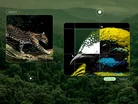
According to the World Wildlife Fund (WWF), monitored global wildlife populations have declined by an average of 73% since 1970, while around one million plant and animal species are now threatened with extinction because of habitat loss, climate change, overexploitation and pollution.
Collecting reliable environmental data in isolated regions has traditionally required significant logistical effort, creating energy, cost and accessibility challenges that can delay conservation work.
To overcome these barriers, Microsoft developed SPARROW (Solar-Powered Acoustic and Remote Recording Observation Watch), an AI-powered platform created by the company's AI for Good Lab that uses renewable energy, edge computing and satellite communications to provide continuous biodiversity monitoring with minimal human intervention.
All the devices connected to the SPARROW platform are solar-powered,

The role of solar power in SPARROW's work
SPARROW has been designed to operate independently in environments where access to electricity and communications infrastructure is limited.
Running on solar power, each unit connects with camera traps, acoustic sensors and other environmental monitoring equipment to collect biodiversity information while avoiding the need for regular maintenance visits or external power supplies.
Rather than storing images and recordings until equipment can be recovered, the platform processes data locally using AI models before transmitting key findings through low-Earth orbit satellite networks.
This significantly reduces the time between data collection and analysis, allowing conservation teams to respond more rapidly to changes within vulnerable ecosystems.
The platform has already demonstrated year-long autonomous operation without maintenance, making it suitable for rainforests, savannas, mountain regions and other hard-to-reach locations where reliable energy supplies are often unavailable.
SPARROW is now operating across 11 countries on five continents, having processed more than one billion images and acoustic recordings to help researchers build a clearer understanding of ecosystem health.
“As SPARROW expands its reach across the world, a key goal of ours has always been to make it open, accessible and useful to researchers,” says Juan Lavista Ferres, CVP & Chief Data Scientist at Microsoft.
“The Microsoft AI for Good Lab built this system that has processed a billion images across 11 countries, giving researchers, conservationists and scientists the time to focus more on their discovery rather than the logistics of collecting and managing data in the field.”
Cutting the environmental cost of monitoring
As biodiversity loss accelerates, technologies that reduce the environmental footprint of field research while improving the quality of data are becoming increasingly valuable.
WWF reports that wildlife populations have declined by an average of 95% in Latin America and the Caribbean, while freshwater species have experienced an 83% decline globally, illustrating the urgency of effective conservation.
SPARROW brings together automated wildlife detection, species identification, biodiversity reporting, collaborative review tools and standards-compliant data management within a single platform, helping organisations manage large conservation programmes more efficiently.

The system supports a range of data collection methods including wireless GSM and 4G camera traps, drone video feeds, manual uploads, satellite-connected devices and dedicated SPARROW field units.
Researchers can collaborate securely using role-based permissions while maintaining ownership of their environmental data, making it easier to coordinate projects across multiple locations.
By streamlining both data collection and analysis, Microsoft aims to reduce the operational burden on scientists so they can focus more of their efforts on protecting ecosystems rather than managing technology in the field.
Supporting resilient ecosystems
The health of natural ecosystems is closely linked to global energy security, climate resilience and economic stability.
WWF estimates that forests provide habitats for 68% of all mammal species and 75% of all bird species, while almost 88% of plant species depend on animals for pollination.
More than half of global GDP is also directly or indirectly reliant on nature and the ecosystem services it provides.
These figures reinforce the importance of deploying energy-efficient technologies capable of monitoring environmental change at scale.
Microsoft is continuing to expand the environmental applications of the technology behind SPARROW. The same AI and edge computing capabilities have been adapted into CONDOR, a wildfire detection system operating across California that is designed to identify fires at the earliest possible stage.
“Beyond biodiversity in places like the Amazon rainforest and the Serengeti, we're applying this AI technology to help address other environmental issues, including wildfire detection through CONDOR,” Juan explains.
“With the launch of SPARROW Studio and new wireless connectivity capabilities, we’re making these tools even more accessible to researchers and conservationists working on the front lines."
Recent additions, including direct wireless integration with GSM and 4G-enabled camera traps and the launch of SPARROW Studio, further improve accessibility for researchers working across both connected and offline environments.
By combining solar power, AI, edge computing and satellite communications, SPARROW highlights how clean energy technologies are enabling a new generation of environmental monitoring systems. As conservation projects expand into increasingly remote regions, reliable renewable power is becoming just as important as AI in helping scientists better understand and protect the natural world.
Company portals

Executives

Juan Lavista Ferres
CVP & Chief Data Scientist