
Inside Schneider Electric's Renewed Deal With McLaren Racing

In the world of sport, everybody knows that teamwork is the key to success. Nowhere is this more apparent than in a sport like motor racing, where teams often exceed 1,000 members.
It is not just the drivers, pit crews and engineers that contribute to these huge operations, though. All teams at the pinnacle of motor racing have business relationships that help them cross the finish line.
McLaren Racing, which is a stalwart of Formula 1, IndyCar, F1 Academy and the World Endurance Championship, is no exception. For the UK-based firm, its premier partner is French energy management and technology giant, Schneider Electric.
The two companies have enjoyed more than two decades of collaboration already and are now set to expand their partnership even further, with McLaren enlisting Schneider as its Official Energy Technology Partner across all of its racing divisions from now on.
But what exactly will this partnership focus on? The firms have announced that Schneider will be tasked with deploying energy infrastructure at race circuits, as well as upgrading systems at McLaren's Technology Centre in Woking, with a specific focus on energy and innovation.
Building on existing foundations
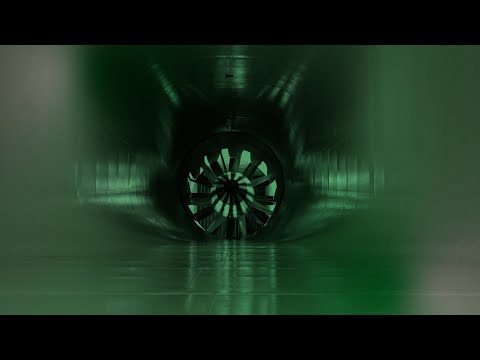
The new arrangement will see Schneider cover all manner of bases to help McLaren race ahead on and off the track. Firstly, Schneider will work on optimising assets around McLaren's wind tunnel, manufacturing facilities and IT data centres, which fuel its racing simulations, real-time strategy and performance analysis.
Specific areas of work include reducing energy consumption through resilient systems, advancing electrification technologies and implementing digital twin technology for efficiency insights.
Zak Brown, CEO of McLaren Racing sees the partnership as an evolution of the existing commercial relationship between the two firms.
"We're proud to welcome Schneider Electric as our Official Energy Technology Partner," Zak says.
"This partnership builds on a strong foundation and reflects our shared commitment to innovation and energy efficiency," he adds.
"By combining Schneider's expertise in energy technology with McLaren's pursuit of performance, we'll explore new ways to make our operations smarter and more efficient."
High-pressure testing environment
Schneider Electric's CEO, Olivier Blum, regards the world of motorsport as a real proving ground for energy systems operating under extreme conditions.
"Racing is one of the most challenging environments to demonstrate the value of advanced energy and digital technology," Olivier explains.
"McLaren Racing pushes every system to its limits, which is exactly where our expertise in performance, reliability and efficiency makes the difference.
"We're proud to become the Official Energy Tech Partner of McLaren, providing energy intelligence they depend on, both on and off the track."
The partnership covers power solutions for trackside operations at race venues and infrastructure at McLaren's Woking headquarters.
Neither party has yet disclosed the financial terms or the duration of the agreement.
Commercial and operational context
The announcement follows hot on the heels of McLaren's championship-winning 2025 season, where British driver Lando Norris dominated proceedings. As a whole, the team reported revenues of US$714m and a post-tax profit of US$73m.
Meanwhile, Schneider Electric recorded revenues of €38.2bn (US$45.7bn) in 2024, employing 160,000 people across more than 100 countries. As such, this partnership represents the meeting of two companies working at the top of their game.
That said, there is always room for motor racing teams to improve when it comes to sustainability. This is a fact that racing championships like F1 are keenly aware of, with the reduction of emissions a core pillar of the world's premier racing competition's strategy for the future.
By working with Schneider, which is widely considered one of the world's most sustainable companies, McLaren is getting ahead of the game.
Sustainability is the only motivation for McLaren to decarbonise, though: there is also a real long-term financial benefit to cutting down on emissions.
Energy consumption at the firm's Technology Centre in Woking is significant, with its wind tunnels, manufacturing operations and simulation technologies all drawing huge amounts of power from the grid.
Because of this, electricity and fuel are one of the company's largest operational costs.
Strategic alignment
Both organisations have emphasised that data analytics and digital systems are key to their operations.
McLaren has invested heavily in simulation and computational fluid dynamics technology to support aerodynamic development under Formula 1's wind tunnel testing restrictions.
Schneider Electric has expanded its software and digital services portfolio, with recurring software revenues reaching 77% of its agnostic software business in 2024.
The partnership structure allows Schneider Electric to deploy technologies across multiple racing environments, from temporary circuit installations to permanent factory infrastructure.
For McLaren, the arrangement provides access to energy systems designed for industrial-scale operations while maintaining the flexibility required for motorsport's demanding schedules.
The companies stated they will leverage digital twin technology to create data insights related to efficiency and sustainability, though they provided no timeline for specific implementations.
Energy partnerships in motorsport have increasingly focused on operational efficiency rather than pure performance gains, reflecting broader pressures on teams to reduce operational costs and environmental impact.
The partnership announcement coincides with the start of the 2026 Formula 1 season, which introduces new power unit regulations requiring increased electrical output from hybrid systems.
Company portals



Executives

Olivier Blum
Chief Executive Officer