
Is Botswana About to Become a Rare Earth Mineral Superpower?
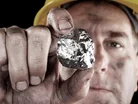
A huge discovery has just been made in Botswana. A huge deposit of rare earth minerals, as well as valuable metals like copper and silver, was found recently at the Gchwihaba Metals mining project in the northwest of the country.
With the global energy transition kicking into gear, discoveries like this one will likely contribute to the reshaping of supply chains and energy systems the world over.
Critical minerals, including the rare earth elements like lithium and cobalt that are so essential for climate technologies, are high on the geopolitical agenda currently.
Demand for these elements is soaring concurrently with the rise of renewables, EVs and electronics. Nevertheless, the clue to the availability of these resources is in the name – they are rare, or at least scarcer than would be ideal.
It is against this backdrop that Tsodilo Resources, the firm that runs the Gchwihaba project, has made its discovery.

Shifting the balance of supply
Rare earth elements comprise 17 metallic elements vital to technologies such as electric motors, wind turbines and solar panels. Their unique magnetic and conductive properties make them irreplaceable in modern energy systems.
However, China currently controls around 61% of global rare earth output and 90% of processing, according to the IEA, and that dominance has been raising strategic concerns for energy independence around the world.
Geopolitical tensions throughout 2025 further highlighted these risks, prompting manufacturers to diversify their supply chains. Many nations have discovered some rare earth deposits, yet few have the infrastructure or scale required to meet the energy sector’s growing demand.
Now, Tsodilo has confirmed the presence of rare earth and critical mineralisation at its 100%-owned Gcwihaba Metals Project.
“The targets were originally identified as geophysical anomalies through ground magnetic and gravity surveys," the company wrote in a report recently.
"Subsequent diamond core drilling has confirmed that these anomalies host skarn-type mineralisation containing an extensive suite of minerals.”
Powering the next generation of clean energy tech
The Gcwihaba site contains 15 rare earth elements and critical materials such as cobalt, copper, nickel, silver and vanadium – all essential to low-carbon energy infrastructure.
Based on detailed modelling and drilling results, Tsodilo estimates an exploration target of 81–97 million tonnes with grades of 0.05%–1.49% total rare earth oxide (TREO).
“The 1.49% TREO intercept at C27 represents the highest grade recorded so far for Gcwihaba,” says James M. Bruchs, Chairman and CEO at Tsodilo.
“These results validate our systematic exploration approach and demonstrate evidence of a polymetallic REE skarn system with both vertical extent and grade.
"Our conceptual exploration target of 81 to 97 million tonnes was generated through integrated magnetic and gravity geophysical modelling using a ground magnetics inversion model, constrained by drilling results and geological interpretation.
"This modelling was completed in-house using Paradigm GOCAD software. Beyond rare earth elements, the skarn system has returned encouraging base and precious metal values, including copper up to 0.41% in the C26 skarn, cobalt up to 320 ppm, and silver up to 5.1 g/t in the C27 skarn.
"The 2026 drilling program will focus on defining high-grade REE zones while further evaluating the polymetallic potential of the system to support preparation of an initial mineral resource estimate.”
Drawing energy from the ground up
The minerals were discovered between 20-50 metres below the surface – relatively shallow by mining standards – making them more accessible and potentially less carbon-intensive to extract. This improves their appeal to energy and technology companies focused on responsible sourcing.
If successfully developed, Botswana’s reserves could play a pivotal role in the global shift towards sustainable energy, offering supply stability and opportunities for regional investment.
Reduced reliance on Chinese minerals could help rebalance global trade while advancing clean energy momentum.
Tsodilo plans an extensive 15,000-metre drilling campaign during 2026 to assess resource potential and support an initial mineral resource estimate – an important step towards integrating Botswana more deeply into the world’s renewable energy supply chain.
Company portals
Executives
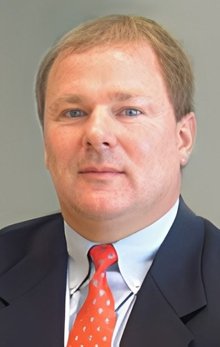
James Bruchs
Chairman and CEO