Maersk and MSC: Shipping's Path to Decarbonisation
The international shipping industry, which facilitates approximately 80% of global trade, is at a crucial turning point.
According to the World Bank, it generates around 3% of the world's greenhouse gas emissions, a figure that would make it the sixth-largest emitter if it were a country.
- Maritime trade volumes grew 2.4% in 2023 while global GDP rose 2.7%
- Between 2025 and 2029, it predicts maritime trade will average +2.4% a year and containers +2.7%.
In response, industry leaders and regulators are navigating a complex path toward decarbonisation, with major implications for the global energy market.
At the COP28 climate conference, shipping chief executives united to call for a definitive end date for the construction of new vessels powered solely by fossil fuels.
They urged the International Maritime Organization (IMO) to establish the necessary regulatory environment to accelerate the transition to green fuels.
This call to action was followed by the approval of a landmark net-zero framework by the IMO’s Marine Environment Protection Committee (MEPC) in April 2025, which is anticipated to be formally adopted in October 2025 and come into force by 2027.
“We have the technology and the willingness - we just need the clear regulatory framework to accelerate the energy transition in the shipping industry”
- Shipping’s energy intensity fell by about 30% between 2008 and 2023
- Without those gains, 2023 marine fuel demand would have been roughly 1.8 million barrels per day higher
- That avoided demand equated to around US$60bn in fuel costs in 2023
- Average commercial ship size is now more than 50% larger than in 2008
- Average operating speeds fell by about 10% versus 2008 as slow steaming became standard practice.
“We believe that a regulatory framework and clear targets are crucial to accelerating the introduction of alternative fuels and reducing our carbon footprint”
IMO regulation and carbon pricing
The IMO's framework introduces two primary measures for all oceangoing ships over 5,000 gross tonnes: a global fuel standard and a pricing mechanism for greenhouse gas emissions.
The fuel standard will progressively limit the pollution intensity of marine fuels, while the pricing mechanism is expected to apply a carbon price, potentially around US$100 per tonne of CO₂ equivalent, to incentivise emissions reduction.
A ship’s emissions will be quantified using a greenhouse gas fuel intensity (GFI) metric, measuring emissions across the entire fuel lifecycle.
- Total shipping greenhouse gas emissions rose from 977 Mt in 2012 to 1,076 Mt in 2018 and CO₂ rose from 962 Mt to 1,056 Mt
- Shipping’s share of global anthropogenic greenhouse gases increased from 2.76% to 2.89% between 2012 and 2018
- Voyage-based international-shipping CO₂ rose from 701 Mt to 740 Mt between 2012 and 2018
- Carbon intensity improved by 21% (AER) and 29% (EEOI) in 2018 versus 2008
- Without stronger measures, total shipping emissions are projected to be 90 to 130% of 2008 levels by 2050.
Not everyone agrees. In late January 2025, a group of countries including Brazil, China and South Africa sent a letter to IMO warning of negative trade impacts from a universal GHG contribution.
In April 2025, the United States withdrew from the carbon pricing talks and urged others to follow. US Secretary of State Marco Rubio, Commerce Secretary Howard Lutnick, Energy Secretary Chris Wright and Transportation Secretary Sean Duffy said in a statement that US President Donald Trump’s administration will “not accept any international environmental agreement that unduly or unfairly burdens the United States or harms the interests of the American people” and described the IMO’s framework as “effectively a global carbon tax on Americans levied by an unaccountable UN organisation”. “Our fellow IMO members should be on notice that we will look for their support against this action and not hesitate to retaliate or explore remedies for our citizens should this endeavour fail,” the statement concludes.
“Shipping is at the forefront of technological innovation when it comes to decarbonisation”
On the launch of the 2025 American Bureau of Shipping (ABS) Sustainability Outlook, ABS CEO Christopher Wiernicki said that “shipping and the IMO are on different trajectories”. “There is no clear pathway for green fuel availability and scalability and infrastructure support,” he said. “LNG and biofuels are mission critical to any success and should not be overlooked, over penalised or discarded in the net zero regulation. Quite frankly, achieving net zero for shipping by 2050 looks like a wildcard.”
Hapag-Lloyd’s sustainability strategy
Hapag-Lloyd’s overarching sustainability goal is to reach net zero fleet operations by 2045.
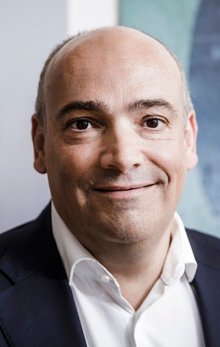
“We have advanced our decarbonisation efforts by adding new, state-of-the-art vessels to our fleet, placing additional newbuild orders and accelerating our fleet upgrade programme,” says CEO Rolf Habben Jansen in its 2024 Sustainability Progress Report.
- Achieved an average annual efficiency ratio of 7.96 in 2024, down from 9.13 in 2022
- Used about 195k tonnes of biofuel blends in 2024
- Carried roughly 490,000 TEU of dangerous goods in 2024, detected 4,256 misdeclarations and achieved zero reportable incidents since 2020
- Recycles vessels exclusively at EU-certified yards with four vessels recycled across 2023 and 2024.
The company’s Fleet Upgrade programme, launched in 2022, aims to improve the efficiency and environmental performance of its ships. It has also ordered 24 large container ships that will be built in China and equipped with “state-of-the-art, low-emission and fuel-efficient high-pressure liquefied gas dual-fuel engines”.
Rolf explains in the report: “Our sustainability journey continues. Building a just, safe and clean industry is an ongoing responsibility and requires continuous collaboration between industry stakeholders.”
Sustainability at Maersk
Maersk aims to reach net zero by 2040, and its strategy includes introducing the world’s first large dual-fuel methanol fleet. In December 2024 it completed an order of 20 dual-fuel owned vessels with a total capacity of 300,000 twenty-foot equivalent units (TEUs).
- Seven large dual-fuel methanol vessels joined the fleet in 2024
- A further 20 dual-fuel vessels were ordered for delivery between 2028 and 2030
- Methanol offtake agreements now cover more than 50% of expected 2027 dual-fuel fleet demand
- Achieved an EEOI of 11.1 gCO₂e per tonne-nautical-mile in 2024, down from 11.7 in 2023
- Maersk Halifax became the industry’s first large container ship retrofitted to operate on methanol, lengthened by 15 metres to 368 metres and increased to about 15,690 TEU.
The company says that dual-fuel vessels are central to its decarbonisation plans, capable of reducing greenhouse gas emissions by 65% to 90% through the use of bio- and e-methanol compared to conventional fossil fuels. Maersk also aims to deploy dual-fuel liquefied methane vessels, aiming to use bio- or e-methane as soon as possible.
“Let's get this done,” says Lene Bjørn Serpa, Director, Head of Corporate Sustainability at Maersk on LinkedIn. “We have the technology and the willingness - we just need the clear regulatory framework to accelerate the energy transition in the shipping industry.”
MSC’s sustainability impact
MSC says that it is committed to an energy transition targeting net zero decarbonisation by 2050 and is investing in a massive newbuilding programme and far-reaching retrofit plan.
- Uses only second-generation biofuel derived from used cooking oil with Proof of Sustainability from suppliers
- Drop-in blends can deliver up to 84% CO₂ saving versus fossil marine fuel
- CO₂ savings are delivered within MSC’s value chain via carbon insetting and mass balance
- Every transaction is externally verified by DNV and customers receive a Retirement Statement plus an External Verification Statement.
MSC has signed an MoU with integrated energy company Eni to explore the potential use of LNG alongside lower-carbon energy carriers such as HVO and bio-LNG. This is alongside offering its customers a Biofuel Solution, a certified carbon insetting programme designed to reduce emissions and contribute to accelerating decarbonisation in the shipping industry.
On the release of its Sustainability Report, MSC CEO Soren said: “With the MSC family’s talent, passion and entrepreneurial spirit we are contributing to the net zero transition and building value chain resilience. Through collaboration, investment and innovation, we will navigate these challenges together.”
Read the full feature in Issue 57 of Sustainability Magazine.
Company portals



Executives

Lene Bjørn Serpa
Director, Head of Corporate Sustainability
Rolf Habben Jansen
CEO
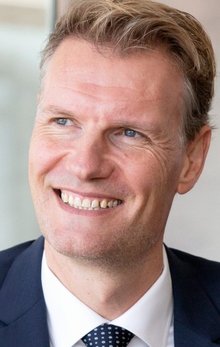
Soren Toft
CEO
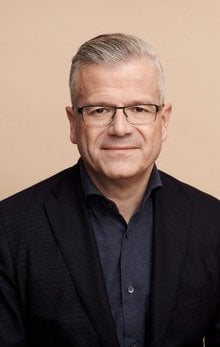
Vincent Clerc
Chief Executive Officer