
Q&A: How to Train a New Generation of Offshore Wind Experts
The energy transition requires a few key things: money, technology and people with the right knowledge and skills.
In recent years, the first two items in that list have been very forthcoming, with huge investments in cutting-edge renewable energy rebalancing the global energy mix.
The final point in that trifecta, however, has always been a little trickier to come by. As things stand, the demand for workers with green skills is outstripping supply by a significant margin.
An area of the energy sector in particular need of more recruitment is offshore wind. In the UK alone, it is anticipated that tens of thousands of engineering and maintenance roles will have to be filled by 2030 to carry out the government's energy plans.
As such, education has never been more important. One organisation offering this kind of specialist learning is the Offshore Wind Academy.
While it was only founded in 2023, the Academy has grown quickly thanks to its huge range of educators with experience at some of the world's largest energy firms.
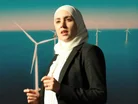
In 2026, it is helping to educate a new generation of energy sector professionals all around the globe. To learn more about the firm's work, Energy Digital spoke to Serene Hamsho, the Offshore Wind Academy's Founder and President.
What drove you to found the Offshore Wind Academy?
The offshore wind industry was growing fast, but the workforce pipeline wasn’t keeping up.
We were seeing enormous investment in projects, yet the professionals needed to design, build, operate and finance those projects were being trained in silos.
I saw a gap between what the industry needed and what was actually being delivered. I founded the Offshore Wind Academy to close that gap.
The core principle was straightforward: practitioners should be teaching practitioners. Not academics, not generalists, but people who have actually worked on these projects.
That’s why our instructors come from companies like RWE, Ørsted, GE Vernova, Vestas, Avangrid and BCG.
What we’ve built is a training platform where the person teaching you foundations design or O&M (operations and maintenance) strategy has actually done that work, in the field, on real projects.
Can you tell us the story of the Offshore Wind Academy?
We started in the US at a moment when the American offshore wind market was just beginning to scale. There was real appetite for workforce development, but almost nowhere for working professionals to go for structured, industry-grade training.
We launched with a handful of courses and a clear mandate: cover the full offshore wind lifecycle, from planning and permitting through foundations, transmission, O&M, floating and decommissioning.
What surprised us early on was the global demand. More than half of our learners were coming from Europe, Asia and beyond before we had even formally positioned ourselves as a global platform. That told us the workforce development gap wasn’t a US problem, it was an industry-wide one.
We’ve since trained over 600 professionals across 30+ countries, and we’re continuing to expand our curriculum and our regional reach. Today OWA serves as both a training platform and a knowledge hub for the offshore wind sector worldwide.

What kind of people can enrol in the Academy?
The short answer is: anyone who works in or around offshore wind, at any stage of their career.
Our learners range from early-career engineers looking to specialise, to senior project managers deepening expertise in a specific technical area, to executives who need strategic grounding in a topic like auction bid strategies or project financing.
We’ve had PhD candidates sit alongside GE Vernova lead engineers and NREL researchers in the same course.
We also serve regulators, port authorities, lawyers and finance professionals who need to understand the technical and commercial dynamics of the sector without necessarily becoming engineers.
And for those entering the industry for the first time, we offer pathways specifically designed to provide that foundation. The common thread is that everyone who comes to OWA is a professional who wants to do their job better.

How important is it to the climate action effort to train a new generation of engineers?
It’s not optional. Offshore wind is one of the few technologies that can deliver clean energy at the scale and reliability the energy transition actually requires.
But a turbine sitting in port or an array operating below capacity because the workforce isn’t there to build or maintain it doesn’t help anyone.
The industry’s ability to deliver on its climate commitments is directly tied to whether it can develop and retain skilled people fast enough to match project pipelines.
There’s also an equity dimension here. A global energy transition that concentrates expertise and jobs in a handful of countries isn’t really a transition, it’s a reshuffling.
Workforce development done right builds local capacity, creates durable employment and makes the transition more resilient everywhere it lands.
A turbine sitting in port or an array operating below capacity because the workforce isn’t there to build or maintain it doesn’t help anyone.
What are the trends in the sector that are making you excited? What are the big challenges?
What excites me most right now is the maturation of floating offshore wind. Fixed-bottom has proven the model. Floating opens up the majority of the world’s coastlines that don’t have the seabed depth for fixed foundations, including Japan, South Korea, Norway, the US West Coast and parts of the Mediterranean.
The technology is moving from demonstration projects toward early commercial scale, and that’s a profound shift.
On the challenge side, supply chain constraints remain serious. The world doesn’t yet have enough cable manufacturing, installation vessels, or port infrastructure to match the permitting ambitions of multiple major markets simultaneously. And workforce availability is a real bottleneck.
The pipeline of trained professionals is not growing as fast as the pipeline of projects. That’s the problem OWA exists to help solve, but it requires coordinated investment from industry, governments and educators.
The technology is moving from demonstration projects toward early commercial scale, and that’s a profound shift.
Donald Trump recently paid TotalEnergies US$1bn to scrap its offshore wind plans in the US. What are your views on this?
It’s a significant setback for the US market in the short term, and I won’t pretend otherwise.
When a major developer accepts a billion dollars to walk away from its US offshore wind portfolio, that signals a policy environment where long-term investment confidence has eroded.
That’s damaging, particularly for communities and supply chain businesses that had organised around those projects.
But I think it’s important to separate the US policy moment from the global trajectory. Offshore wind is not a US story right now. Europe continues to build at scale. Asia, particularly China, South Korea and Japan, is accelerating.
The fundamentals of why offshore wind exists – energy security, decarbonisation, falling technology costs – haven’t changed.
Capital and talent will go where the conditions are right. What the US risks is falling behind in an industry it was well-positioned to lead, and that’s a real cost that will be felt in jobs and in the energy mix for years.
What place will offshore wind hold in the future of energy?
A central one. The physics are compelling: offshore wind resources are consistently strong, located near the densely populated coastlines where energy demand is highest, and the technology is now mature enough to deliver at utility scale.
As floating wind unlocks new geographies and transmission infrastructure catches up, the addressable resource base expands dramatically.
What I find underappreciated is how offshore wind functions as an anchor technology for the broader clean energy system. Large offshore projects drive port development, cable manufacturing, specialist vessel fleets and grid upgrades that benefit the whole energy ecosystem.
The workforce, infrastructure and industrial capacity built around offshore wind doesn’t stay siloed. It compounds.
The question isn’t really whether offshore wind will be central to the future energy mix. It will be. The question is which countries and which companies invest in the people and the infrastructure to claim that future, and which ones wait too long.
Company portals









Executives
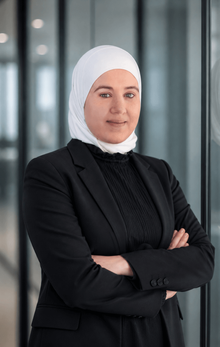
Serene Hamsho
President & Founder