Turbine Footprints & Grids: What is Wind Energy?
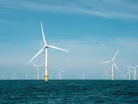
Wind power is a key component of the global energy transition, converting kinetic energy into clean electricity.
As a renewable energy source, it is self-replenishing and produces no operational emissions, though the lifecycle of wind turbines presents its own environmental considerations.
The sector is experiencing substantial growth, yet it operates within a complex global energy landscape still wrestling with rising demand and emissions.
A record 117 GW of new wind capacity was added globally in 2023, bringing total cumulative capacity beyond 1,136 GW, according to the Global Wind Energy Council.
Despite this growth, overall energy-related CO₂ emissions rose by 0.8% in 2023 to a new high of 37.8Gt CO₂.
The International Energy Agency (IEA) points to increased coal consumption in China, India and Southeast Asia as a primary cause.
While advanced economies reduced their energy demand, the growth in clean energy could not fully offset the world’s escalating needs.
The IEA confirms that accelerating clean energy growth is essential to limit power-sector emissions this decade.
A major hurdle for wind energy is its integration into grids that have historically been built to accommodate fossil fuels. Establishing connections for wind farms is complex, especially for offshore projects that can often be located more than 100km from land.
These distances require long transition lines and development can be slowed by permitting bottlenecks and limited grid capacity.
Furthermore, the variable nature of wind means the energy supply is intermittent. This unpredictability requires other, more constant, energy sources to meet power demand.
To mitigate this, wind power is often combined with other renewables like solar to smooth out the overall energy production curve.
Innovative solutions and project developments
To address intermittency, companies are piloting integrated energy systems.
The Hollandse Kust Noord project in the Netherlands combines offshore wind with floating solar panels, battery storage and offshore hydrogen electrolysis.
The project began operations in December 2023.

Its floating solar array will be situated alongside the turbines to provide a more consistent energy output.
The inclusion of batteries and an on-site hydrogen plant allows for the storage of excess energy generated during periods of high wind and low demand.
Tackling the turbine lifecycle footprint
While wind turbines are clean during operation, their manufacturing, transport and decommissioning have an environmental footprint.
Turbine blades, made from composite materials like fibreglass and resin, are particularly difficult to recycle at their end-of-life.
The industry is actively seeking solutions to this challenge.
The Kaskasi offshore wind farm in Germany is the first commercial project to use Siemens Gamesa’s RecyclableBlade technology.
This innovation allows for the recovery of blade materials once a turbine is decommissioned.
Marc Becker, CEO of the Siemens Gamesa Offshore Business Unit, says: "We are proving that as leaders of the offshore revolution, we are committed to making disruptive technology innovation commercially viable with the pace that the climate emergency demands."
“This milestone marks a significant contribution to Siemens Gamesa’s target of having fully recyclable turbines by 2040.
“With RecyclableBlade available for our customers, we can create a virtuous circular economy.”
Corporate procurement of clean power is also accelerating. A record 46 GW of wind and solar power purchase agreements (PPAs) were signed by corporations in 2023.
Technology firms are among the leading buyers, with Google aiming to run its global operations on carbon-free energy on an hourly basis by 2030.
In partnership with AES, Google is developing a 24/7 carbon-free energy solution for its Virginia data centre, using grid virtualisation to create a modernised green grid.
This system optimises the grid for renewables.
Michael Terrell, Senior Director for Energy and Climate at Google, says: “Not only is this partnership with AES an important step towards achieving Google’s 24/7 carbon-free energy goal, it also lays a blueprint for other companies.”







Executives

Marc Becker
CEO Offshore Business Unit
Michael Terrell
Head of Advanced Energy