Siemens Sets Energy Strategy for Net Zero Push

Global technology conglomerate Siemens operates across more than 190 countries, delivering automation, infrastructure and healthcare solutions.
The company's 2025 sustainability report reveals how energy efficiency and decarbonisation sit at the heart of its operational strategy, with ambitious targets aimed at transforming both its own energy footprint and that of its customers worldwide.

Validated emission reduction targets
Siemens' greenhouse gas emission reduction targets have been validated by the SBTi as being in line with the 1.5°C scenario, according to the report.
Siemens has committed to reducing its absolute greenhouse gas emissions from its own operations by 90% and from its value chain by 30% by fiscal year 2030 compared to fiscal year 2019.
Siemens' target is to achieve net zero emissions by 2050 by reducing absolute emissions across its entire value chain by 90% and neutralising any remaining emissions.
Beyond its own environmental footprint, Siemens plans to bring positive impact by targeting over 1,000 million tonnes of cumulative avoided emissions between 2023 and 2030.
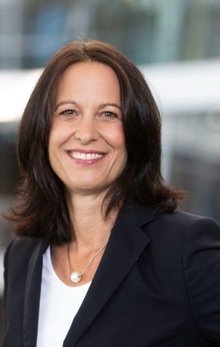
Judith Weise, Chief People and Sustainability Officer at Siemens, says: "As of 2025, our cumulative customer avoided emissions stand at 694 million tonnes of CO₂e, quantifying the positive impact of our offerings sold over their lifetime.
"Additionally, for the second straight year, we enabled customers to avoid more emissions than we caused along our entire value chain – while reducing our own emissions by an impressive two thirds since 2019."
Energy-driven conservation programme
Biodiversity and ecosystems provide vital services for society and business, according to Siemens, which is committed to protecting and conserving biodiversity across its operations, with particular focus on areas where energy consumption, pollution and resource use impact ecosystems.
Siemens has identified risks related to biodiversity from habitat loss and an evolving regulatory landscape.
Siemens regards its business model as resilient to changing ecosystems and biodiversity loss, which is supported by the Environmental Council.
Siemens' target is to drive biodiversity protection by implementing a conservation programme at 100% of its relevant sites by 2030.
This programme helps sites evaluate and manage risks from changing land use and freshwater use regulations, which could help to ensure compliance and minimise disruptions.
In 2025, Siemens increased the implementation rate of its conservation programme at all of its relevant sites from 18% to 55%, putting it on track to meet its 2030 goal.
Resource recovery and efficiency
In its operations, Siemens aims to achieve greater impact with fewer resources for its customers, society and the environment.
Siemens believes circularity adds value by creating business opportunities, reducing energy consumption, enhancing supply chain resilience, minimising waste, supporting decarbonisation and protecting water and biodiversity.
Siemens focuses on designing its products for sustainable materials, optimal use and value recovery.
Siemens is committed to having 100% sustainable product packaging for relevant products to promote sustainable forestry practices and minimise waste, while also pursuing the goal of having zero waste sent to landfill by 2030.
In its efforts to promote circularity across the value chain, Siemens plans to empower its customers to adopt circular practices.
This involves using digital product passports which could allow customers to make informed decisions about material recovery and circular sourcing.
Eva Riesenhuber, Global Head of Sustainability at Siemens, says: "With over 90% of our business enabling customers to achieve a positive sustainability impact, we're uniquely positioned to empower them to become more competitive, resilient and sustainable.
"Even further, our Sustainability Statement 2025 provides measurable proof that our impact on societal infrastructure goes beyond our customers and our own business transformation to reach, ultimately, our planet and society."
Company portals
Executives
Dr. Eva Riesenhuber
Global Head of Sustainability
Judith Wiese
Chief People and Sustainability Officer of Siemens AG (CPSO)