SLB's Role in the Expansion of bp's Thunder Horse Oil Field
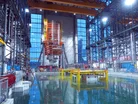
The Thunder Horse oil field, located 150 miles southeast of New Orleans in the heart of the Gulf of Mexico, is one of the largest deepwater oil fields ever discovered.
It was first discovered in 1999 by bp and has been operated by the company ever since. It is thought that more than one billion barrels of oil lay beneath the waves at Thunder Horse – enough to last well into the 2030s.
That kind of scale demanded enormous ambition but, for a time, Thunder Horse seemed a cursed project.
Pumping was originally planned to commence in 2005, but the project's semi-submersible production platform was almost irreparably damaged by Hurricane Dennis in July of that year, with the strong winds almost capsizing the gigantic rig.
In light of the extensive pre-production hype surrounding the "world's largest production platform," it was a costly and embarrassing incident for bp.
Following a failure during pre-commissioning checks, components in the subsea system needed to be repaired and replaced, and the equipment remained in a cold state for a months and months.
The field was eventually brought on stream in June 2008, and has now been running for almost two decades. It was expanded to the north and south in 2016 and 2018, further boosting its capacity.
Now, more than 18 years into production, bp is turning to subsea boosting technology to help sustain output from what has become one of its most significant deepwater assets.
SLB's OneSubsea joint venture has been awarded a contract by bp to provide a subsea boosting system for the Thunder Horse project.
The agreement covers the engineering, procurement and construction (EPC) of the system, including project management, engineering, manufacturing and testing.
Details on the value or specific timeline of the contract were not disclosed.

A standardised approach across three projects
The Thunder Horse award does not stand alone.
The EPC contract follows recent subsea boosting contract awards for bp's Kaskida and Tiber developments, with all three projects leveraging the same supplier-led, standardised subsea boosting system solution.
The decision to use identical systems across all three developments is a deliberate one, with the standardised approach designed to reduce the complexity that typically comes with bespoke deepwater engineering.
The latest award further strengthens the ongoing collaboration between bp and OneSubsea as operators increasingly look to standardised subsea technologies to streamline execution and improve economics across large-scale deepwater developments.
What subsea boosting actually does
For a field like Thunder Horse, where reservoir pressure naturally declines over time, subsea boosting is less a luxury than a practical necessity.
By installing pumping systems on the seabed, rather than relying on surface facilities, operators can artificially maintain the pressure differential needed to keep hydrocarbons flowing to the surface.
"Subsea boosting is an important enabler for extending production from existing assets," says Mads Hjelmeland, CEO of SLB OneSubsea.
"Our standardised subsea solutions support faster deployment and improved efficiency, helping operators enhance production and recovery while optimising overall field performance," he adds.
SLB OneSubsea's position in the market
SLB OneSubsea is a joint venture involving SLB, Aker Solutions and Subsea7.
The venture has been building momentum in the Gulf.
In March 2026, SLB OneSubsea secured an EPC contract from PTTEP Sabah Oil, a subsidiary of PTT Exploration, pointing to growing international demand for the same standardised model now being deployed across bp's Gulf portfolio.
For bp, the consistency of approach across Kaskida, Tiber and now Thunder Horse suggests a broader procurement philosophy – one that prioritises repeatability and supply chain efficiency over project-by-project customisation.
Whether that translates into meaningful cost savings or faster first-oil timelines remains to be seen, given neither party has disclosed financial terms or delivery schedules for any of the three contracts.
What is clear is that the deepwater Gulf remains an active frontier for subsea technology investment and that SLB OneSubsea has positioned itself as bp's vendor of choice for this particular application.