
Spain's Decree to Keep Telco Networks Live During Blackouts
When the lights went out across Spain and Portugal in late April last year, everything ground to a halt.
The blackout was one of the most severe to hit Europe in decades. Offices had to close, planes and trains were cancelled and, perhaps most devastatingly, mobile connections vanished in an instant.
For a region used to constant connectivity, the incident has stuck long in the mind.
The vulnerability of the grid was shocking. What was more frightening, however, was how quickly the countries' digital infrastructure collapsed after its source of electricity was compromised.
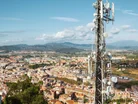
Now, more than a year on, Spain's government is looking to address this issue. Oscar Lopez, Spanish Government's Digital Transformation Minister, announced on 25 June a new decree that will require mobile operators to guarantee at least four hours of network coverage for most of the population during power cuts.
In Spain, a decree is the most powerful legislative tool that politicians have because they can be enforced without the need for ordinary parliamentary process.
To use such powers in this instance shows not only how seriously the government is taking its response to the incident but also how much value it places on keeping mobile connections alive in emergencies.
The terms of the regulation
The rule is set to be phased in gradually, rather than imposed with immediate effect.
The government has mandated that within half of Spain's population must be covered within the first 12 months, rising to 65% and 75% in years two and three respectively. The decree is expected to be ratified by the end of 2026.
But how exactly will it work?
Importantly, this is not a rule aimed only at telecoms companies in the traditional sense. It also applies to the wider digital infrastructure that increasingly underpins both telecoms and energy systems. Submarine cables, which carry data between countries under the sea, are covered, as are satellite systems, data centres and internet exchange points.
Any operator serving more than 500,000 users or generating over US$56.8m in annual revenue falls within scope.
That threshold draws in much of the same infrastructure that energy companies now rely on for monitoring grids, dispatching power and running control rooms.

A tiered approach to resilience
The Spanish Government's announcement suggests that not every site will be held to the same standard across the country.
For a start, ordinary mobile masts will only need to meet the four-hour minimum. Mid-tier network management centres, which oversee a great deal of regional traffic, will need to stay operational for at least 12 hours without external power, though.
The most critical control centres, whose failure could ripple across the entire country, must guarantee a full 24 hours.
During last year's blackout, it was around 16 hours before some regions of Iberia regained power. As such, this new decree will cover incidents of a similar magnitude.
The cost of back-up power
The biggest, most obvious question that Spain's decree will raise is about how network operators are expected to maintain service when the grid is down.
The answer is batteries, though deploying energy storage at this scale will come with a hefty price tag, which goes some way towards explaining the phased approach the government is taking towards the regulation.
Bigger batteries will be needed at thousands of sites across the countries, while generators or hybrid back-up systems will likely be used at others, ready to switch on when grid power fails.
As is the case in the data centre sector, 'always-on' infrastructure requires a failsafe.
Telecoms operators were consulted during the drafting process and pushed back on cost and practicality of such an undertaking, though the government has since scaled back its targets to be more achievable within the timeframe.
The relationship between energy and telecoms
This conjoining of telecoms and energy brings together two sectors that rarely speak the same language.
Energy companies build resilience around generation and grid balancing; telecoms companies build resilience around batteries at the base of a mast. Both now answer to the same underlying problem, which is what happens in the hours after the grid fails and before it comes back.
Spain's 112 emergency number depends entirely on mobile networks staying alive long enough for ambulances, fire crews and police to coordinate.
Under the decree emergency call centres must also draw up their own resilience plans including back-up communication channels.
Importantly, Spain is not the only nation pursuing such an endeavour. Other countries, including Norway and Australia, have reached the same conclusion that telecoms networks now sit alongside energy systems as essential national infrastructure.
As Spain's Prime Minister, Pedro Sánchez, said after the blackout on 28 April 2025: "All the necessary measures will be taken to ensure that this does not happen again." Now we are seeing these measures kick into gear in real time.