
Why Spain’s Energy Bills Went Down During the Iran Crisis
When the war between the US, Israel and Iran began in late February and the Strait of Hormuz closed shortly thereafter, the world braced for a devastating oil shock.
These kinds of crises had been seen before: during the 1973 Yom Kippur War, in 1979 during the Iranian Revolution and in 2022 after Russia’s invasion of Ukraine.
This one, however, was worse than them all.
Governments in South East Asia urged people to work from home to conserve energy. The IEA released its emergency stock of 400 million barrels of oil. The price of fuel reached record highs around the world.
For many countries, the effects were swift and devastating. The experience for Spain, though, was markedly different.
While Italian power prices averaged US$154 per megawatt hour in March, Spanish wholesale prices sat at US$45, roughly a third of the cost.
These prices were consistently among the lowest across Europe since the conflict began.
But how did Spain manage this and what does it say about its energy system?
How gas lost its grip
The mechanics of electricity pricing mean that gas, as the most expensive source of power, typically sets the price in any hour it is used.
In Spain, that hour is arriving far less often.
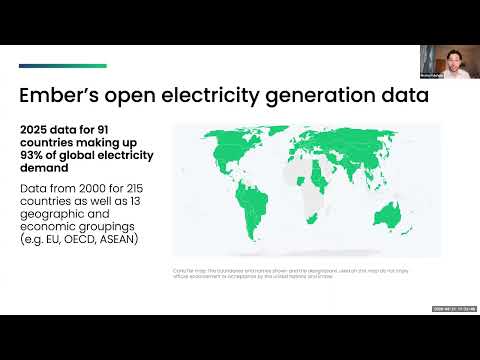
Gas now influences electricity pricing in just 9% of hours since the start of 2026, down from 52% in 2021, according to analysis from independent energy think tank Ember.
The trail is easy to follow here. In Spain, wind and solar generation grew by 37% between 2021 and 2025, pushing gas right to the margins of the country’s energy mix.
"Wind and solar growth are acting as a shield against the price impacts of global instability," says Chris Rosslowe, who authored the Ember report.
"While gas prices spike, renewables are keeping power bills down for Spanish households and businesses."
The result has been a saving of roughly US$11 per household per month since the Hormuz strait closed. These savings are not exactly earth-shattering, but the fact that Spanish consumers emerged from the crisis in the black is remarkable in and of itself.
The capacity that made it possible
Spain’s resilience to the crisis was a long time in the making, built over years rather than weeks or months.
Since 2019, the country has doubled its wind and solar capacity, adding more than 40GW to its grid.
That is more than any other EU member state except Germany, whose power market and population is roughly twice the size of Spain’s.
Coal, which once supplied a quarter of Spain's electricity, has been effectively eliminated from the picture.
The country’s reliance on oil and gas has also plummeted as its portfolio of renewables grows.
In fact, Ember’s research reveals that the influence of fossil fuels on Spain’s electricity prices has dropped by 75% since 2019.
What’s more, Chris says that this has nothing to do with Spain’s sunny climate being more optimal for solar generation than its neighbours.
"You don't need Spanish sunshine to achieve what Spain has done – every country in Europe could be making better use of its own wind and solar resources to reduce reliance on expensive gas," he explains.
Iberdrola is one of the main players in Spain’s electrification journey and its Executive Chairman, Ignacio Galán, is a huge advocate for a fast and radical energy transition.
“We need to accelerate the expansion of electrification through renewables to reduce our dependence on fossil fuels,” he says.
“Tripling renewables by 2030 is feasible and will mobilise investments of US$2.4tn a year.”
What the rest of Europe is paying
While Europe is so often coordinated in its approach to energy, Spain is actually something of an outlier in this instance.
The bloc's wholesale gas prices have risen by 60% since the Iran war began, and the EU has collectively increased its fossil fuel imports in response, accumulating a US$65bn energy bill from the conflict.
Of that, analysis from the Jacques Delors Institute suggests that just a small amount of those premiums – around US$2.2bn – have been reinvested into electrification.
"Less than 5% of it has gone to electrification measures, the one structural investment that reduces exposure today and builds energy resilience for tomorrow," says Alice Moscovici, a researcher at the European think tank.
Meanwhile, a March 2026 Greenpeace study found EU oil companies were generating an additional US$88m in profits every single day.
Taxes, blackouts and what comes next
All that being said, Spain's story is not wholly without complications.
In April 2025, a nationwide blackout made headlines around the world.
The power cut, triggered by a series of voltage fluctuations, plunged the country into chaos, halting metro systems, disrupting traffic and leaving millions without power.
In the wake of this short but shocking incident, many observers questioned whether it was Spain’s growing reliance on renewables that had caused the blackout.
A 472-page post-incident report prompted a shift to "reinforced mode" grid management, which adds a cost floor to bills that would otherwise be lower still.
The Spanish Government did not allow criticism to slow its renewables rollout, however.
Between May 2025 and February 2026, Spain added an average of 1.3GW of wind and solar capacity each month – above the 1.2GW monthly average recorded in the prior 12 months.
Then, during the US and Israel's war on Iran, the government decided to cut taxes on electricity by up to 60% in some instances, saving citizens an average of US$8 a month on energy bills.
The government also introduced some emergency measures that made it easier to attach battery storage to existing renewables plants, bypassing additional environmental assessments.
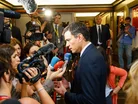
All this is part of Prime Minister Pedro Sánchez's broader plan to improve the energy sovereignty and sustainability of Spain. "Spain will become the country with the strongest social and economic safety net in the entire EU," he explained during a press conference in the early days of the Strait of Hormuz crisis.
The results – especially in a time of such upheaval– have been astonishing, making Spain what Sánchez himself calls "an increasingly resilient country in the face of external crises."
Company portals



Executives

Alice Moscovici
Research Fellow

Chris Rosslowe
Senior Analyst

Ignacio Sánchez Galán