IEA: Can the World Stop 'Worst-Ever Energy Crisis'?

The world is currently facing an energy crisis more severe than any in recorded history.
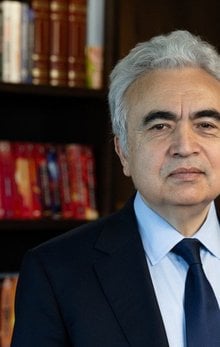
That is the verdict of Fatih Birol, Executive Director of the IEA, who this week delivered one of the starkest public assessments yet of the economic catastrophe unfolding in the wake of the US-Israeli war on Iran.
Speaking at the National Press Club of Australia in Canberra on Monday, Fatih warned that the crisis now dwarfs even the most turbulent periods of the twentieth century's energy history.
"This crisis, as things stand, is now two oil crises and one gas crash put all together," he said.
Three crises in one
The scale of the disruption is almost without precedent.
The effective closure of the Strait of Hormuz – the narrow waterway through which roughly 20% of the world's oil and gas ordinarily flows – has stripped the global energy market of approximately 11 million barrels per day of supply. That figure is more than double the combined shortfalls of the 1973 and 1979 oil shocks.
Liquefied natural gas (LNG) supplies have also been hammered, with the IEA estimating a reduction of around 140 billion cubic metres – nearly double the 75 billion cubic metre shortfall that followed Russia's invasion of Ukraine in 2022.
At least 40 energy facilities across nine countries have been severely damaged in the conflict, including the Ras Laffan complex in Qatar – the world’s largest LNG production facility.
"The global economy is facing a major, major threat today, and I very much hope that this issue will be resolved as soon as possible," Fatih added.
Oil prices have surged more than 50% since US-Israeli strikes on Iran on 28 February, with Brent crude hovering around US$113 a barrel and US benchmarks trading near the US$100 mark.
Trump steps back from the brink
A rare moment of relief came on Monday (23 March).
US President Donald Trump had on Saturday threatened to "obliterate" Iran's power plants unless Tehran agreed to reopen the Strait of Hormuz.
That deadline that was due to expire just hours before Trump made a statement, saying that Washington and Tehran had held “productive” discussions about de-escalation.
Trump’s threat had briefly sent the world into panic. Iran had warned in response that any such strike would trigger the destruction of critical infrastructure across the Middle East, including water systems and power facilities serving American military bases.
However, Trump subsequently announced a five-day postponement of any strikes.
Financial markets responded with relief, though analysts are cautioning that a durable settlement is still elusive – not least because no clear framework for talks yet exists and Tehran has so far withstood enormous military and economic pressure while hitting crucial targets of its own.
Meanwhile, Fatih was unambiguous about what the only lasting solution looks like.
"Stock release will help to comfort the markets, but this is not the solution," he said, describing the reopening of the Strait of Hormuz as "the single most important solution to this problem".
How can the world curb an imminent energy crisis?
With the Strait of Hormuz still closed and diplomacy in its nascent stages, the end of the conflict still feels far away to many nervous onlookers.
However, on 20 March, the IEA published a report identifying 10 demand-side measures that governments, businesses and households can take to ease the pressure on fuel supplies.
The proposals span road transport – which accounts for around 45% of global oil demand – as well as aviation, industry and domestic energy use.
The IEA also encourages remote working where possible, reducing highway speed limits by at least 10 kilometres per hour and taking public transport.
What's more, the agency recommends increasing car-sharing and carpooling, alternating private vehicle access in large cities through number-plate rotation schemes and improving driving efficiency for commercial freight.

Beyond road transport, the IEA is urging a reduction in non-essential air travel to ease pressure on jet fuel markets and calling on industry to switch where possible from liquefied petroleum gas to alternative feedstocks such as naphtha, freeing up LPG for cooking and household use.
Fatih has acknowledged that such measures cannot come close to replacing the lost supply, but argued that widespread adoption could meaningfully cushion the blow for consumers while diplomatic efforts continue.
He has also revealed that the IEA's decision to speak publicly about the crisis last week was itself a deliberate act – born of concern that its severity had not been fully grasped at the highest levels.
"I thought the depth of the problem was not well appreciated by the decision-makers around the world," he said.
The coordinated release of 400 million barrels of oil from IEA member countries' emergency reserves – the largest in the agency's history – is already under way.
Whether that, combined with demand restraint and a fragile diplomatic pause, will be enough to prevent the crisis from deepening further remains, for now, deeply uncertain.

The IEA’s full list of recommendations are as follows:
- Work from home where possible: Displaces oil use from commuting, particularly where jobs are suitable for remote work.
- Reduce highway speed limits by at least 10 km/h: Lower speeds reduce fuel use for passenger cars, vans and trucks.
- Encourage public transport: A shift from private cars to buses and trains can quickly reduce oil demand.
- Alternate private car access to roads in large cities on different days: Number-plate rotation schemes can reduce congestion and fuel-intensive driving
- Increase car sharing and adopt efficient driving practices: Higher car occupancy and eco-driving can lower fuel consumption quickly.
- Efficient driving for road commercial vehicles and delivery of goods: Better driving practices, vehicle maintenance and load optimisation can cut diesel use.
- Divert LPG use from transport: Shifting bi-fuel and converted vehicles from LPG to gasoline can preserve LPG for cooking and other essential needs.
- Avoid air travel where alternative options exist: Reducing business flights can quickly ease pressure on jet fuel markets.
- Where possible, switch to other modern cooking solutions: Encouraging electric cooking and other modern options can reduce reliance on LPG.
- Leverage flexibility with petrochemical feedstocks and implement short-term efficiency and maintenance measures: Industry can help free up LPG for essential uses while reducing oil consumption through quick operational improvements.
Company portals


Executives
Fatih Birol
Executive Director