SunZia: The US's Largest-Ever Renewables Project Goes Live
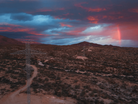
Pattern Energy has confirmed that SunZia, the largest renewable energy infrastructure project ever undertaken in the US, is now fully operational.
The project comprises an approximately 3.65GW wind farm and a 550-mile high voltage direct current transmission line.
Together they are designed to deliver more power than the Hoover Dam which, for many years, was the country's largest clean energy installation.
At full capacity SunZia is expected to supply enough electricity to power around one million American homes annually.
Construction began in September 2023, though the project's roots stretch back far further.

"SunZia becoming fully operational is a milestone more than 18 years in the making and one that I've been fighting for since I first came to Congress," said Martin Heinrich, US Senator for New Mexico, commemorating the opening of the site.
“Through a whole series of obstacles spanning over a decade and a half, we kept working to move it forward because we knew what it could mean for America’s energy future and New Mexico’s role in leading it.
"Now, New Mexico is home to one of the largest energy infrastructure projects in the Western Hemisphere.”
Solving the US's transmission problem
SunZia's significance lies just as much in its ability to transmit energy as its capacity to generate it.
SunZia's high-voltage direct current (HVDC) system is able to transmit large volumes of electricity efficiently over long distances using converter stations at each end of the line.
It is one of the first major HVDC systems built in the US in a generation.
"Large-scale transmission is essential to meeting the West's growing energy needs and strengthening reliability across the grid," says Elliot Mainzer, President and CEO of the California Independent System Operator.
“Projects of this scale help deliver energy reliably to areas of rising demand, improve the movement of power across states and support a more resilient, flexible and affordable electric system.
"SunZia represents the kind of long-term infrastructure investment needed to serve customers today and prepare the grid for the future.”
Hunter Armistead, who is CEO of Pattern Energy, strikes a similarly assured tone.
“SunZia proves that we can still build the consequential infrastructure this country needs,” he explains.
“We did this the right way, we did it on time and on budget – in genuine partnership with the local communities and landowners who trusted us, with the environmental stewardship this unique landscape deserves, and with the determination to see something through that many thought was too big and too complex to finish.”
The investment and the local impact
As one of the US' largest energy projects in history, it follows that the scale of capital behind SunZia is quite as considerable as it is.
Pattern says that the facility represents an investment of more than US$20bn in New Mexico and Arizona communities.
That includes US$1.3bn in direct payments to local governments, schools, counties and private landowners over the first 30 years of operation.
At peak construction the project supported more than 2,000 jobs and it will sustain more than 100 permanent operations roles going forward.
"SunZia is supporting local jobs, strengthening the local tax base and creating long-term investment that can help support schools, public services, landowners and families across the region," says Barbara Sultemeier, Board Member for the Corona Landowner's Association through the Lincoln County Community Foundation.
The American context
The team at Vestas, the wind energy giant that supplied much of the hardware for the project, take a similar view of SunZia's impact, framing it as a victory for communities.
"For Vestas, this is our largest onshore wind project in North America but the number that stays with me isn't just the gigawatts. It's the people," says Laura Beane, President for Vestas North America.
"Nearly 90% of the workforce we hired for this project are local to New Mexico to ensure SunZia was and continues to be a success.
"Our Colorado factories, responsible for the on-time delivery of our components, grew from a few hundred employees to over a thousand. These are careers, not just jobs – built by Americans, for Americans."
Importantly, the opening of SunZia – the US' largest-ever wind farm – comes at a time when the US Government is actively trying to curtail domestic wind projects.
Since US President Donald Trump's second term in the White House began in January 2025, he has been unequivocal about his disdain for wind energy, calling it the "scam of the century" while issuing executive orders to prevent further projects and offering billion-dollar payouts to operators to cease construction of wind farms.
A test case for US infrastructure
Whether SunZia becomes a template for future transmission builds remains an open question.
Eighteen years from conception to completion is a long timeline by any measure.
It underlines how difficult permitting large interregional transmission lines remains in the United States.
Pattern Energy now operates more than 40 facilities across North America with nearly 12,000MW of operating and in construction capacity.
What's more, CEO Hunter Armistead says that the company has no intention of slowing down.
"This project sets a new standard for what is possible – and we intend to keep building on it," he says.
For an industry grappling with surging data centre demand and an ageing grid, SunZia offers a working example of what large scale transmission investment can achieve.
Even so, the path to get there was anything but quick.




Executives

Elliot Mainzer
President and CEO
Hunter Armistead
CEO
Laura Beane
President of Vestas North America