The Sustainable Story of Start Campus' SINES Data Centre
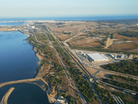
The SINES Data Campus is one of Europe’s most remarkable data centre projects.
When the facility is fully constructed in 2030, its computing capacity is expected to top 1.2GW, placing it amongst the world’s most powerful data centres.
More pertinently, given the ever-growing scrutiny on the environmental impacts of AI, the campus is – and will continue to be – powered wholly by renewable energy, while it also uses seawater for all its cooling needs.
A new investment of €695m (US$812.6m) from Nscale (which operates the site alongside Start Campus and Microsoft) has put a fresh focus on the project lately, reminding data centre operators and hyperscalers alike what sustainability can look like in this burgeoning, resource-intensive sector.
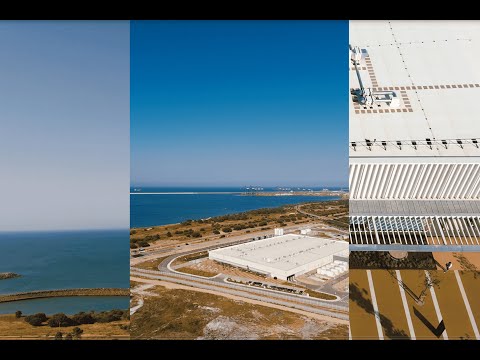
From coal to cloud
Start Campus, the firm that develops, operates and manages the buildings at the site, was founded in Lisbon in 2020 and quickly identified something special about Sines, a small town on Portugal’s Alentejo coast.
The company had found a parcel of repurposed industrial land adjacent to a coal-fired power station that had been recently decommissioned by EDP.
One thing that particularly interested the firm was the site’s existing seawater intake basin and its direct access to international subsea fibre cables.
Start Campus quickly began drawing up plans for the site and it was classified by the Portuguese government as a Project of National Interest in March 2021.
The first phase of construction then began in April 2022 and SIN01, the campus’s first data centre, came online in late 2024.
That same year, 87.5% of Portugal’s electricity was generated by renewables, according to Eurostat, which made Start Campus’ vision for a low-carbon data campus eminently achievable.
Speaking in 2025, the company’s CEO, Robert Dunn, said: “At Start Campus, we are committed to building the foundation for the next generation of sustainable, AI-ready digital infrastructure.
“Power is one of the most critical resources in today’s digital infrastructure. But it’s not just about access – it’s about managing power efficiently, intelligently, and sustainably at scale.”
The issue of water
While operating using only renewable energy is a landmark achievement in its own right, the truly unique thing about the SINES Data Campus is its approach to water consumption.
SIN01 is the world's first AI data centre to use ocean water as its primary cooling method, drawing water directly from the Atlantic and returning it just one degree warmer.
The fact that the facility is built on the bones of an old coal plant has helped in this regard, as SIN01 makes use of the same piping infrastructure that cooled its predecessor.
With temperatures rising and concerns about water scarcity growing, data centres have received huge criticism for the volume of freshwater they consume. This approach circumvents that entirely.
The result is a Water Usage Effectiveness rating of zero and a design PUE of 1.1 – both among the best figures in the industry.
Why the SINES Data Campus matters
The data centre industry is under growing pressure to justify its resource consumption.
According to the UN, data centres consumed an estimated 448TWh of electricity last year. For context, that is more than all but 10 of the world’s countries.
With such a large footprint, sites like the SINES Data Campus offer a glimpse of what sustainable, low-impact computing can look like.
This kind of prestige is exactly why Nscale is enthusiastically investing so much capital in the future of the campus.
"Building on a proven foundation, the expanded deployment in Sines, Portugal creates one of the most advanced environments in Europe for high-density AI infrastructure," says Nscale's CEO and Founder, Josh Payne.
"It also represents one of the largest AI infrastructure investments in Portugal’s history – and among the most significant in the EU – reflecting the surging demand we’re seeing for Nscale’s services," he adds.
While Josh is correct that the site in Portugal enjoys many geographical advantages that other data centres do not, it takes a great deal of work and commitment to run the SIN01 this way.
As Robert says: "It takes daily attention to make sure that you can be as sustainable as possible."
Company portals



Executives
Josh Payne
Founder & CEO
Robert Dunn
CEO