Why is Shell Selling All its Service Stations in France?
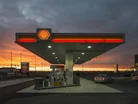
Shell is preparing to sell its entire network of petrol stations in France, according to a report from French news outlet Les Échos.
The company is seeking a buyer for its portfolio of around 60 service stations, with a deal expected to be agreed by the third quarter of 2026 and completed in early 2027.
The assets, which generated operating profits of roughly US$127.5m in 2025, might appear modest within Shell’s global portfolio, yet they remain a profitable foothold in a competitive downstream market.
Crucially, Shell does not directly own these sites, instead operating through concession agreements with motorway operators including Vinci, Cofiroute and ASF.
That structure has long limited control while tying the business to fixed-term contracts and periodic competitive tenders.
So, what is the rationale behind this decision?
- Employees: 98,000
- HQ: London, UK
- Production capacity: 2.8 million barrels of oil per day
- Operational reach: More than 70 countries
- CEO: Wael Sawan
Profit without permanence
Despite the profitability of Shell’s sites in France, the stations sit within a structurally constrained segment of the downstream sector.
A significant share of earnings comes not from fuel sales but from retail activity, including food and beverage purchases that drive margins in roadside convenience.
This reflects a broader industry reality in Europe, where fuel retail margins are thin and increasingly sensitive to price competition from supermarkets.
In France in particular, hypermarkets dominate fuel sales, often undercutting traditional operators and compressing returns.
Shell’s motorway presence, while fairly premium in location, is also costly, since it is linked to concession fees, operational standards and the upkeep of infrastructure.
Internally, the sentiment suggests that profitability alone has not been sufficient to justify continued investment.
One employee described the preparation for sale bluntly, stating: “We dressed up the bride to sell her better.”

A strategic pivot
The divestment aligns with a wider strategic shift under CEO Wael Sawan towards assets that offer higher returns further upstream.
Shell’s recent US$16.4bn acquisition of ARC Resources speaks to this notion, as it strengthens the firm’s position in North America’s valuable gas and LNG sector.
That particular deal is expected to add around 370,000 barrels of oil equivalent per day while also increasing Shell’s influence in LNG Canada, a venture that will see a consortium of industry players build a new gas export terminal in British Columbia.
That, in turn, is expected to help Shell’s presence in Asia grow too.
When compared to manoeuvres like this, a relatively small yet operationally tricky network of service stations in France looks increasingly unimportant.
The company has already scaled back other activities in France, including its proposed expansion of EV charging hubs, its hydrogen projects and a sustainable aviation fuel initiative with ENGIE.
Taken together, these moves point less to a single divestment than to a broader retrenchment in the country.
Given the upheaval currently taking place across the global energy sector, changes like this are to be expected as the industry’s major players take stock of their positions.
Market tensions and timing
The timing of the sale is notable given heightened scrutiny of fuel prices amid geopolitical instability in the Middle East.
Rising pump prices have intensified political and public pressure on energy companies, with competitors such as TotalEnergies introducing price caps to ease consumer concerns.
Retail operators are also navigating accusations of unfair competition from supermarkets, further complicating the commercial landscape.
Within Shell’s network, some employees argue that recent cost controls have eroded customer experience and long-term asset value.
Another internal voice suggested the company had prioritised short-term extraction of value, even at the expense of future attractiveness.
What will Shell’s physical footprint look like going forward?
The planned sale has fuelled speculation that Shell’s withdrawal from fuel retail could precede a broader exit from France.
Around 40 employees are directly affected, though the wider implications extend to suppliers, concessionaires and local partners.
The contractual nature of motorway concessions adds another layer of uncertainty, with up to 40 per cent of sites potentially subject to re-tendering by 2028.
For any buyer, this introduces both risk and opportunity in a fragmented and evolving market.
For Shell, the sum seems simpler.
In a portfolio increasingly centred on scale, integration and upstream resilience, France’s motorway service stations may simply no longer fit.
Company portals

Executives
Wael Sawan
Chief Executive Officer