Why US Oil Majors are Reigniting Their Interest in Venezuela
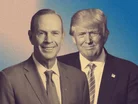
When US President Donald Trump ordered the US military to overthrow Venezuela's President Nicolás Maduro in early January, he made it clear what his intentions were.
“We’re going to have a presence in Venezuela as it pertains to oil,” Trump said in a press conference on 3 January. “We’re going to be taking a tremendous amount of wealth out of the ground.”
Venezuela has the largest proven oil reserves of any nation on the planet, though it is only 23rd in the list of oil exporters. Trump's aim has been to increase production in Venezuela in a way that can benefit American consumers and oil companies alike.
Despite these intentions, however, investments from said oil companies have not been as immediately forthcoming as the President would have hoped.
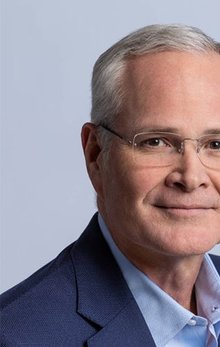
Just a week after the US intervention in Caracas, CEO of ExxonMobil, Darren Woods, described Venezuela as "un-investable", saying that he needed to see "some pretty significant changes" before his company would consider investing in the country.
Meanwhile, Ryan Lance, the CEO of ConocoPhillips, said that Venezuela needed to "completely rewire" its economy if it wanted to attract foreign investment.
That corporate hesitance looks like it is beginning to change, though.
Chevron's perspective on Venezuela
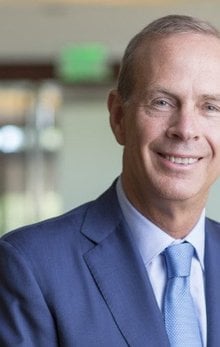
Recently, Mike Wirth, the CEO of Chevron, has revealed his optimism about the future of oil investment in Venezuela.
This follows on from the swift policy reform the Venezuelan Government has enacted under the leadership of Delcy Rodríguez, aimed at revitalising the nation’s struggling hydrocarbons sector.
Wirth has said that while some barriers still need to be overcome, recent adjustments to Venezuela’s oil framework are a step towards unlocking foreign capital.
Speaking to CBS, he said: “[The policy] moves things in a positive direction. It still needs some work. It’s probably not enough to bring in the level of investment that would be desirable. So I think there’s progress that’s been made.”

Reshaping fiscal terms to revive oil output
In short, Venezuela's revised oil reform bill is designed to make investment in the country's energy sector more attractive by easing the fiscal burden on operators.
Approved in January by the National Assembly, the legislation has led to the US to relaxing certain sanctions, while also allowing American energy companies to re-engage with Venezuelan assets.
One of the key changes is to the traditional extraction tax with a hydrocarbons levy of up to 15% on gross production, removing deductions and simplifying the fiscal regime.
Royalty rates, now capped at 30%, are no longer fixed in law, giving the Oil Ministry latitude to adjust terms depending on project economics, development stage and capital requirements.
President Rodríguez’s administration has also introduced provisions allowing for reductions in hydrocarbons income tax to maintain project viability, though legal analysts have questioned whether such flexibility aligns with constitutional tax limits.
Existing partners such as Chevron continue to operate under special licences granted despite ongoing US sanctions. Several licence holders have long advocated for regulatory reform to improve investment conditions.
Balancing political pressure and energy investment
Efforts to reopen Venezuela’s energy sector to international oil companies have been shaped in part by pressures from the US Government, as Washington seeks to stabilise regional supply dynamics.
However, the reforms have sparked criticism domestically and abroad. Some Venezuelan political figures view the shift as a departure from nationalist energy policies, while international legal experts argue the updated framework still lacks sufficient investor protections.
Despite these tensions, Chevron remains the only company currently authorised to produce oil in Venezuela under US sanctions, with other operators awaiting approval to resume or initiate projects.
Rising US interest in Venezuelan crude
Momentum appears to be building among US energy executives, several of whom travelled to Caracas in mid-April to meet President Rodríguez and assess the viability of re-entering the market.
Their interest underscores the strategic importance of Venezuelan crude in supporting North American supply, particularly as energy security concerns persist.
“An increase in production there would improve energy reliability and supplies in the United States,” Wirth said in the CBS interview.
Yet Wirth also highlighted structural challenges facing the sector, including a depleted workforce following years of economic decline and emigration. Both he and opposition leader María Corina Machado have stressed that any meaningful recovery will depend on attracting skilled workers back to the country.
He further cautioned against expectations of rapid output gains, particularly in light of President Trump’s recent move to invoke the Defense Production Act to channel federal funding into domestic energy projects.
“You can’t turn on production at a moment’s notice,” he said. “It takes engineering, it takes supply chains, it takes contracts and workers moving and being mobilised.”
Company portals


Executives
Darren Woods
CEO
Mike Wirth
Chairman of the Board and CEO
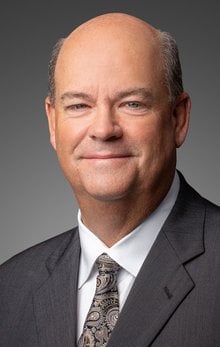
Ryan Lance
Chairman and CEO