
nPower Q&A: The Spring Statement’s Impact on UK Energy
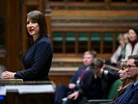
Yesterday, all eyes were on Rachel Reeves, the UK’s Chancellor of the Exchequer, as she delivered her Spring Statement.
It is one of two statements HM Treasury makes each year to Parliament upon publication of economic forecasts.
The second statement is presented in the autumn.
Green issues were pushed to the side in Rachel Reeves’ spring speech, with no mention of financial plans for the energy sector, either.

Despite the address lacking a climate focus, there is plenty to be said about the impact this event may have on the energy landscape.
Anthony Ainsworth, Chief Operating Officer at npower Business Solutions — a subsidiary of E.ON — said in response to the Spring Statement: “From an energy perspective, all eyes were on the Chancellor to see if the rumoured budget cuts to Great British Energy (GB Energy) would become a reality.
“Many were also hoping that she would counter the recent challenges to the 2050 net zero target by the Conservative Leader, Kemi Badenoch.
“While energy and net zero did not feature as a headline in the Statement, the Chancellor was keen to stress the importance of the Planning and Infrastructure Bill, and the positive growth forecast by the OBR as a result of the reforms.
“It will be a vital piece of legislation to drive towards our clean power by 2030 target, with our own research revealing that planning was the top area where businesses would like to see red tape cut.
“Attention will now turn to the Spending Review in June this year, where we would urge the Chancellor to hold firm and not cut budgets to schemes that are designed to transform our energy system. This may save money in the short term, but it would stifle growth in the long term.
“A homegrown, clean and efficient energy system is crucial to driving economic growth. It will not only reduce energy costs for businesses, helping them to increase investment, it will also give them greater stability and energy security in increasingly uncertain times.”
Here, Anthony goes into more detail and shares his thoughts with Energy Digital.
Q. Please introduce yourself and your role.
I am Chief Operating Officer (COO) of npower Business Solutions (nBS), a role I have held since June 2020.
nBS is one of the largest business energy suppliers in the UK, working with more than 22,000 organisations across both the mid-market and industrial and commercial sectors, as well as hundreds of independent generators.
I have overall responsibility for the energy sales and solutions P&L and a focus on shaping a future where businesses use less energy, while ensuring that whatever energy is used comes from lower carbon and renewable sources.
Q. What's your biggest takeaway from the budget when it comes to energy and sustainability?
As many have noted, the Chancellor of the Exchequer was keen to stress that we are in a period of domestic and global change and that this change seems to be happening almost daily.
From an energy perspective, we tuned in to see if the rumoured budget cuts to Great British Energy (GB Energy) would become a reality.
Indeed, GB Energy was keen to publish some good news before the Spring Statement, announcing its first major project to help fund a rooftop solar programme for around 200 schools and 200 NHS sites.
For us though, the focus on the Planning and Infrastructure Bill, and how it is designed to speed up the delivery of critical energy infrastructure, was the key point.
Although not ‘new news’, it will be a vital piece of legislation to drive towards our clean power by 2030 target.
Research we conducted as part of our Business Energy Tracker and Red Tape Challenge reports revealed that planning was the top area where businesses would like to see red tape cut, so any reforms in this area have to be positive for the low-carbon transition.
Q. Do you think the lack of emphasis on energy and sustainability progress will impact the industry? How and why?
A few commentators have highlighted that not shutting down rumours of future budget cuts to GB Energy — or countering the recent challenges to the 2050 net zero target by the Conservative Leader, Kemi Badenoch — was a missed opportunity.
However, I believe it is important to look at the positives of what has been announced since the General Election in July 2024.
As well as the Clean Power 2030 Action Plan, the Planning and Infrastructure Bill and GB Energy, the government has lifted the ‘de facto’ ban on onshore wind, significantly increased the budget for Contracts for Difference Allocation Round 6, approved major solar parks and launched the Clean Energy Mission Control Centre.
That said, now is the time for certainty. 2025 feels like a crucial year where change needs to happen at pace if our targets are to be met.
Q. How do you feel GB Energy and other climate goals will be approached in future, considering the lack of mention in the budget?
Following the Spring Statement, attention will now turn to the Spending Review in June this year, where departmental budgets will be set.
This is where we will see if there have been any changes of note that could impact the progress of clean power by 2030, GB Energy and other climate goals.
We would urge the Chancellor to hold firm and not cut budgets to schemes that are designed to transform our energy system.
This may save money in the short term, but it would stifle growth in the long term.
Q. You said a “homegrown, clean and efficient energy system is crucial to driving economic growth” — what does this mean?
In its General Election manifesto, the Labour party said that one of its key ‘missions’ was to ‘Make Britain a clean energy superpower’.
It said that achieving this would cut energy bills, create green jobs, deliver energy security and provide climate leadership.
For businesses, the economics of clean energy make perfect sense.
Low carbon and reliable energy will not only reduce energy costs for businesses, helping them to increase investment, it will also give them greater stability and energy security in increasingly uncertain times.
But, it is also important to remember that it’s not just about the longer-term gains.
The government also has to address the current market issues impacting businesses and public sector organisations and the price they pay for energy.
For example, the lack of liquidity in the wholesale markets has had a huge impact on costs and needs to be addressed.
Q. What impact does investment in UK energy have on the energy transition?
Investment in the transformation of the UK energy sector is vital if our clean power by 2030 targets are to be met.
This is why collaboration will be so crucial to success, not just between government departments such as the Treasury, the Department of Energy Security and Net Zero (DESNZ) and the Department for Business and Trade (DBT), but also between energy and trade organisations, businesses, stakeholders and the public sector.
In short, this is a pivotal year for energy and for delivering real results against the government’s mission.
Explore the latest edition of Energy Digital Magazine and be part of the conversation at our global conference series, Sustainability LIVE.
Discover all our upcoming events and secure your tickets today.
Energy Digital is a BizClik brand