Airbus Delays Plans for Commercial Hydrogen Aircraft
Aviation is responsible for around 2.5% of global energy-related CO₂ emissions every year, according to the IEA.
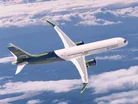
Airbus has placed its bet on hydrogen decarbonising the sector through its ZEROe project.
The company aimed to put a hydrogen-propulsion aircraft into service by 2035.
However, Airbus believes that the hydrogen economy needed for this to be successful is five to 10 years behind where it expected.
Airbus said that its ZEROe plans will therefore be changed, and it does not expect hydrogen planes to be in service until the late 2040s.
Guillaume Faury, CEO at Airbus, told Energy Digital: “There's been a lot of work in the last years on bringing a green hydrogen supply to a number of industries as a way to decarbonise.
“Analysis of the landscape and of progress has shown that a lot of projects have been put on the back burner, have been delayed or are of lesser importance than what was expected five years ago.
“By entering into service a hydrogen plane, there would need to be sufficient green hydrogen supplies, so we are working with airports.
“We have partnered with a number of airports which are willing to start introducing hydrogen in their operations ahead of the plane, starting with stationary equipment, cars, buses, equipment on wheels that is used at airports.
“That's the growth of the ecosystem that we need to see happening with sufficient confidence to gain comfort that entry into service would be successful from the hydrogen supply perspective.
“That’s not the case today.”

The role of sustainable aviation fuel
While hydrogen may not be mature enough yet, there are other ways to reduce aviation’s carbon footprint.
Sustainable aviation fuel (SAF) can be easily integrated with current airport infrastructure and used in existing engines in place of, or mixed with, traditional fuel.
In July 2024, Airbus announced a strategic investment in LanzaJet, a sustainable fuels technology and production company.
“Sustainable aviation fuels are one of the most important levers available to decarbonise aviation, but their production is still limited,” said Julie Kitcher, Chief Sustainability Officer and Communications at Airbus.
“Our partnership with LanzaJet demonstrates Airbus’ commitment to work with leading energy technology suppliers to explore innovative production pathways and scale SAF.
“This important partnership with LanzaJet underlines the importance of new technologies and cross-sector collaboration to achieve net-zero CO₂ emissions by 2050.”
At Airbus’ 2025 Annual Press Conference, Guillaume said: “Looking at our own operations at Airbus in 2024, we used 18% SAF in our aircraft and helicopter flights.
“This means we are on track so far towards our goal to use at least 30% SAF in our operations by 2030.
“Of the 766 commercial aircraft delivered in 2024, 75% were delivered to their customers with a SAF blend.”
Airbus’ plans for hydrogen
Although Airbus’s original hydrogen timeline appears delayed, the company has not lost confidence in its decarbonising potential.

Guillaume explained: “In short, yes we are adapting our ZEROe roadmap, but no, we are not moving away from hydrogen.”
Airbus says it has made a lot of progress in its understanding of hydrogen’s technical pathways, and it has already concluded the design of a fully electric aircraft powered by a hydrogen fuel cell prop system that it unveiled in 2022.
The company believes that an aircraft powered by a hydrogen fuel cell prop system is the most promising pathway to a commercially viable hydrogen plane.
Explore the latest edition of Energy Digital Magazine and be part of the conversation at our global conference series, Sustainability LIVE.
Discover all our upcoming events and secure your tickets today.
Energy Digital is a BizClik brand