Behind Brookfield's US$25bn Investment in Bloom's Fuel Cells

Brookfield Asset Management has agreed to expand its financing framework with fuel cell manufacturer Bloom Energy from US$5bn to US$25bn.
The pair's original agreement was struck in October 2025, but this fivefold increase shows just how quickly capital is being funnelled into solving one of the AI sector's most pressing issues: power.

Bloom's solid oxide fuel cells offer a workaround.
Rather than drawing power from the grid, they generate electricity onsite through an electrochemical reaction between hydrogen and oxygen, without combustion.
This makes them faster to deploy than new transmission infrastructure and, according to the companies, cleaner than diesel generators or gas turbines typically used as stopgap power.
Bloom has already installed hundreds of megawatts of this technology at data centre sites, working with partners including American Electric Power, Equinix and Oracle.
- Employees: 2,300
- HQ: San Jose, California, US
- Production capacity: 1GW of fuel cell capacity per year
- Operational reach: Nine countries
- CEO: KR Sridhar
The deal in context
The expanded commitment sits within Brookfield's AI Infrastructure Fund, launched in November 2025 with an ambition to deploy US$100bn across AI-related infrastructure.
Brookfield already manages more than US$1tn in assets and has invested over US$100bn in digital infrastructure and clean power to date.
Aman Joshi, CCO at Bloom, says the increased funding reflects the momentum the company is seeing in the market.
"Bloom is uniquely positioned to address the urgent need for clean, reliable power to support the rapid growth of AI," he explains.
Aman added that the company was "pleased with our partnership with Brookfield" and looking to deepen collaboration on larger projects.
Sikander Rashid, Head of AI Infrastructure at Brookfield, sees the expansion as part of a broader integrated strategy spanning power and compute.
"Scaling our commitment with Bloom Energy reflects both the strength of this partnership and the conviction behind our broader AI infrastructure strategy, including integrated compute," he says.
For Sikander and the team, the ambition is about delivering solutions "from electrons to tokens" for sophisticated customers.
A market moving faster than the grid
The scale of the increase, from US$5bn to US$25bn in under nine months, says as much about the state of the grid as it does about Bloom's technology.
Utilities across major markets are struggling to keep pace with hyperscaler demand, pushing developers towards behind-the-meter solutions that bypass queues for new connections.
That dynamic has turned onsite generation from a niche engineering choice into a strategic necessity for some of the world's largest technology companies.
Whether fuel cells can scale to meet gigawatt-level demand, rather than the hundreds of megawatts deployed so far, remains an open question.
Bloom's technology is not without competitors, and gas turbines still dominate much of the behind-the-meter market on cost grounds.
Fuel cells also carry a higher upfront capital cost than conventional generation, even if operating expenses and emissions profiles compare favourably.
For now, Brookfield's willingness to commit such a large sum suggests confidence that the economics will hold as deployment scales.
The wider test will be whether this model of pairing capital with onsite generation becomes the template for AI infrastructure buildout, or simply one option among several as developers race to secure power however they can.
- Employees: 255,000
- HQ: New York, New York, US
- Value of managed assets: >US$1tn
- Operational reach: More than 50 countries
- CEO: Connor Teskey
Bloom's technology is not without competitors, and gas turbines still dominate much of the behind-the-meter market on cost grounds.
Fuel cells also carry a higher upfront capital cost than conventional generation, even if operating expenses and emissions profiles compare favourably.
For now, Brookfield's willingness to commit such a large sum suggests confidence that the economics will hold as deployment scales.
The wider test will be whether this model of pairing capital with onsite generation becomes the template for AI infrastructure projects, or simply one option among several as developers race to secure power however they can.
Company portals




Executives
Aman Joshi
Executive Vice President and Chief Commercial Officer
Connor Teskey
President, Brookfield Asset Management; CEO, Renewable Power & Transition
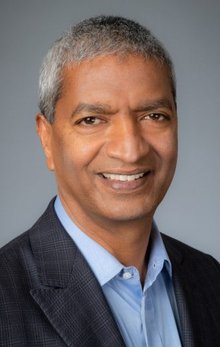
KR Sridhar
CEO

Sikander Rashid
Head of AI Infrastructure