
Foxconn & Brookfield Strike 1GW Renewables Deal in Vietnam
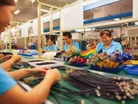
The global manufacturing sector is one of the world's biggest polluters.
According to the World Economic Forum, the industry contributes to around 20% of all carbon emissions, while the US Government estimates that manufacturing accounts for 54% of global energy consumption.
Much of that work is localised in Asia, with the UN revealing last year that more than 50% of the world's manufacturing takes place across the continent.
Vietnam is an emerging power in that market and companies are beginning to address the carbon footprint of Vietnamese manufacturing.
To this end, the Hon Hai Technology Group (known internationally as Foxconn) and Brookfield have announced a strategic partnership to develop up to 1GW of utility-scale renewable energy capacity in the country, combining wind, solar and large-scale batteries.
The deal is takes the form of some long-term power purchase agreements, or PPAs, and marks a significant step in corporate-led energy procurement across the region.
For Foxconn, the world's largest electronics manufacturer with operations spanning 24 countries, the move speaks to a more deliberate approach to managing energy across its sites.
This is something Foxconn has lacked in recent years, with non-profit Greenpeace revealing that the firm's renewable electricity ratio was just 8%, compared to the 24% of its rival electronics manufacturer Luxshare Precision.

Investing in emerging markets
On the investment side, Brookfield will deploy capital through its Catalytic Transition Fund, a vehicle designed specifically to mobilise private finance into clean energy projects in emerging markets.
The fund is backed by US$1bn of catalytic capital from ALTÉRRA and is structured to attract additional private investment by improving risk-adjusted returns in markets that have historically been harder to finance.
Daniel Cheng, who is Head of Energy for Asia-Pacific at Brookfield, sees the deal as indicative of trends across the region.
"Brookfield's partnership with Foxconn underscores the scale of corporate demand for renewable power in Vietnam, one of Asia's fastest-growing economies," he says.
"As global manufacturers increasingly turn to renewables for its cost-competitiveness, speed to market and energy security benefits, we're seeing strong and rising demand for long-term supply from across the region."
Daniel also pointed to policy developments in South East Asia as a secondary driver, describing momentum around direct PPA frameworks as a "second-order tailwind" for the fund's activity over the past year.
Factoring in the supply chain
One element of the Foxconn announcement that stands out is the explicit inclusion of supply chain partners within the scope of the deal.
The partnership is designed not only to cover Foxconn's own Vietnamese operations but to extend clean energy access to its broader supplier network in the country – a less common feature in corporate PPA structures.
Foxconn's Chief Investment Officer, James Tu, describes the arrangement as one in which both sides are actively invested in the outcome, rather than a straightforward offtake agreement.
"We are pleased to be a strategic partner to Brookfield to secure long-term access to renewable energy for our operations and supply chain in Vietnam," he says.
"This initiative where we're investing and managing alongside Brookfield ensures stable and cost-effective power supply for our continued growth in the region."
Timing and the PPA framework
The partnership's progression will run alongside Vietnam's evolving direct PPA framework – a regulatory structure the country has been developing to allow large energy users to contract directly with renewable generators, bypassing traditional utility arrangements.
That framework is still maturing, and the pace at which the 1GW pipeline develops will depend, at least in part, on how quickly the regulatory environment catches up with commercial appetite.
Vietnam's electricity system has faced well-documented capacity pressures in recent years, and the country's ability to attract structured, long-term investment of this kind will be a useful indicator of how its energy transition is progressing at an industrial scale.
For Brookfield, the deal adds to what it describes as one of the world's largest renewable energy portfolios, spanning hydro, wind, solar and storage across five continents.
For Foxconn, it is a further signal that the energy procurement decisions of large manufacturers are no longer peripheral to corporate strategy – they are increasingly central to it.


Executives
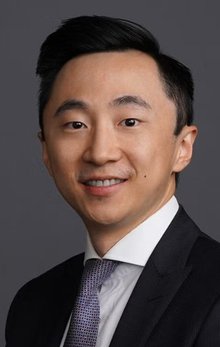
Daniel Cheng
Head of Energy for Asia-Pacific

James Tu
Chief Investment Officer