Can Global Transport Firms Decarbonise by 2040?
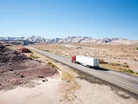
At COP30, Brazil and Mexico signed the Global Memorandum of Understanding (MoU) on Zero-Emission Medium- and Heavy-Duty Vehicles, a major step towards cleaner road transport. The transport sector is a major source of global greenhouse gas emissions, contributing over eight billion tonnes of CO₂ equivalent annually.
The pledge signed by over 40 governments commits to 100% zero-emission new truck and bus sales by 2040, with a 30% interim goal for 2030. The inclusion of Brazil and Mexico is a notable development.
Stephanie Kodish, Senior Global Director of CALSTART’s Drive to Zero, says: “The momentum Brazil and Mexico bring to the global transition to zero-emission transport is remarkable. Latin America is a hotspot for clean technology and zero-emission commercial vehicles,” adding that local communities will enjoy the benefits.
Global collaboration on sustainable transport
Introduced at COP26, the Global MoU is co-led by Colombia and CALSTART’s Drive to Zero. It aims to decarbonise medium- and heavy-duty vehicles (ZE-MHDVs) like trucks and buses, which are major GHG emitters.
Signatories commit to data sharing and collaborative planning to speed up the deployment of zero-emission fleets.
Reaching net zero by 2050 requires a swift market transformation. Signatory nations will work together on transition pathways, charging infrastructure and incentives to make zero-emission vehicles economically competitive.
The business case for vehicle electrification
There are also clear operational and economic arguments for the transition. Gustavo Tannure, CEO of EZVolt, calls the transition to electric fleets "inevitable" highlighting benefits like 80% lower operating costs, higher energy efficiency and the elimination of pollutants.
He compares it to the transition from horse-drawn transport to motor vehicles.
Gustavo adds that Brazil’s government is pursuing economic and health benefits and that "EZVolt stands ready to support Brazil's growing charging needs."
While non-binding, the agreement signals substantial market growth for zero-emission vehicles to manufacturers and investors.
Market signals and investment opportunities
The 42 signatory countries represent nearly a quarter of all trucks worldwide and 40% of global GDP. Endorsing companies generate over US$1.3tn in annual revenue.
Christian Levin, President and CEO of Scania, explains that “mature technical solutions are already available” to decarbonise the sector.

He praises Brazil and Mexico for their leadership stating their commitment “paves the way for coordinated public–private action” and that Scania is “ready to collaborate...to make zero-emission freight transport a reality across Latin America.”
The move shows emerging economies aligning with net zero goals. Francisco Laverón of Iberdrola calls it a “powerful example of how electrifying heavy-duty transport can promote sustainability,” adding that renewable electricity will fuel the transition.
The focus is now on translating commitments into action through technology investment and clear policies. Dr José Luis Samaniego Leyva of SEMARNAT notes the collaboration “opens the doors to new opportunities for investment production and innovation.”
John Boesel of CALSTART concludes that, by signalling they are “open for business”, the countries will attract global fleet operators and innovators.



Executives

Christian Levin
President and CEO
Francisco Laverón Simavilla
Iberdrola Direction of Energy Policies Head of Energy Policy. Chairman Area

Stephanie Kodish
Global Director, Drive to Zero