Electrification Key to Corporate Strategy After Iran War
The war between the US, Israel and Iran may be over for now, but the scars the conflict has left on the global economy are far from healed.
The disruption caused by the closure of the Strait of Hormuz left around 20% of the world’s oil and gas stranded in the Middle East, with consumers and companies paying premiums as a result.
Despite the agreement of a peace deal on Sunday 14 June, this experience will have left millions around the world with a sour taste in their mouths.
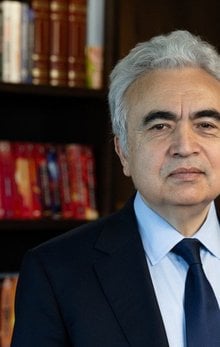
This crisis – described by the IEA’s Fatih Birol as “two oil crises and one gas crash put all together” – is the second market-crashing incident in just four years, after Russia’s invasion of Ukraine.
Consequently, many experts are saying this must be the moment the world turns its back on the volatile fossil fuel industry and instead invests in electrification.
According to a new survey published by Public First, four in five businesses say that the ongoing crisis in the Middle East has made the transition away from fossil-powered equipment more urgent.
For this study, Public First polled almost 2,000 executives across 18 countries on behalf of green campaign groups E3G, the We Mean Business Coalition and the Global Renewables Alliance.

The twin pressures of cost and security
The results of this piece of research confirm that the US-Israel-Iran war has truly changed the global narrative when it comes to electrification.
While the transition to EVs, heat pumps, renewable energy and battery storage has often been couched in terms of sustainability, electrification is now regarded as a cheaper, more reliable alternative to oil, gas and coal.
Public First found that 91% of respondents said switching from fossil fuel-powered equipment to electric alternatives would strengthen their energy security.
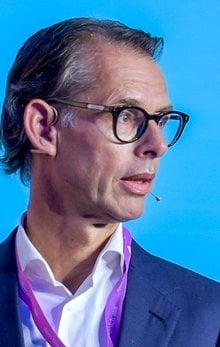
Dimitri de Vreeze, who is CEO of Swiss-Dutch chemicals multinational DSM-Firmenich, put it plainly.
"Businesses today are operating in a structurally more volatile energy landscape, where continued reliance on fossil fuels exposes companies and economies to recurring shocks," he told the Financial Times.
DSM is already expanding electrification across its operations, with Dimitri citing improved cost predictability as a tangible early benefit.
Roche, a European pharmaceutical firm that is aiming to make 85% of its fleet electric by 2029, shares that sentiment.
"Our experience shows that electrification can help strengthen operational resilience and support long-term business continuity," Thomas Schinecker, the firm’s CEO told the FT.
The policy gap
Despite this groundswell among the private sector, there is some significant friction between corporate ambition and government action slowing the shift to electric.
Three-quarters of the survey’s respondents expect to have replaced the majority of their fossil-fuel-powered equipment by 2030, yet, on the other hand, 72% said that government policy was lagging behind.
José Manuel Entrecanales, the Executive Chairman of Spanish infrastructure group ACCIONA, was blunt about what is at stake.
"This is not the first fossil fuel crisis, and it will not be the last," he said to the FT, describing dependence on imported fuels as a real vulnerability.
"What businesses need now are the grids, market structures and policy frameworks that can match their ambition and unlock the full potential of electrification," he added.
That kind of change, at that sort of scale, comes at a high price.
The IEA has estimated that investments in the grid will need to double every year until 2030 to accommodate the scale of electrification required to meet net zero.
Grid investment and demand growth
The IEA’s research also suggests that electricity consumption is projected to grow at least 2.5 times faster than overall energy demand over the next five years, driven mostly by industry, electric vehicles, air conditioning and data centres.
Christian Hartel, President and CEO of Munich-based chemicals group Wacker Chemie, noted that more than 60% of the energy used in his company's processes was already electricity-based, placing it ahead of many peers.
The survey also found that some of the most ambitious electrification targets came from businesses in heavily populated developing economies, including Nigeria, Indonesia, India, the Philippines, Colombia and South Africa.
That finding complicates the familiar narrative of electrification as a predominantly Western preoccupation.
It also raises questions about where grid investment will flow, and whether international policy frameworks can keep pace with the scale of commercial appetite now emerging across emerging markets.






Executives
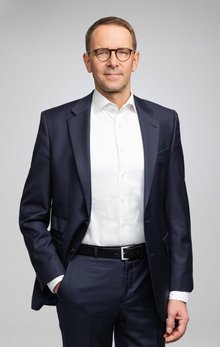
Christian Hartel
President and CEO
Dimitri de Vreeze
CEO
Fatih Birol
Executive Director
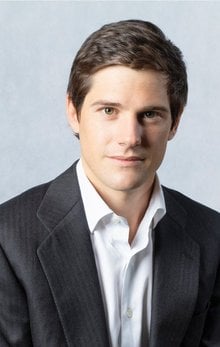
José Entrecanales
Chief Financial and Sustainability Officer (CFSO)
Thomas Schinecker
CEO Roche Group