
How Scotland Can Tap Into a £10bn Biomethane Opportunity
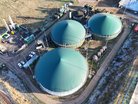
Scotland could produce enough biomethane to meet roughly half of its current gas demand by 2050, according to a new report from the Green Gas Taskforce, setting out an expansive vision for renewable gas as a pillar of the country’s energy transition.
The report, which was published alongside Scottish Gas firm SGN, argues that Scotland has enough sustainable feedstocks to generate 19TWh of biomethane by mid-century, up from an estimated 8TWh by 2030.
This, the report suggests, could be enough fuel to heat 76% of homes in Scotland, while also catering to industry, transport and power generation.
While scaling the country's biogas infrastructure would require enormous investment – something which is never quantified in the report – the Green Gas Taskforce suggests that biogas could save money in other areas.
Using biomethane – which is a fuel that can be dropped into existing gas networks – means that people would not need to rip out their boilers, while less strain might also be placed on the electricity grid.
The Taskforce and SGN also suggest that Scotland's biomethane sector could contribute £10bn (US$13.6bn) to the national economy if fully funded and expanded, while it could also support around 8,000 jobs.
The report also claims that 85p(US$1.12) of every £1 (US$1.32) invested in biomethane would stay within the UK economy, which the report says is the highest domestic content share of any renewable or low-carbon technology.
From whisky waste to farm feedstocks
Should Scotland go all in on biomethane, the country will not be starting from zero.
In fact, there are already 25 biomethane plants connected to SGN’s network in Scotland, which is enough to decarbonise the equivalent annual gas demand of more than 208,000 households, with a further nine plants in the pipeline.
The report does not speculate how many new production facilities would be needed to fulfil Scotland's potential, but its existing infrastructure is at least a start.
Today, the largest source of Scottish biomethane comes from the country's famous whisky industry, where waste is delivered to the anaerobic digesters at biomethane production sites.
The report says that Scotland's agricultural sector could be the biggest source of feedstock going forward, though.
Only 2.5% of Scotland’s organic farm waste is used to produce biomethane right now.
For the farming sector, the prospect of long-term income from waste streams is one of the more tangible parts of the report’s proposition, especially given the tight margins Scotland's farmers are currently operating under.
Marcus Hunt, who is Business Development Director at SGN and Co-Chair of the Green Gas Taskforce, says that the industry has already shown it can deliver at scale if given the right backing.
“What makes biomethane particularly compelling is that we're not starting from scratch," he explains.
"Scotland already has enough connected biomethane capacity on SGN's network to meet the equivalent demand of more than one in ten homes connected to the gas grid, demonstrating that this technology is already delivering for consumers today.”
“By turning more of Scotland's agricultural and organic waste into renewable gas, we can create value in rural communities, reduce reliance on imported fuels and strengthen the resilience of our energy system. The opportunity now is to move from potential to delivery and unlock this industry at scale.”
A route through the heat debate
The report’s broader significance lies in the role it assigns biomethane within Scotland’s contested heat transition.
Economy-wide gas demand in Scotland stood at 42TWh in 2024, the report says, with 25TWh of that coming from domestic heating.
Against that backdrop, the Taskforce argues that renewable gas should not be treated as a niche technology but as part of the core decarbonisation toolkit, particularly for homes and businesses that may struggle to electrify quickly or cheaply.
The report also points to biomethane’s use in heavy goods vehicles and in gas-fired power stations that can help balance the electricity system during periods of low wind and solar generation.
That breadth is part of its appeal, though it also raises a familiar policy question: whether government sees biomethane as a strategic national asset or as a supporting technology competing for attention in an already crowded net zero landscape.
Gillian Martin, the Scottish Government's Secretary for Climate Action and Rural Affairs, has been cautious but curious and receptive in her response to the report.
“Biomethane and anaerobic digestion have an important role to play in Scotland’s transition to net zero, helping to reduce emissions while making better use of local resources. This report highlights the potential to support economic activity, including in rural communities, and strengthen our homegrown energy supply," she says.
“I welcome the work of the Green Gas Taskforce in bringing forward this analysis, which we will consider as part of our wider approach to delivering a just and affordable energy transition.”
That breadth is part of its appeal, though it also raises a familiar policy question: whether government sees biomethane as a strategic national asset or as a supporting technology competing for attention in an already crowded net zero landscape.
Gillian Martin, the Scottish Government's Secretary for Climate Action and Rural Affairs, has been cautious but curious and receptive in her response to the report.
“Biomethane and anaerobic digestion have an important role to play in Scotland’s transition to net zero, helping to reduce emissions while making better use of local resources. This report highlights the potential to support economic activity, including in rural communities, and strengthen our homegrown energy supply," she says.
“I welcome the work of the Green Gas Taskforce in bringing forward this analysis, which we will consider as part of our wider approach to delivering a just and affordable energy transition.”
Could Scotland's policymakers facilitate a green gas boom?
For the Green Gas Taskforce, policy is a crucial next step in making biomethane a bigger part of Scotland's energy mix.
The group is calling for a national biomethane target, a post-2030 support framework following the Green Gas Support Scheme, action to secure zero-rating for biomethane under the UK Emissions Trading Scheme and measures to create a viable market for greenhouse gas removals linked to biomethane production.
Charles McAllister, the Director of the Green Gas Taskforce, says that collaboration with the government is key.
“Biomethane is a reliable, renewable and ready fuel with the potential to heat and decarbonise the equivalent of three quarters of Scottish homes whilst providing a stable revenue stream to Scottish farmers," he says.
“Biomethane is a reliable, renewable and ready fuel with the potential to heat and decarbonise the equivalent of three quarters of Scottish homes whilst providing a stable revenue stream to Scottish farmers," he says.
“In order to unlock Scotland’s green gas potential, the Green Gas Taskforce is calling on the Scottish Government to recognise biomethane’s potential and act to turbocharge its development.”
Company portals


Executives

Charles McAllister
Director

Marcus Hunt
Business Development Director