
IEEFA: Has Germany's Gamble on LNG Backfired?
Germany thought it had solved its energy security problem.
After Russia's 2022 invasion of Ukraine, most of the nations of Europe took a stand and economic sanctions were quickly levied against Moscow.
While this hampered Vladmir Putin's ability to fund the war, it also meant that the EU was cutting ties with its single largest gas supplier.
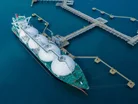
Berlin moved fast to reduce its dependence on Russia. The government commissioned several floating storage and gas terminals, as well as signing some long-term LNG contracts with the US.
The trouble is, it may have simply traded one dependency for another.
A new report recently published by the Institute for Energy Economics and Financial Analysis (IEEFA) has found that around 92% of Germany's LNG imports were sourced from the US in last year, up from 82% in 2023.
That concentration is striking given that, just four years earlier, it was Russia supplying roughly 52% of Germany's total gas imports.

The pivot to LNG
Germany's pivot to LNG has not been cheap – and the numbers suggest it has been poorly calibrated to actual demand.
Parliament allocated €9.8bn (US$11.3bn) to support LNG infrastructure expansion between 2022 and 2038, and the European Commission approved a further €4.06bn (US$4.68bn) grant to cover losses incurred by state-owned Deutsche Energy Terminal operating four floating units.
That figure could rise to €4.96bn (US$5.72bn) if the actual losses exceed the projections.
Despite this, the rate that Germany sent LNG out into the gas grid sat at just 36.3%, well below the EU average of 50.8%. This is reflected in the country's overall consumption of gas, which has fallen a great deal since its peak in 2021, dropping 15% in 2022 and remaining broadly flat since.
What's more, the IEEFA's report suggests that if all of the government's LNG contracts are seen out, Germany would be committed to importing 26.2bcm of LNG in 2030 – almost three times its 2025 import volumes.
So, why exactly is Germany planning to nearly triple its LNG import capacity to 56.1 billion cubic metres by 2028?
The success of heat pumps
Amid the apparent missteps in strategy, part of Germany's energy policy that appears to be working.
The government installed more than a million residential heat pumps between 2022 and 2025, reducing cumulative gas demand by around 40 terawatt-hours across that period.
The IEEFA says that this has avoided the need to import an additional 16% more LNG over three years, saving around €1.3bn (US$1.5bn) in import costs.
In 2025, sales of heat pumps exceeded gas boiler sales in Germany for the very first time, with almost 300,000 units shifted across 12 months.
On this subject, the IEEFA's report suggests that the continued electrification of heating – combined with energy efficiency programmes and renewable expansion – offers a more durable path to energy security than infrastructure built around imported fossil fuels.

The hydrogen problem
As things stand, Germany's power sector strategy rests heavily on hydrogen.
The government currently has plans to build 10 gigawatts of hydrogen-ready gas-fired power plants that will eventually help the country transition away from natural gas.
The IEEFA, however, is sceptical. The report argues that high production costs, infrastructure gaps and project execution risks mean hydrogen power will almost certainly play a smaller role than government forecasts assume.
Germany's Network Development Plan envisions hydrogen power capacity of between 17 and 28 gigawatts by 2045, which is equivalent to roughly 87% of the country's current gas-fired power plants.
That said, the IEEFA's own modelling suggests that if Germany pursues the development of renewables, battery storage and cross-border grid interconnections, it could source as little as 5% of its electricity from natural gas and hydrogen combined by 2045.
The outlook for decarbonising gas plants is also a little unsure, with the IEEFA looking askance at carbon capture and storage.
Europe currently has no operational CCS projects attached to gas power plants, and IEEFA estimates capture costs alone exceed €150 (US$173) per tonne of CO₂. That is roughly double the current EU Emissions Trading System price of €76 (US$88).
The report also warns that if Germany attempts to decarbonise its 10-gigawatt portfolio of gas plants using CCS, subsidy costs would rise into the hundreds of billions.
Utilities in the crosshairs
Ultimately, the financial risks will fall on specific companies.
Major utilities including RWE, EnBW and Uniper together account for a substantial share of Germany's roughly 70GW of gas and coal-fired capacity, and all three have signed long-term LNG supply agreements running to 15 or 20 years.
The IEEFA has warned that this is creating a mismatch, wherein companies planning to decarbonise their gas fleets are simultaneously locking in supply commitments that assume those same fleets remain heavily utilised well into the 2040s.
The message from the report and its authors are quite clear, with the sentiments summed up well by Ana Maria Jaller-Makarewicz, Lead Energy Analyst for IEEFA’s Europe team.
"The Middle East crisis is Germany's biggest wake-up call to electrify since Russia’s 2022 invasion of Ukraine," she says.
"There is significant potential for Germany to accelerate heat pump deployment and curb its reliance on gas imports even further."

Executives

Ana Maria Jaller-Makarewicz
Lead Energy Analyst for IEEFA’s Europe team