
Why the Iran Energy Crisis Might Have Won the War for Russia

For over four years now, Volodymyr Zelensky, Ukraine’s President, has fought a defensive war against Russia with the backing of several powerful countries.
Notwithstanding US President Donald Trump’s withdrawal of support for Zelensky, the US had been a staunch ally for Ukraine under Joe Biden. Meanwhile, Europe has always been steadfast in its support.
However, this week Zelensky has revealed that some of Kyiv's international partners have urged him to scale back long-range strikes on Russian energy infrastructure.
Speaking to journalists via a WhatsApp voice message on 30 March, Zelensky framed Ukraine's campaign against Russian energy assets as a reciprocal response to Moscow's own sustained assault on Ukrainian power infrastructure.
He made it clear that restraint would require concessions from Russia too.
"We have received messages from some of our partners asking about how our responses against Russia's oil sector – the energy sector – can be reduced," he said.
"If Russia is ready not to strike Ukraine's energy, then we'll respond by not attacking theirs."
A crisis within a crisis
Zelensky's comments came after Ukraine's military claimed to have carried out 10 major attacks on Russian energy infrastructure this month alone, including a strike on the Ust-Luga oil terminal – a key crude export facility near St Petersburg.
Satellite imagery collected on 27 March showed a large fire at the Ust-Luga complex.
Zelensky said the attack had knocked out 60% of the port's export capacity, a claim that, if accurate, represents a significant blow to Russian oil revenues at a particularly sensitive moment.
Russia's state budget relies on oil earnings for at least one third of its revenues, according to analysts, and those earnings may have doubled over the past month.
This, simply, is a direct consequence of surging global crude prices following the US-Israeli war on Iran and the effective closure of the Strait of Hormuz, which has left around 20% of the world’s oil and gas supplies stranded.
The identities of the partners pressing for restraint remain unnamed, though the geopolitical logic is not difficult to trace.
China and India remain the principal purchasers of Russian crude oil, accounting for 85% of Russia's oil exports in February, according to data from the Centre for Research on Energy and Clean Air.
The European Union, meanwhile, represents the largest market for Russian gas at 34% of total volume and 49% of its LNG exports.
It is unclear whether that figure may increase as supplies from the Middle East drive energy prices yet higher.
A windfall for Moscow, a problem for Kyiv
Before the conflict in the Middle East began and the Strait of Hormuz was cut off, Russian crude traded at a substantial discount to other benchmarks on global markets.
According to analysts, it is now sometimes commanding a premium.
In an effort to ease pressure on oil markets, the US Treasury suspended sanctions on Russian crude already at sea earlier this month.
The move speaks to the uncomfortable reality that surging energy prices have shifted the economics and global perception of the Russia-Ukraine conflict.
What benefits Russia's war chest also strains the global economy and, in turn, Ukraine's allies.
Zelensky has himself acknowledged that while surging oil prices provide Russia with an injection of cash, they also threaten Ukraine's ability to sustain its own war effort.
He told journalists that the Ukrainian army had enough fuel for now, but that he had been seeking to secure additional supplies during a tour of the Gulf states, including Saudi Arabia, the UAE, Qatar and Jordan.

Europe already fragile as the shock bites
The timing could scarcely be worse for European businesses.
According to the latest Weil European Distress Index, corporate distress across Europe at the start of 2026 is already above the levels recorded ahead of the 2022 Ukraine war energy crisis – meaning companies are entering this latest period of volatility from a materially weaker position.
The retail and consumer goods sector remains the most distressed in Europe, sitting at its highest level on a six-month rolling basis since the global financial crisis, driven by rising operating costs, wage pressures and softening consumer demand.
Infrastructure, utilities and power has now risen to become the third most distressed sector – a category shift that carries particular resonance given the current context.
Andrew Wilkinson, Partner and Co-Head of Weil's London Restructuring practice, warns of the pace at which conditions could deteriorate.
"Businesses are entering a period of renewed volatility already under pressure, which leaves far less room to absorb further shocks,” he says.
“The key risk is pace,” he continues. “If energy prices remain elevated and confidence continues to weaken, we could see stress build more quickly than in previous cycles – particularly for companies that have already delayed investment or are operating with tighter margins."
His colleague Neil Devaney, also Partner and Co-Head of Weil's London Restructuring practice, points to risks building in sectors beyond the consumer-facing industries that have dominated distress headlines.
"We are seeing continued pressure in industrials, alongside early signs of stress emerging in infrastructure, utilities and power,” he explains.
“This matters because these are capital-intensive, system-critical sectors. If pressure continues to build here, it points to a broader and more entrenched cycle of distress, rather than one confined to consumer-facing industries."
A ceasefire or an escalation?
Whether Zelensky's conditional offer of restraint will gain traction remains to be seen.
As the Ukrainian strikes continue, the Russian government is reportedly considering reintroducing a ban on gas exports – a measure being discussed by Russian Deputy Prime Minister Alexander Novak alongside industry ministries and oil companies.
For now, both sides show little sign of stepping back.
Russian attacks have left more than a million Ukrainians without electricity and heating this winter, and Zelensky has shown no inclination to offer unilateral concessions.
What his disclosure does reveal, however, is that the pressure being applied to Kyiv is real and the crisis in the Middle East is being felt right across the world.
Company portals

Executives

Andrew Wilkinson
Partner and Co-Head of Restructuring at Weil London
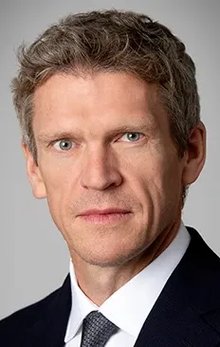
Neil Devaney
Partner and Co-Head of Restructuring at Weil London