
London Climate Action Week: Schneider Electric on Grid Tech
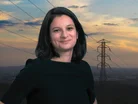
Energy systems and digital infrastructure are becoming impossible to separate.
That was the message from a panel on electrification at the Climate Innovation Forum, held during London Climate Action Week 2026.
Esther Finidori, Chief Sustainability Officer at Schneider Electric, told delegates that power and data networks now underpin every part of the modern economy.
"When you think about it, the energy system and the data and telecommunication system are the two things you need that are the backbone of your economy," she said.
Esther argued that without reliable electricity, data and communications, essential services simply stop functioning.
"Without electric, energy without data and communications, you have no economy. You will run and operate nothing; from hospitals, schools to businesses. We need to start thinking ahead about the energy system as being the critical backbone for the economy and treat it as such."
The upside of a spike in electricity demand
Much of the current debate around electricity demand centres on data centres and the strain they place on grids.
Esther took a different view.
She argued that rising demand from AI infrastructure should be treated as a signal to invest rather than a problem to contain.
"We need to consider anything that is an increase of electric demand as good news," she said.
She pointed to the tension building around power-hungry AI facilities and questioned whether this should really be framed as a conflict.
"All the tensions arising now on the demand that will be generated by AI factories. Is this a conflict of uptake?" she asked.
"We should see this as a major opportunity to finally have demand growth that unlocks the investments we need in terms of supply, in terms of grid upgrades, so that we can electrify our energy system.
"We need to anticipate a future where there will be abundant electric and that electric needs to be affordable. If each time we hit a demand-supply crisis, prices hike, we will have a negative loop in the electrification momentum. So we need to start planning now for affordable and available electric as a fuel for the economy."
“We need to start planning for a grid that can adapt and evolve fast. And the key to that is digitalisation. ”
The route to flexibility
Esther was clear that supply alone will not solve the problem.
She said demand is likely to outpace the industry's ability to build new capacity or retrofit existing assets.
"What we see as well is that demand will increase faster than our ability to commission new supply and our ability to retrofit," she explained.
For Esther, digital tools are what will allow grid operators to manage that gap.

"We need to start planning for a grid that can adapt and evolve fast. And the key to that is digitalisation. We need to modernise the grid so that with the data it becomes much easier and being managed," she said.
"The issue is not the total of electricity available; it's the peak, it's the maximum load at a point in time. And that's very easy to move provided that you have the right data architecture to manage the grid and control your peak.
"Massive and rapid digitisation is the way forward so that we can go with the right speed to evolve the grid. Scale and speed are the two answers that we need to anticipate and plan for."
Europe multi-trillion-euro grid bill
Fellow panellist Hilde Tonne, Chair of Arup, used the session to underline the scale of investment Europe needs to make electrification a reality.
"[It] is going to take approximately, for Europe, €5tn (US$5.7tn) of investments prior to 2050," she said.
She broke that figure down further, framing it against current spending on fossil fuel imports.
"[That's] €210 billion yearly from now on and onwards. However, that number is less than what the EU is paying today on imports of fossil fuel."
Hilde also stressed that grid investment cannot come at the expense of generation capacity.
"We have to think homegrown. It starts there," she explained.
"It starts with wind, solar and other renewables that can be close to us, that we can steer ourselves, in order to have that security, that resilience and that basis for electrification we talk about."
Company portals


Executives
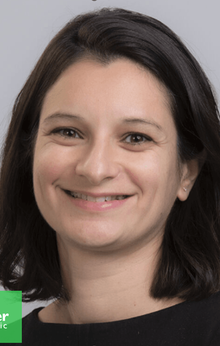
Esther Finidori
Chief Sustainability Officer
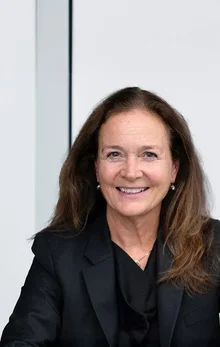
Hilde Tonne
Chair