
MG: Advancing EV Energy with Semi-Solid-State Batteries
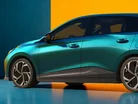
MG Motor (MG) is preparing to introduce semi-solid-state battery technology to its European electric vehicle range, marking a step forward in energy storage performance and efficiency.
Owned by SAIC Motor, MG becomes the first manufacturer to achieve mass production of semi-solid-state batteries. The company plans to deploy the technology in its MG4 EV Urban range by the end of 2026, bringing a new phase of battery development into the European market.
These batteries sit between traditional lithium-ion systems and fully solid-state designs. By partially replacing liquid electrolytes – the medium that carries electrical charge within a battery – with solid materials, semi-solid-state systems aim to improve safety durability and energy performance.
Boosting battery energy performance

MG has named its new system the SolidCore Battery, highlighting its focus on structural and chemical improvements. Solid-state electrolytes within each cell act as a protective barrier, which the company says extends battery lifespan and supports compliance with future regulatory standards.
This design also improves performance in low temperatures, a long-standing challenge for electric vehicles. Batteries typically lose efficiency in colder conditions, reducing range and requiring preheating before operation. MG states that its system enables immediate start-up without preheating, while also supporting improved acceleration under similar conditions.
Kimi Li, Vice President of MG UK and Europe, says: “MG's new SolidCore Battery and Hybrid+ technology provide tangible benefits for our customers and position our vehicles at the forefront of their class.
“These advancements reinforce MG's commitment to making cutting-edge technology and electric mobility more intuitive, accessible and widely available. Our strategy of developing MG vehicles in Europe, for Europe further enhances the desirability, versatility and value that our cars deliver to customers across the European market.”
Alongside the SolidCore Battery, MG is introducing Hybrid+ technology for hybrid vehicles, combining software control systems a larger battery and a three-speed transmission. This reflects a broader focus on managing energy more efficiently across different vehicle types.
The path to solid-state energy systems
Semi-solid-state batteries are widely viewed as a transitional technology, bridging the gap to fully solid-state systems. These future batteries replace liquid electrolytes entirely, reducing fire risk and enabling higher energy density – the amount of energy stored within a given space.
According to the Faraday Institution, combining solid electrolytes with lithium metal electrodes could enable longer driving range faster charging and improved safety. These characteristics are central to the next stage of electric mobility, where energy storage becomes more compact reliable and efficient.
Major manufacturers including Toyota and CATL are already working on fully solid-state batteries, while SAIC Motor is also accelerating its own development. Reports indicate that a dedicated production line for all-solid-state batteries is under construction in Shanghai, signalling further investment in next-generation energy systems.
Europe’s growing demand for electric energy
The introduction of new battery technology comes as Europe’s electric vehicle market continues to expand. European Commission data shows around 298,000 passenger plug-in vehicles are registered in January 2026, marking a 22% increase compared with the same period in 2025.
Battery electric vehicles account for approximately 195,000 of these registrations, underlining the growing demand for efficient and reliable energy storage systems.
MG’s presence in Europe has also grown, with more than one million vehicles sold across 34 countries. The company has established an engineering centre in Germany as part of its “in Europe, for Europe” strategy, supporting local development and adaptation to regional energy and regulatory requirements.
The deployment of semi-solid-state batteries aligns with this expansion, offering a way to improve vehicle efficiency and performance while responding to Europe’s evolving energy landscape.
As battery technology continues to develop, the focus remains on increasing energy density improving safety and ensuring consistent performance across different climates and use cases.
Company portals


Executives

Kimi Li
MG Europe and the UK's Vice Present