
Middle East's Solar & Wind to Grow Tenfold by 2040, DNV Says
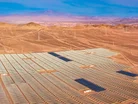
When it comes to energy, the Middle East and North Africa (MENA) is a region most often associated with fossil fuels, thanks mostly to its abundant oil reserves. That may not be the case for too much longer, however.
According to a new report from DNV, MENA is about to enter a period of rapid growth when it comes to renewable energy, with the region's wind and solar capacity expected to increase ten times over by the year 2040.
The report, which is titled The Rise of Renewables in the Gulf Region, predicts that variable renewable capacity in MENA will grow from current levels to generate approximately 85% of the region's electricity by 2060.
Brice Le Gallo, Vice President & Regional Director Asia Pacific Energy Systems at DNV, is an expert on the region. He believes that the dramatic drop in costs of renewable energy are playing a large role in MENA's ongoing story.
"The region’s historical contribution to the global energy system has been driven by oil and gas exports, which have also formed the backbone of domestic consumption," he says.
Before 2020, it was importer countries that were responsible for most new solar and wind installations as they sought to reduce their fossil dependence.
"More recently, the steep decline in costs of solar, wind and battery technologies coupled with abundant resources and ambitious climate targets have driven wealthy fossil exporter nations to accelerate their renewable build-out," explains Brice.
"The same countries are also heavily investing in financing upcoming renewable expansion in neighbouring countries and the wider Middle East."
Is demand for renewable energy is outstripping growth in MENA?
Despite these impressive projections, though, the report suggests that renewable electricity will not actually displace gas-fired power until after 2040.
The reason is quite straightforward. Electricity demand is growing even faster than renewable capacity, driven by space cooling, data centres, electric vehicles and green hydrogen production.
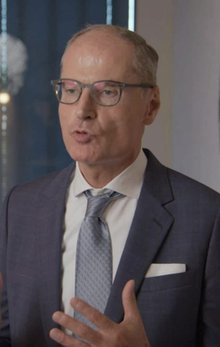
"The rapid rise of renewables in the Gulf, and MENA more broadly, is not replacing hydrocarbons overnight, but it is reshaping the power system," says Ditlev Engel, Energy Systems CEO at DNV.

The report finds that, by 2060, electricity will meet 35% of total energy demand in the region, up from 17% today. Of that electricity, solar will account for about 45% and wind a further 40%.
"GCC countries are building some of the world's largest solar and storage projects while still supplying global oil and gas markets," Ditlev adds.
"This development is driven mainly by economics. Renewables now provide low-cost electricity, and clean power is becoming necessary for competitive industry and future hydrogen production."
The Middle East and North Africa's climate is also particularly conducive to renewable energy generation, with more than 300 sunny days a year and powerful desert winds.
The 2040 tipping point
DNV sees 2040 as the crucial turning point for MENA. Only then will annual growth in renewable electricity exceed annual growth in total electricity demand, marking the genuine start of fossil fuel displacement in the power sector.
Jan Zschommler, who is Market Area Manager for the Middle East & Africa at DNV, sees the shift in stark terms.
"The Gulf is moving from discussion to deployment," he explains. "Utility-scale solar, wind and storage projects are now being built at a pace that changes the regional power mix."
Solar capacity is projected to increase from 76GW in 2024 to 340GW by 2029. By the end of the decade, solar is expected to supply close to one-fifth of all electricity.
Wind power, though starting from a smaller base, is expected to triple in each decade from 2020 to 2060. Combined, solar and wind generation in MENA will increase about fourteen-fold by 2040.
Storage capacity set to soar
As is the case in all other geographies, energy storage will play a decisive role in managing the variability of renewable generation in the Middle East and North Africa. The report projects that storage capacity will soar from about 36 gigawatt-hours today to almost 9,500GWh by 2060.
Batteries will increasingly replace thermal power plants as the main source of short-term flexibility in the grid. The region is also pursuing some of the world's largest solar-plus-storage facilities, including MASDAR's one gigawatt round-the-clock project in Abu Dhabi.
The average size of utility solar projects is increasing dramatically, with 80% of projects due to be completed by the end of the decade larger than one gigawatt, up from 20% at the beginning of the decade.
Despite the renewable build-out, the region faces challenges. New electricity demand is initially coming mostly from buildings and desalination, but from 2040 to 2060 demand growth will be driven by electric vehicles, AI data centres and green hydrogen production.
Space cooling alone will contribute 30% of electricity demand growth to 2035 as temperatures rise and growing GDP broadens access to cooling systems.
Company portals

Executives

Brice Le Gallo
Vice President & Regional Director Asia Pacific Energy Systems at DNV
Ditlev Engel
Energy Systems CEO

Jan Zschommler
Market Area Manager for the Middle East & Africa