
SF₆: How to Phase Out the World’s Most Potent Greenhouse Gas

Carbon dioxide tends to dominate conversations about greenhouse gases.
And while CO₂ accounts for roughly 74% of total emissions, according to the Center for Climate and Energy Solutions, it is by no means the most potent of these gases.
Methane, which is at least 80 times more damaging than carbon dioxide over a 20-year timeframe, is increasingly being addressed by climate action campaigns.
But even the harmful potential of methane is dwarfed by a lesser-known greenhouse gas – sulphur hexafluoride, more commonly referred to as SF₆.
SF₆ has been used in energy grids for decades to insulate electricity and extinguish high-voltage electric arcs, preventing fires and damage to equipment.
The problem? Sulphur hexafluoride is around 23,500 times more damaging to the Earth’s atmosphere than CO₂, according to the World Economic Forum.
The dangers of SF₆
SF₆ has the highest global warming potential (GWP) of any substance known to man.
Matt McGrath, Environmental Correspondent at the BBC, recently contextualised the potency of the gas.
“Just one kilogram of SF₆ warms the Earth to the same extent as 24 people flying London to New York return,” he said.
And while grid operators design their equipment to prevent the emission of the gas, there have been several high-profile SF₆ leaks in recent years, involving the likes of Duke Energy, Solvay, SSE and TotalEnergies.
These incidents have prompted calls SF₆ to be phased out of the energy sector as quickly as possible, with the EU already mandating its discontinuation.
As such, finding a replacement has become a matter of urgency.
Schneider Electric, a global leader in energy technology, is one of the companies developing cleaner alternatives.
Schneider Electric’s SF₆-free offering
Southern California Edison (SCE), one of the US’ largest grid operators, has partnered up with Schneider to install SF₆-free switchgears across a number of its substations.
Schneider's GMAirSeT switchgear replaces SF₆ with clean air and vacuum technology.
The first two deployments are set to take place in 2027, at SCE's Great Lakes substation in the Antelope Valley region of northern Los Angeles County and the Running Springs substation in the San Bernardino Mountains.
The fact that Schneider’s technology can be fitted to existing infrastructure is a key selling point.
The system is designed to be compact and modular, meaning SCE can upgrade substations without needing to tear them down and start again.
While the removal of SF₆ switchgears is primarily about reducing environmental impact, the companies suggest that the technology will be able to double the capacity of the substations.
Shinjini Menon, the SVP of System Planning and Engineering at SCE, sees the initiative as an important part of the modernisation of power grids.
"Our customers and communities are becoming increasingly dependent on electricity," she says.
"Demand continues to grow at an unprecedented pace across our service area, and we are committed to updating our grid architecture so that we can energise customers faster and keep electric bills affordable."
The demand for SF₆-free technology
The context for the partnership is one of rising electricity consumption across SCE's service territory, driven by electrification of transport, buildings and industry.
The pre-assembled, enclosed substation systems Schneider will bring to the project are designed to be installed far more quickly than conventional equipment, which should help SCE to connect new customers to the grid faster.
Ruben Llanes, CEO of Digital Grid and President of North America Power & Grid at Schneider Electric, believes the project could go some way towards solving the energy trilemma – the balance between sustainability, reliability and affordability.
"Utilities shouldn't have to choose between speed, cost and clean energy," he says.
"This enables SCE to bring new capacity online faster, manage project costs and reduce emissions at the same time."

A change among American utilities
SF₆-free switchgears are already being taken up enthusiastically in Europe and parts of Asia, but adoption among US utilities has been comparatively slow.
Projects like Schneider and SCE’s, however, suggest that picture, particularly in states where regulation is tighter and demand is growing.
New York's grid operator, NYISO, projects that electricity demand could increase by between 1,600MW and more than 4,000MW by 2030 – figures that make the case for faster, lower-footprint substation upgrades difficult to ignore.
Michele Hix, VP of Strategic Customers and Segments for Schneider’s North American operations, believes this is an important moment for the American energy landscape.
"California and New York are advancing electrification and grid modernisation, and meeting this moment requires deep collaboration between utilities and technology partners," she says.
If the SCE projects proceed as planned, they are expected to inform a wider rollout of similar substation modernisation approaches across the utility's network over time.
Company portals


Executives
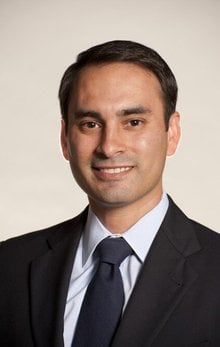
Ruben Llanes
CEO of Digital Grid and President of North America Power & Grid

Shinjini Menon
SVP of System Planning and Engineering at SCE