
The Energy Headlines from London Climate Action Week Day One

A sense of urgency ran through Guildhall this morning as London Climate Action Week began in earnest.
"Climate cooperation in a fragmented world" is the tagline of this year's summit, where a week of dialogue, investment conversations and technology showcases will take place.
As a midsummer event, London Climate Action Week generally falls squarely between COP events. As such, the event provides an annual checkpoint and pulse check for how the world is progressing on decarbonisation.
If any reminder of the effects of climate change were needed, this year’s opening day takes place during London’s second heatwave of the summer, with record temperatures expected throughout the event.
As such, the UK’s energy transition will be a central talking point, especially considering the country is preparing for an imminent change in prime minister.

Energy security and system transformation
Dr Rachel Kyte, the UK Government’s Special Representative for Climate, opened proceedings by setting out the scale of change required in global energy systems.
“We must move away from an energy era based on concentrated resources, production, cartels and geographic choke points, and instead see the greater security and economic opportunities offered by clean energy, offered by renewable energy,” she said.
“Because renewable energy cannot be held hostage and it cannot get stuck in the Strait of Hormuz. This lesson is not new. This is the third energy crisis in a decade," she added.
“But it comes just as the new technologies are revolutionising the efficiency and access of energy for millions around the world. And they are revolutionising our individual relationship to the energy system.
“When you can generate electricity from your own car back up into the grid, it is a profoundly democratising act.
“From solar with storage to wind to geothermal to hyper efficiency. Remember, efficiency is our first fuel.
“Electro technologies have plunged in price and transformed in potential. Embracing this potential is a pathway to energy security.”
Global momentum behind the energy transition
Each year, London Climate Action Week serves as a platform to sustain international momentum on climate action, with energy systems acting as the backbone of that effort.
Rachel highlighted how countries are advancing energy transition strategies through locally tailored approaches, while stressing that developed economies must lead investment, infrastructure and policy alignment.
“We collectively, as a community, we as the United Kingdom government, we as part of the G7, as the G20, are required to respond at [the] pace and scale necessary to confront the true nature of the crisis as it has arrived today," she says.
Crucially, for Rachel, climate action is very much a global effort.
“All of this is our work and all of this needs to be at speed and scale," she explains.
Financing the future energy system
Financing emerged as a defining issue across early sessions, particularly in unlocking private capital for clean energy infrastructure and grid modernisation.
In the session following Rachel's address, Selwin Hart, Assistant Secretary General and Special Advisor to the UN Secretary General on Climate Action and Just Transition, emphasised the structural barriers facing investment.
“The cost of capital is the missing ingredient," he said. Our financial system rewards wealth, rather than opportunity.”
““The cost of capital is the missing ingredient. Our financial system rewards wealth, rather than opportunity.” ”
Rachel also addressed the scale of reform required to align global finance with energy transition needs, particularly for developing economies.
"The challenge of climate change goes far beyond individual countries in partnership," she explained.
"It is a test of our multilateral collaboration and the responsiveness of our global financial architecture, which is in urgent need of speeded reform.
"We must ensure it goes further to meet countries' needs for faster access to finance, especially at a time of crisis.
“It must be able to support them at lower cost and at greater scale. And it must be in support of countries' own priorities."
A week of deals and delivery
Closing her remarks, Rachel urged delegates to focus on delivery, collaboration and tangible progress across the energy transition.
“Don't be daunted by the magnitude of this challenge. Just look around the room, take comfort and strength from the assembled insights and the commitment that everybody here represents.
"It's going to be a long week, a hot week, full of discussions, full of deals, full of determination.
"But I left Climate Week last year feeling that I had rarely been in a place where the right people were talking about the right things in the right place.”
Company portals


Executives
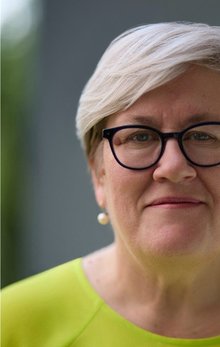
Dr Rachel Kyte
Special Representative for Climate
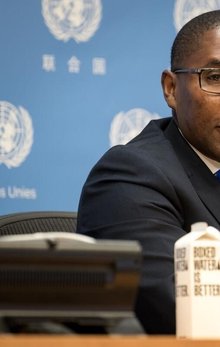
Selwin Hart
Assistant Secretary General and Special Advisor