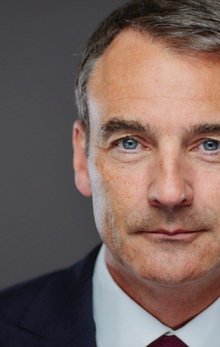
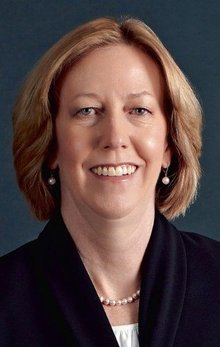
bp: Who is Big Oil's First-Ever Female CEO Meg O'Neill?

Meg O'Neill became the CEO of bp on 1 April, making her the first woman to lead a top-five oil major and the first external hire to run the British company in more than a century.
It is a set of distinctions that would be notable in any circumstances.
For bp, a company that has cycled through four leaders since 2020 and has spent the better part of three years unwinding a renewable energy strategy that damaged shareholder returns, the arrival of an outsider carries particular weight.
In her first message to staff, she made no bones that the path ahead was going to be straightforward.
"Right now, we're operating in an environment of significant complexity: geopolitical tension; conflict; rapid technological change; and shifting global energy demand," she wrote in a memo seen by the Guardian.
It was a candid opening from someone who has walked into what is arguably the most demanding professional role in the global oil industry today.
A career in energy
Meg grew up in Boulder, Colorado, and holds degrees from MIT: a bachelors in both chemical engineering and ocean engineering, as well as a master's in ocean systems management.
She spent 23 years at ExxonMobil in roles that took her across the world. After stints in Houston, New Orleans, Indonesia, Canada and Norway, she eventually left Exxon in 2018 to join Woodside Energy.
At Woodside, she earned a reputation as a bold decision maker, with some news outlets dubbing her "Meg the Merciless".
She made the call to merge the Australian energy producer with the BHP Group's petroleum arm to create a top-10 independent oil and gas company valued at US$40bn.
She doubled Woodside's output in this time and expanded into the US market, most notably through a major LNG project in Louisiana.
Saul Kavonic, Head of Energy Research at MST Marquee, who previously worked at Woodside, said she "made some really bold moves and fundamentally pivoted Woodside's future" and moved the company away from Australia towards North America.
It is that track record of transformation that persuaded bp's board to reach outside its own ranks for the first time in its 117-year history.
What Meg O'Neill inherits at bp
Meg's in-tray will have been overflowing from the first moment she stepped into her office at bp. The scale of the challenge that awaits her is difficult to fathom.
The firm became the first large oil major to suspend its shareholder buyback programme in February, after underlying earnings fell to just below US$7.5bn in 2025, down from almost US$9bn the year before.
Net debt stood at US$22bn at the end of 2025, reduced from US$26bn but still well above the company's target range of US$14bn–US$18bn by end-2027.
Under pressure from activist investor Elliott Management, which revealed it had a 5% stake in bp last year, the company has written down the value of its solar, offshore wind and biogas businesses by more than US$4bn and has committed to divesting US$20bn of assets through 2027.
These renewable assets formed part of what has been described as bp's "green pivot".
The move to sustainability was once heralded by former CEO Bernard Looney as a defining shift towards becoming an "integrated energy company", though, despite its best intentions, it is now regarded as the reason for the company's travails.
Meg's predecessor, Murray Auchincloss, spent his 22 months in at the helm trying to reverse it. He did not survive long enough to see the job through.
'Clear direction and consistency'
Meg's tone in her opening message to staff was measured, signalling continuity rather than a sharp break with recent direction.
"I'm committed to providing clear direction and consistency so we can move forward together with confidence," she told staff.
She acknowledged that the company had been through "significant change and that can be tough" – something that some analysts have described as a pointed reference to a period that included the exit of two chief executives and chair Helge Lund, who had overseen the company's efforts to diversify.
Progress had been made on near-term targets to 2027, she said, but added that "there's always more to do".
Her stated ambition for the company was characteristically direct: she wants to make bp "simpler, stronger and more valuable".

Dealing with the emerging fuel crisis
The arrival of Meg O'Neill has been accompanied by a shift in the stock market.
The company's share price has climbed to an almost 16-year high as the Iran war entered its fifth week, with Brent crude briefly touching close to US$119 a barrel on Tuesday before tumbling below US$100 on Wednesday on renewed optimism over a potential end to US military action.
Analysts at HSBC estimate that around 10% of bp's oil and LNG output has been affected by the conflict but note that higher prices more than offset the disruption, raising their 2026 earnings per share forecast by 63% and their cash flow per share estimate by 18%.
It is a fortunate windfall for a new chief executive, but one that should not obscure the structural challenges that remain.
Meg has a US$22bn debt pile to reduce, a divestment programme to execute and a workforce that has watched three leaders come and go in five years.
Chair Albert Manifold, who has pushed hard for bp to move faster on shareholder value since taking over last year, described Meg as "the right leader" to pursue "significant strategic and financial opportunities".
Whether that confidence is borne out will depend less on the oil price and more on whether bp's new leader can bring the operational discipline and speed of execution that she demonstrated in Perth to a far larger and more complex organisation in London.
Company portals


Executives
Bernard Looney
CEO
Meg O'Neill
CEO
Murray Auchincloss
Chief Executive Officer