Siemens and BASF: A World-First Green Hydrogen Project
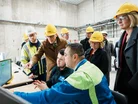
BASF has commissioned a 54MW water electrolyser at its Ludwigshafen site, that will become Germany's largest proton exchange membrane (PEM) electrolyser.
This advanced facility, built over around two years, has the capability to produce one tonne of CO₂-free hydrogen every hour, culminating in an impressive annual capacity of 8,000 tonnes.
In a collaborative effort with Siemens Energy, the system features 72 stacks where electrolysis occurs, seamlessly integrated into the site's existing production and infrastructure systems.
This marks a notable first in the world for integrating hydrogen production technology within a chemical manufacturing setting.
“This water electrolysis plant is not only the largest of its kind in Germany, but it also ranks among the top ten worldwide,” says Stephan Kothrade, Member of the Board of Executive Directors and CTO of BASF SE.
“We can produce up to 8,000 tons per year, and this is achieved without fossil feedstocks, using only water and electricity from renewable sources.”
Funding and investment for the project
The project benefitted from considerable governmental backing through the IPCEI Hydrogen initiative, with a funding allocation up to US$134.6m.
Specifically, the Rhineland-Palatinate state government contributed approximately US$40.4m while BASF directly invested approximately US$27.1m.

"I am delighted that the federal government's efforts to support the hydrogen economy in Germany are bearing fruit," says Udo Philipp, State Secretary at the Federal Ministry for Economic Affairs and Climate Action.
"A flagship project for the integration of hydrogen into a chemical production site has become a reality at the Ludwigshafen site.“It is the largest project of its kind in Germany to date, making it an important pioneer as we strive to achieve our climate targets."
Environmental Benefits
The newly-commissioned electrolyser is set to reduce greenhouse gas emissions at BASF's principal plant by as much as 72,000 tonnes annually, substituting traditionally derived hydrogen with its emission-free counterpart.
“All this in a chemical industry that is currently the third-largest source of industrial CO₂ emissions worldwide,” says Anne-Laure de Chammard, Member of the Executive Board at Siemens Energy.“That is why projects like this mark a real turning point.”
BASF is transitioning away from natural gas-based steam reforming methods previously used at its site.
The hydrogen produced will be integrated into the site's hydrogen network, serving various production facilities as a vital raw material for manufacturing essential products like ammonia, methanol and vitamins.
"The commissioning of the electrolyser makes it possible for us to support our customers in achieving their climate targets by offering them products with a lower carbon footprint," explains Katja Scharpwinkel, member of BASF SE's Board of Executive Directors and Site Director Ludwigshafen.
The regional impact
Looking beyond direct site utility, BASF intends to supply hydrogen for mobility solutions within the Rhine-Neckar Metropolitan Region, contributing to the broader development of a robust hydrogen economy.
This strategic move aligns well with Rhineland-Palatinate's climate protection goals and industrial transformation strategy.
"The commissioning of the electrolyser at BASF for the production of green hydrogen is a milestone for the ramp-up of the hydrogen economy in Rhineland-Palatinate, Germany and Europe and an important commitment of BASF to its technology and production site in Ludwigshafen," says Alexander Schweitzer, Minister-President of Rhineland-Palatinate.
Named Hy4CHem, this initiative exemplifies a practical approach to industrial decarbonisation that effectively balances climate objectives with economic competitiveness.
As one of the initial large-scale implementations of green hydrogen technology in chemical manufacturing, it furnishes operational insights that could facilitate similar transitions in other industrial domains.
“This is another important step towards CO₂-free hydrogen production and allows us to fulfil our promise of enabling the green transformation for our customers,” Stephan says.
Explore the latest edition of Energy Digital Magazine and be part of the conversation at our global conference series, Sustainability LIVE.
Discover all our upcoming events and secure your tickets today.
Energy Digital is a BizClik brand