Top 10: Companies Leading the Energy Transition
The world is in the middle of a new industrial revolution.
Fossil fuels, which powered the global growth of the 20th century, are giving way to a new generation of clean, green technologies.
Whether it's solar panels, wind turbines or long-duration batteries, the scale of the transformation is staggering.
According to Bloomberg, global investment in the energy transition reached a record US$2.3tn in 2025, even as political headwinds and economic instability threatened to curtail progress.
While the climate action movement started as an existential, scientific imperative, it has fast become an economic imperative too.
In today's economy, you will find entrepreneurs, engineers and executives that have staked their careers – and billions of dollars of capital – on the conviction that clean energy is not just better for the planet, but better for business.
In this week's Top 10, Energy Digital shines a light on some of the most influential, innovative and successful companies working at the heart of the energy transition.
10. Vestas
Founded: 1945
Based in: Aarhus, Denmark
CEO: Henrik Andersen

Vestas, born in a West Jutland blacksmith shop shortly after the Second World War, pivoted to wind turbines in the 1970s and never looked back.
Today it operates across more than 80 countries, has installed more than 100GW of wind capacity worldwide and manufactures some of the most advanced offshore turbines on the planet.
Its latest offshore design can produce 15MW from a single machine – enough to power thousands of homes from a single slow rotation of its blades.
9. Schneider Electric
Founded: 1836
Based in: Paris, France
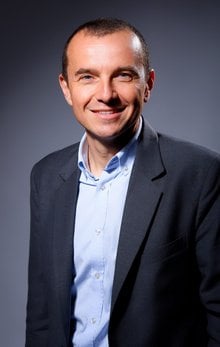
CEO: Olivier Blum

Schneider Electric is one of the kingpins of climate technology, and of the global energy transition more broadly.
The French group's offerings straddle hardware and software, wiring intelligence into everything from office towers and factories to data centres and grids.
Its platforms allow its customers to see – and then slash – their energy use and emissions in real time, while its hardware enables everything from rooftop solar arrays to EV charging stations.
In 2026, Schneider is less a component supplier and more a partner for those companies chasing net zero.
8. Sungrow
Founded: 1997
Based in: Hefei, Anhui, China
CEO: Cao Renxian

Every solar panel needs an inverter to convert the direct current it produces into the alternating current the grid requires, and Sungrow makes more of them than any company on the planet.
The China-based firm ships to more than 170 countries around the world and has had a hand in deploying hundreds of gigawatts of power conversion tech across the globe.
In the architecture of the energy transition, Sungrow is structural.
7. First Solar
Founded: 1999
Based in: Tempe, Arizona, USA
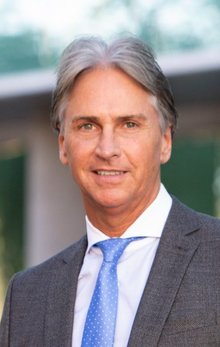
CEO: Mark Widmar
In a solar industry dominated by Chinese manufacturers, First Solar stands almost entirely alone as the sole US-headquartered company among the world's largest module makers.
Its solar panels require just 1-2% of the semiconductor material used by conventional silicon modules, delivering a dramatically smaller environmental footprint.
With more than 14GW of annual domestic manufacturing capacity as of 2025, First Solar has become a cornerstone of the US solar market.
6. NextEra Energy
Founded: 1925 (as Florida Power and Light)
Based in: Juno Beach, Florida, USA
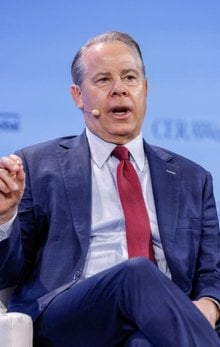
CEO: John Ketchum

NextEra Energy now produces more wind and solar energy than any company in the world, with more than 76GW of renewable capacity across North America.
It is also a growing force in grid-scale battery storage, and has announced a landmark partnership with Google to develop 15GW of new generation capacity to supply data centre campuses by 2035.
Chairman and CEO John Ketchum has called the current era NextEra's greatest opportunity in its entire history – and it is hard to argue.
5. Ørsted
Founded: 1972 (as Dansk Naturgas)
Based in: Fredericia, Denmark
CEO: Rasmus Errboe

If the energy transition is a story of reinvention, then no company embodies it better than Ørsted.
Founded in 1972 as a state-owned oil and gas firm, it spent decades extracting hydrocarbons from the North Sea before making one of the most dramatic corporate pivots in industrial history.
Following the success of its ground-breaking wind project Vindeby in 1991 – the first offshore wind farm in the world – it began investing heavily in renewables.
By 2009, Ørsted has exited oil and gas entirely, selling its fossil fuel assets and throwing the lion's share of its capital behind offshore wind.
By 2025 it had achieved a 98% reduction in its operational emissions and a 99% renewable energy share, becoming the first major energy company in the world to fully complete its own green transformation.
4. Form Energy
Founded: 2017
Based in: Somerville, Massachusetts, USA
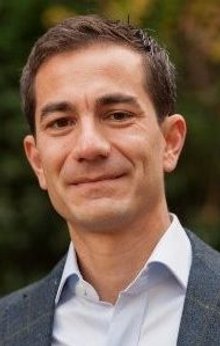
CEO: Mateo Jaramillo

The single greatest obstacle to a fully renewable grid is intermittency – dealing with demand when the sun sets and the wind drops. Lithium-ion batteries can bridge a few hours, but Form Energy is building something very different.
The firm's iron-air batteries are capable of discharging electricity for 100 straight hours, using nothing more than iron, water and air – three abundant resources.
By October 2025, the company had contracted more than 200MW of capacity. Its factory in West Virginia built on the footprint of a former steel mill, is now in commercial production.
3. Climeworks
Founded: 2009
Based in: Zurich, Switzerland
Co-CEOs: Jan Wurzbacher and Christoph Gebald

Climeworks, founded by two Swiss engineers who built their first prototype in a university laboratory, is a company that has spent 15 years turning looking for a solution to the carbon capture question.
Its Mammoth plant in Iceland captures CO₂ directly from ambient air and stores it permanently underground by mineralising it into basaltic rock.
Its technology has piqued the interest of some of the world's largest companies, including British Airways, Morgan Stanley and TikTok, all of whom have signed substantial removal contracts.
Recently, Climeworks surpassed US$1bn in total equity funding, and a newly unveiled third-generation design promises to halve both costs and energy consumption per tonne removed.
2. GE Vernova
Founded: 2024 (spun off from General Electric)
Based in: Cambridge, Massachusetts, USA
CEO: Scott Strazik

Carrying the world's largest installed base of wind turbines, a growing portfolio of grid modernisation software and a multi-billion-dollar annual research programme, GE Vernova is uniquely positioned at the crossroads of renewable generation and distribution.
Its GridOS software is already embedded in utilities across the globe, orchestrating the increasingly complex balance of supply and demand on networks that were never designed for this moment.
When CEO Scott Strazik calls the current period an electricity investment "supercycle", the order books tend to agree with him: by the third quarter of 2025, the firm had grown its total equipment and services backlog by US$16bn in a single year.
1. Commonwealth Fusion Systems
Founded: 2018
Based in: Devens, Massachusetts, USA
CEO: Bob Mumgaard

While it has yet to realise its full ambition, Commonwealth Fusion Systems' is a company with genuinely world-changing potential.
Its fusion energy technology, when fully matured, could theoretically produce limitless low-carbon energy.
In 2025 alone the company raised US$863m in a Series B2 funding round, bringing its total capital raised close to US$3bn and representing roughly one third of all private investment in fusion worldwide.
Google has signed a first-of-its-kind direct power purchase agreement for 200MW from CFS's first commercial plant, named ARC, planned for Virginia in the early 2030s.
Then, in May 2026, CFS became the first fusion developer in history to enter a major US grid operator's interconnection queue. It was a significant moment for this kind of nuclear energy, moving it out of the lab and further into the mainstream.
Company portals





Executives
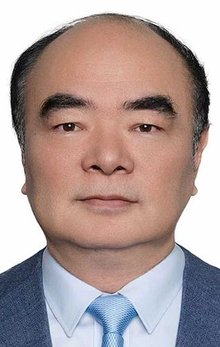
Cao Renxian
CEO

Christoph Gebald
CEO & Co-Founder
Henrik Andersen
President & CEO

Jan Wurzbacher
CEO and Founder
John Ketchum
CEO
Mark Widmar
CEO
Mateo Jaramillo
CEO
Olivier Blum
Chief Executive Officer
Rasmus Errboe
CEO and Group President
Scott Strazik
Chief Executive Officer