Top 10: Energy Management Platforms
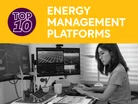
Energy underpins nearly every aspect of modern life, and demand for it is growing.
A lack of visibility, unreliable data collection and unnecessary energy waste are all making this growth a challenge.
Energy management platforms can help, offering automation, visibility and a central point for data.
With energy demand expected to grow as much as 18% by 2050 according to McKinsey research, it is time for businesses to get on top of where their energy is going.
Energy Digital has ranked 10 of the top energy management platforms.
10. GridPoint
Company: GridPoint Inc.
CEO: Derek Booth
Headquarters: Virginia, US
Launched: 2003
Founded in 2003, GridPoint is an energy management platform designed to optimise energy use in commercial buildings.
It leverages advanced analytics, real-time monitoring and automated controls to help businesses reduce energy consumption.
GridPoint’s system allows for granular energy metering, asset level monitoring, automated scheduling and demand response.
Derek Booth, CEO at GridPoint, says: “This is an exciting time in the company’s history.
“We are committed to advancing GridPoint’s vision as a leading technology company that generates value for commercial buildings and electric utilities at the edge of the grid.
“We are executing our growth plan by focusing on expanding our platform capabilities and providing world-class customer service.”
9. EnergyHub
Company: EnergyHub
President: Seth Frader-Thompson
Headquarters: New York, US
Launched: 2007
EnergyHub has advanced from a marketing agency for residential solar to a leading provider of DERMS.
It enables utilities to effectively manage customer-owned DERs at scale, such as batteries, thermostats, EVs and VPPs.
EnergyHub has partnerships across industries, including with GM Energy, a business unit of General Motors, to expand access to utility grid programmes for EVs and home energy storage.
“Our partnership with GM is a significant step forward in expanding the reach and impact of our utility clients’ EV and stationary storage programmes,” said Jeff Huron, Senior Manager, EV Strategy and Business Development at EnergyHub.
“Direct integrations with automakers like GM allow us to create the best possible experience for customers while ensuring utilities are prepared for the increasing demand from electric vehicles and distributed energy resources.”
8. SAP Cloud for Energy
Company: SAP
CEO: Christian Klein
Headquarters: Walldorf, Germany
Launched: 2018

This cloud-native energy data management platform was developed by SAP to address the digital transformation needs of the energy and utilities sector.
It seamlessly integrates with other SAP programmes, SAP S/4HANA Utilities and SAP Subscription Billing, to support both energy and water data on an open platform.
SAP Cloud for Energy centralises and automates the collection, validation and analysis of metering data, enabling utilities and large energy consumers to enhance operational efficiency and decision making.
Some of its key features include automated data validation, anomaly detection, device master synchronisation and embedded analytics for real-time insights.
7. Panoramic Power
Company: Centrica
CEO: Chris O’Shea
Headquarters: Berkshire, England
Launched: 2009
Panoramic Power began as an innovative response to the growing need for granular energy intelligence in both commercial and industrial environments.
The platform leverages self-powered wireless sensors that clamp on to electrical circuits without disruption.
This solution has been installed in more than 800 sites across 30 countries, and clients like The North Face and Orange Business have achieved significant savings using it.
“To be able to improve our performance, we need to have detailed knowledge of our energy consumption,” said Marco Bastucci, Green Act Programme Director at Orange Business.
“We now have the highest visibility on power usage. We reduced the consumption of three of our data centres by 10% and we decided to scale up the deployment of Panoramic Power.”
6. Microsoft Sustainability Manager
Company: Microsoft
CEO: Satya Nadella
Headquarters: Washington, US
Launched: 2022

Originating from Microsoft’s broader Cloud for Sustainability initiative, Microsoft Sustainability Manager leverages the Microsoft Power Platform, Azure and a dedicated energy data model to centralise and automate the collection, integration and reporting of environmental metrics.
These include energy usage, emissions, water and waste.
The platform’s core capabilities include real-time dashboards, automated data integration from diverse sources and streamlined reporting aligned with global ESG standards.
The platform has been widely adopted by global enterprises including PwC, Mitsubishi Electric and World Wide Technology.
“One of the reasons Microsoft Sustainability Manager stood out was its accessibility and letting you customise the product to fit your needs,” said Aneesh Kale, Manager, Global ESG and Sustainability at World Wide Technology.
“Scope 3 data is acquired through numerous suppliers, each of which has its own format. Microsoft Sustainability Manager helps you create and store data in separate formats, and that is a massive plus.”
5. IBM Envizi
Company: IBM
CEO: Arvind Krishna
Headquarters: New York, US
Launched: 2004
IBM Envizi is a leading energy and ESG management platform.
Originally developed in Australia as a smart meter data collusion, the solution evolved into a comprehensive tool before being acquired by IBM in 2022.
It now leverages IBM’s AI analytics capabilities to help organisations collect, monitor, analyse and report on energy consumption among other factors like greenhouse gas emissions.
Envizi centralises data from sources like utility bills, IoT sensors and renewable energy assets.
This allows for real-time insights and automated, audit-ready reporting.
“As part of IBM, we feel more confident than ever that we can achieve our goal of providing clients and partners with the world class tools they need to reduce their operational impacts and optimise for the low carbon future,” said David Solsky, CEO and Co-Founder of Envizi.
4. Honeywell Forge
Company: Honeywell
CEO: Vimal Kapur
Headquarters: North Carolina, US
Launched: 2019
Honeywell Forge is the company’s flagship IoT-based energy management platform designed to help organisations monitor, control and optimise building performance, energy consumption and carbon emissions.
The platform’s key benefits include real-time visibility into energy use, automated utility data analysis and advanced controls for HVAC and other building systems.
It supports both manual and autonomous adjustments to reduce energy costs, cut carbon emissions and improve indoor air quality without sacrificing occupant comfort.
Honeywell Forge is also system-agnostic and scalable, making it suitable across both single buildings or global portfolios.
The platform’s Optimise package lets users leverage AI to continuously balance energy efficiency and occupant wellbeing.
3. Metasys
Company: Johnson Controls
CEO: George Oliver
Headquarters: Wisconsin, US
Launched: 1990

Johnson Controls launched the Metasys energy management platform in 1990, setting the standard for buildings of the future.
This building automation system links a building’s environmental control, energy management, lighting, fire management and security systems.
Promoting openness and integrating third-party components, Metasys quickly became the standard for automating facilities management.
By the end of the decade, Metasys systems could be found in high-profile buildings like the Pentagon, the Kremlin and Beijing’s new international airport.
The company says: “The Metasys building automation system is the foundation of modern facility management – delivering industry-leading capabilities with bottom-line benefits.”
Metasys is widely adopted, with more than 10,000 systems operating globally in iconic buildings including the Empire State Building.
It is scaleable, interoperable and allows for remote access, making it a solid choice for businesses seeking operational savings, energy efficiency and future-ready digital infrastructure.
2. EcoStruxure
Company: Schneider Electric
CEO: Olivier Blum
Headquarters: Paris, France
Launched: 2007
Schneider Electric’s EcoStruxure is an energy management platform launched to bridge operational technology and information technology for smarter, more sustainable buildings and industries.
Built on an open, IoT-enabled architecture, EcoStruxure connects everything from sensors to the cloud, collecting and analysing real-time data to deliver actionable insights and optimise energy use.
Its Energy Hub, a cloud-based SaaS solution, can empower facility managers to comply with evolving energy codes, benchmark performance and achieve up to 30% energy savings.
EcoStruxure Energy Hub can connect not just Schneider Electric devices but also third-party equipment, including energy and power meters, smart breakers, environmental sensors and water or gas metres.
EcoStruxure is used globally across sectors including commercial real estate, industry and mining.
In 2024, Schneider Electric launched model based, automatic sustainability reporting within EcoStruxure IT, its data centre infrastructure management software.
“At Schneider Electric, we recognise that sustainability is a journey, and for the last three years, we’ve increased our investment to develop new software features that make it faster and simpler for our customers to operate resilient, secure and sustainable IT infrastructure,” said Kevin Brown, Senior Vice President of EcoStruxure IT, Schneider Electric.
“The new reporting capabilities included with EcoStruxure IT have been tested and adopted by our own organisation, and will allow customers to turn complex data into meaningful information, and report on key sustainability metrics.”
1. SIMATIC Energy Manager
Company: Siemens
CEO: Roland Busch
Headquarters: Munich, Germany
Launched: 2019
Siemens’ SIMATIC Energy Manager is designed to deliver industrial-grade transparency, efficiency and compliance for energy intensive operations.
It collects, analyses and visualises energy consumption data from machines, production lines and entire facilities both locally or globally.
The system integrates seamlessly with Siemens’ automation hardware and third-party devices, ensuring a comprehensive, vendor-neutral view of energy flows.
SIMATIC Energy Manager is cloud-ready, with integration into Siemens’ MindSphere and Insights Hub for advanced IoT analytics and global asset management.
Its widget-based dashboards allow for granular, asset-level analysis, supporting both operational and strategic decision-making.
Siemens’ Fürth location in Germany was honoured by the World Economic Forum for its sustainable manufacturing, using its own technology to cut energy consumption by 64%.
SIMATIC Energy Manager Pro is one of the pieces of software used to achieve these impressive savings and sustainability gains.
“The Sustainability Lighthouse Award recognises the outstanding work of our team in Fürth,” said Cedrik Neike, Member of the Managing Board of Siemens AG and CEO of Digital Industries.
“By implementing our intelligent energy system, we reduced energy consumption by 64% and cut greenhouse gas emissions by 72% per throughput, on top we increased production by 145%.
“In this way, we’ve demonstrated that sustainability and productivity can go hand in hand.
“The innovation does more than just benefit our own operations; we also use it to offer our customers profitable, ecofriendly solutions.
“This latest award from the WEF Lighthouse Network adds to the recognition already received by our Amberg and Erlangen sites in Germany and our site in Chengdu, China. It also underscores Siemens’ leadership in sustainable manufacturing.”
Explore the latest edition of Energy Digital Magazine and be part of the conversation at our global conference series, Sustainability LIVE.
Discover all our upcoming events and secure your tickets today.
Energy Digital is a BizClik brand