
Intuit, Meta & Siemens: This Week's Top Five Energy Stories
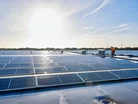
1. Intuit Powers Clean Energy Future with Solar Fund Initiative
Financial services provider Intuit supports solar programmes in underserved areas while targeting net zero emissions and renewable energy in its operations
Financial services provider Intuit serves approximately 100 million customers across eight countries globally.
The company's vision centres on powering prosperity worldwide, a mission that extends beyond financial success to encompass planetary health and workforce sustainability.
Intuit's sustainability strategy includes multiple partnerships and programmes designed to create measurable environmental impact whilst supporting underserved communities.

The Coalfield Solar Fund represents one initiative, launched in 2023 alongside partners Secure Solar Futures and The Need Project.
This multi-year incentive grant programme enables schools throughout Virginia and West Virginia to install solar panel systems without requiring upfront capital investment.
Beyond infrastructure, the programme incorporates workforce development components that prepare students for careers in emerging industries.
Through solar apprenticeships, practical training and direct engagement with clean energy, solar and STEM sectors, the initiative creates local workforce development pathways.
2. SAF, Gas & Renewables: Berkshire Hathaway's ESG Impact
Berkshire Hathaway has been ranked 53rd in the Top 250 World’s Most Sustainable Companies 2025 for its subsidiaries' environmental commitments
Berkshire Hathaway operates as a multinational conglomerate overseeing a portfolio comprising 23 subsidiary businesses.
Its companies, such as Fruit of the Loom and NetJets, maintain their own environmental objectives designed to minimise the ecological footprint of the collective enterprise.
The operations of Berkshire Hathaway Energy encompass generating, transmitting, storing, distributing and supplying power through its network of subsidiaries.
Power generation occurs through multiple sources, spanning natural gas, steam, hydroelectric, coal, wind, solar, geothermal and nuclear energy.
The company is pursuing net zero greenhouse gas emissions whilst endeavouring to maintain affordable pricing for consumers.
Berkshire Hathaway Energy has committed to expanding renewable energy utilisation and enhancing transmission infrastructure through the exploration of innovative technologies.
Investment in renewable energy generation has reached US$34bn, with the objective of adhering to energy regulations.
Patrick Reiten, Senior Vice President of Public Policy at Berkshire Hathaway Energy, says: "Technology-neutral energy incentives directly contribute to lower energy costs for our customers and job creation in the states we serve.
3. Siemens: How Industrial AI Drives Sustainability in Energy
Siemens’ report reveals how AI is delivering energy savings and carbon reductions as organisations aim for net zero targets
AI and sustainability have become two of the most powerful drivers, challenges and imperatives for industries across the globe. As expectations and urgency grow on both fronts, innovators are discovering ways not only to bring them closer together, but to make them accelerate one another.
With 74% of organisations targeting net zero by 2040, AI is fast becoming core infrastructure for tackling decarbonisation at the necessary speed and scale.
Addressing this dual challenge and opportunity, Siemens has released a report, From Pilots to Performance: How Industrial AI is Helping to Scale Sustainability Impact, produced in partnership with Reuters Events. The study covers 263 senior sustainability leaders, conducted in the third quarter of 2025.
The report reveals that almost two-thirds of organisations have moved past proof-of-concept into live industrial AI deployments focused on sustainability.
Some 63% have advanced to targeted use, moderate adoption or broad rollout across operations and product development. This growing maturity is now translating into tangible environmental impact.
Nearly two-thirds of organisations report energy savings averaging 23%, while 59% say they have cut carbon dioxide emissions by an average of 24%.
These results represent strong year-on-year gains compared with 2024, when 41% reported energy savings and 36% reported CO₂ reductions.
4. How Meta is Powering AI & Data Centres with Renewable Energy
Social media giant Meta is adding 15 GW of renewable energy to global grids as it works to reduce emissions across its data centre operations
Meta is a world-leading social technology company, known for developing social media apps and technologies including Facebook, Instagram and WhatsApp.
As artificial intelligence and data centres become increasingly vital to its strategy, the company is working on solutions to address the significant energy demands these technologies require.
The International Energy Agency estimates that data centres used approximately 1.5% of global power consumption in 2024, highlighting the scale of energy consumption in the tech sector.
As one of the world's largest technology companies, Meta has worked on improving its environmental footprint through strategic energy initiatives.
The core sustainability strategy is driven by its target of achieving net zero emissions across its value chain by 2030.
The company's goal is to reduce its Scope 1 and 2 emissions by 42% by 2031 from its 2021 baseline, as well as not exceeding its baseline Scope 3 emissions by the end of 2031.
As of 2024, wind and solar projects supported by Meta are adding more than 15GW of clean and renewable energy to global energy grids.
5. Iron-Air Batteries: Transforming Renewable Energy Storage
As renewable energy demands long-duration storage solutions, iron-air batteries are emerging as a cost-effective alternative to lithium-ion technology
According to Mark Loveridge, Commercial Director of Renewable Exchange, the most exciting clean technology innovation of 2025 could be rust.
Professionals like Mark are becoming increasingly interested in how rust could contribute to climate change mitigation.
The challenge facing current renewable energy systems is that, unlike fossil fuels, renewable sources such as solar and wind are challenging to store in the volumes required.
This could mean that during periods when the sun isn't shining and the wind isn't blowing, energy supplies become limited.
For decades, lithium-ion cells have dominated the energy storage discussion, powering devices ranging from mobile phones to electric vehicles.
However, as 2025 nears its end, a chemically different alternative has progressed from laboratory research to electrical grid implementation.