
Rosebank & Jackdaw: Why North Sea Oil & Gas is Controversial
Andy Burnham had not even settled into 10 Downing Street before the North Sea threatened to become his first political headache.
On Saturday 18 July, the BBC reported that the incoming Prime Minister was preparing to announce new oil and gas drilling plans upon taking office, fuelling speculation that the Labour Party was about to abandon its manifesto pledge on exploration licences.
By Sunday, Deputy Leader Lucy Powell had shut that story down.
“Andy has been clear he stands by the policies in our manifesto in relation to that,” she told the BBC.
While the issue was seemingly squashed, the reaction from trade unions, energy companies and environmentalists had been intense, with arguments over energy security, carbon emissions and utility bills all swirling.
So, why exactly is drilling in the North Sea such a cause célèbre in the UK? Energy Digital looks into the issue.
The details of Rosebank and Jackdaw
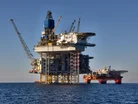
While there are around 300 offshore oil and gas fields around the UK, this episode has focused on just two: Rosebank and Jackdaw.
Rosebank is an oil field west of the Shetland Islands, while Jackdaw is a gas field off the Aberdeenshire coast.
There is little to distinguish them from the hundreds of sites in the North Sea, but in recent years they have become shorthand for the wider debate over the UK’s fossil fuel future.
Both were granted development approval by regulators in 2022 and 2023 under the last Conservative government, only for that approval to be overturned in 2025 following a legal challenge on environmental grounds.
Crucially, neither project requires a new exploration licence, since both were licensed years ago purely to search for reserves.
What is still outstanding is production consent, the separate regulatory sign-off needed before companies can actually extract and sell what they find.
Activists believe that allowing energy companies to drill in these sites would symbolise a capitulation of the country’s climate goals, returning to oil and gas at a time when decarbonisation has never been more urgent.
Why the sites divide opinion
The politics around Rosebank and Jackdaw are complicated.
Ed Miliband, who until this week was the UK’s Energy Secretary, previously described the Rosebank licence as “climate vandalism”, a phrase that continues to shape how the projects are read within Labour's own ranks.
Nevertheless, 2026 has seen the UK experience its second energy squeeze in four years as a result of the conflict in the Middle East, which has left some politicians and commentators suggesting that North Sea drilling could help to lower energy bills and boost the country’s energy security and sovereignty.
Kemi Badenoch, Leader of the Conservative Party, for instance, said recently she planned to “get Britain drilling”.
It is not totally clear whether new exploration in the North Sea would actually lower energy costs, however.
Green Party MP Adrian Ramsay has called any move to unlock new drilling “the wrong response”, arguing it “will do nothing to bring down bills”.
Labour backbencher Rachael Maskell has struck a similar note, saying amid this summer's heatwaves it was more important than ever to “follow the climate science because we have got a climate emergency”.
Some industry figures see things differently. Enrique Cornejo, Policy Director at Offshore Energies UK, argued that “the incoming prime minister needs to deliver a genuine change in policy” and must “back North Sea oil and gas over imports”.
Would drilling actually reduce the UK’s energy bills?
The central question, and the one Lucy Powell's intervention was really addressing, is whether producing more oil and gas from the North Sea would meaningfully lower household bills or improve energy security.
Gas and oil are sold on international markets, so barrels and cubic metres extracted from Aberdeen do not automatically translate into cheaper domestic prices, a point erstwhile Prime Minister Keir Starmer made repeatedly while resisting pressure to expand licensing.
Gary Smith, the General Secretary of the GMB Union, took the opposite view, warning that reliance on imported energy carries its own costs and calling the existing moratorium “reckless and damaging”.
Polling by Opinium found 71% of respondents supported domestic oil and gas production, with 49% backing an end to the exploration ban against 24% opposed, figures the industry will doubtless cite as it lobbies for a softer line.
Environmental campaigners remain unmoved, though.
Tessa Khan, the Executive Director of Uplift, warned it would be “a terrible look if the first thing Andy Burnham does is cave to the demands of oil and gas profiteers”.

What happens next
Rather than a wholesale policy reversal, Lucy Powell described the shift as “a change of emphasis” rather than substance, pointing instead to greater use of tiebacks, a technique allowing operators to connect new wells into existing infrastructure without a fresh licence.
That approach would allow the new Prime Minister to show his support for domestic production while staying within his manifesto commitments.
Final decisions on Rosebank and Jackdaw will ultimately rest with the courts and the new Energy Secretary, Miatta Fahnbulleh, rather than Andy Burnham personally, given the ongoing judicial process.
What is clear is that the North Sea has become an early test of how the new PM balances climate commitments against a cost of living crisis sharpened by the US-Iran conflict.
Company portals




Executives

Enrique Cornejo
Head of Energy Policy

Tessa Khan
Executive Director