
What Does Court Ruling Mean for Shell and Prized Oilfields?
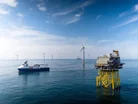
On 30 January, the Court of Session in Edinburgh ruled consent for two new oil and gas fields in the North Sea — Jackdaw and Rosebank — was granted unlawfully.
This means the owners of the sites — Shell and Equinor and Ithaca — must obtain new consent from the UK government before drilling at the facilities can begin.
But how has this all come about?
Legal challenges brought by environmental groups against their approvals thrust the oil fields and their owners into a court battle about their legitimacy.
The key reasons for the challenges are:
- Insufficient environmental impact assessment: The UK government failed to properly consider the full impact of emissions, particularly Scope 3 emissions, from burning the extracted oil and gas and not just the impact of extracting the oil
- Unlawful approval process: The UK government admitted that the previous Secretary of State’s decisions to agree to the grant of consent for Jackdaw and Rosebank projects were unlawful
- Potential environmental damage: Campaigners, including Greenpeace and Uplift, argue that the developments could harm marine protected areas in the North Sea
- Lack of transparency: Environmental groups claim there was a failure by the regulator to be transparent in its reasoning for approving the schemes
- Climate concerns: Activists say that these projects are incompatible with the UK’s climate obligations and will exacerbate global climate issues.
Greenpeace launched legal challenges against both projects alongside Uplift.
“Jackdaw and Rosebank were both approved under the false claim that they are compatible with the UK’s legally binding climate commitments,” the body says.
“This is not true — regulators approved them without taking into account the emissions caused from burning the fossil fuels. Which is where the vast amount of emissions are produced.”
Shell’s Jackdaw project
Jackdaw is a platform being built by Shell to extract gas in the North Sea that can then be brought ashore to Scotland.
The Jackdaw field is 250km east of the Scottish city of Aberdeen and is expected to produce enough fuel to heat 1.4 million UK homes — equal to around 6% of projected UK North Sea gas production.
- January 2020: Shell submits an Environmental Statement for the Jackdaw Field Development to the UK government’s Department for Business, Energy & Industrial Strategy (BEIS)
- June 2022: Regulator North Sea Transition Authority (NSTA) gives consent for Shell UK to develop the Jackdaw project. The Offshore Petroleum Regulator for Environment & Decommissioning (OPRED) had previously agreed to the grant of consent for the Jackdaw project following an assessment of the environmental impacts of the project as part of this consent process.
- Independent campaigning network Greenpeace asked the Scottish Court to review NSTA’s grant of consent and OPRED’s agreement to the grant of consent. Greenpeace says the planning application should consider not only the emissions from the platform’s operations, but also the emissions when the gas is used by customers.
- January 2025: Today’s decision means work can continue while a fresh consent process is carried out for Jackdaw.
Shell says that, without investing in and building oil and gas infrastructure in UK waters, the country could be forced to import 80% of its gas by 2030.
The Rosebank Project

Despite differing views around the part oil and gas fields play in the UK’s energy landscape, Equinor — which owns 80% of the site — believes there are “sound and rational reasons for developing Rosebank”.
“This project is part of our contribution to energy security and creating jobs for Britain,” the company says.
“In the longer term, our ambition is to reduce CO₂ emissions from production through electrification measures.”
Equinor expects Rosebank to create more than 2,000 jobs and for it to be responsible for 7% of UK oil production from first oil to 2030.
Rosebank is estimated to be the site of around 300 million barrels of oil. Unlike Jackdaw, the majority of this oil is expected to be exported overseas.
Equinor believes oil and gas plays a significant part in the UK’s energy transition.
“Oil and gas will be needed to power the global economy for many years to come, including in independent scenarios of what would be needed in a Paris-aligned trajectory,” it says.
“As well as being primary sources of energy, oil and gas will be needed as input to low carbon fuels such as blue hydrogen for hard-to-abate sectors and as feedstocks for non-energy applications such as chemicals.
“To meet the needs of society, Equinor will continue to produce oil and gas for the foreseeable future.”
The Rosebank field is expected to be developed in two phases. Start-up from Phase 1 is planned in between 2026 and 2027.
What this court ruling means
With work continuing while new consent is being arranged, Judge Lord Ericht said that work on both fields could continue.
This is while a more detailed assessment of the fields' environmental impact is drawn up — but he was explicit in saying no oil and gas could be extracted until fresh approval is declared, meaning Jackdaw and Rosebank could still go ahead.
Greenpeace UK’s Philip Evans says: “This is a historic win — the age of governments approving new drilling sites by ignoring their climate impacts is over.”
A spokesperson for Shell, which owns Jackdaw, says: “Today’s ruling rightly allows work to progress on this nationally important energy project while new consents are sought.
“We have spent more than £800m (US$994.9m) since the regulator approved Jackdaw in 2022.
“Swift action is needed from the government so that we and other North Sea operators can make decisions about vital UK energy infrastructure.
“When operational, Jackdaw would provide enough fuel to heat 1.4 million UK homes, at a time when older gas fields are reaching the end of their production and the UK is reliant on imported gas to meet its energy needs.”
A spokesperson for Equinor says: "We welcome today’s ruling and are pleased with the outcome which allows us to continue with progressing the Rosebank project while we await new consents.
“Rosebank is critical for the UK's economic growth, with an estimated 77% (£6.6bn, US$8.2bn) of total direct investment benefiting UK businesses.”
Explore the latest edition of Energy Digital Magazine and be part of the conversation at our global conference series, Sustainability LIVE.
Discover all our upcoming events and secure your tickets today.
Energy Digital is a BizClik brand