Top 10: Oil and Energy Companies in the Middle East & Africa
Energy companies have long been the beating heart of Middle Eastern and African economies.
In the region, oil, gas, coal and renewables are more than commodities. Instead, they are instruments of state power, national identity and geopolitical leverage.
In 2026, that relationship between the region and these resources has never felt more volatile.
The US–Israeli military campaign against Iran, launched in late February, triggered the most severe disruption to global energy flows in recorded history.
Iran's subsequent closure of the Strait of Hormuz, through which roughly 20% of the world's seaborne oil and 20% of global LNG trade ordinarily pass, sent Brent crude surging past US$100 per barrel and plunged energy markets into crisis.
Meanwhile, Qatar's Ras Laffan LNG facility – the largest of its kind in the world – was knocked offline following drone strikes in early March, cutting gas supplies to a world already running on lean winter reserves.
In the short term, the region's national oil companies are having to perform an extraordinarily difficult balancing act, wherein they are looking to keep exports ticking over while under existential threat.
From Riyadh to Lagos, from Tehran to Johannesburg, the long-term questions will be about diversification, survival and adaptability.
In this week's Top 10, Energy Digital looks at the MEA region's most formidable energy companies and how they are adapting to this new era.
10. Kuwait Petroleum Corporation (KPC)
Founded: 1980
Based in: Kuwait City, Kuwait
CEO: Shaikh Nawaf Saud Al-Sabah
Employees: 16,000
The Kuwait Petroleum Corporation manages Kuwait's entire hydrocarbon value chain, from extraction to retail.
Kuwait sits atop some of the world's most plentiful and cost-effective fuel reserves and these supplies were bolstered even further after a significant offshore discovery at the Al-Jlaiaa field in early 2025, adding an estimated 800 million barrels to the country's economy.
KPC is fairly conservative in its diversification ambitions relative to its neighbours across the Gulf, but the company nonetheless remains a cornerstone of OPEC, as well as a key supplier to Asian markets.
9. Petroleum Development Oman (PDO)
Founded: 1937
Based in: Muscat, Oman
Managing Director: Raoul Restucci
Employees: 7,000 (plus 60,000 contractors)
PDO is Oman's largest oil and gas producer. The firm is a joint venture between the Omani government, Shell, TotalEnergies and Partex, and it is responsible for roughly 70% of the nation's energy output.
The company has earned a strong reputation for its oil recovery techniques – including steam injection and polymer flooding – which help to extend the life of mature fields.
Its expanding solar-powered oilfield operations reflect a company carefully navigating the competing demands of present production and a post-hydrocarbon future.
8. Sonangol
Founded: 1976
Based in: Luanda, Angola
CEO: Sebastião Martins
Employees: 8,500
Angola's state oil company has undergone some big reforms since the late 2010s, refocusing its efforts on deepwater presalt production in the Congo Basin.
Over this period, Angola has become one of Africa's foremost exporters, with most of its crude bound for Asian markets.
Sonangol has put an emphasis on strong partnerships with international majors during this time, in an attempt to speed up offshore development.
Meanwhile, the long-delayed Lobito Refinery project has become a government priority in reducing Angola's dependence on imported refined products.
7. Iraq National Oil Company (INOC)
Founded: 1966 (re-established 2018)
Based in: Baghdad, Iraq
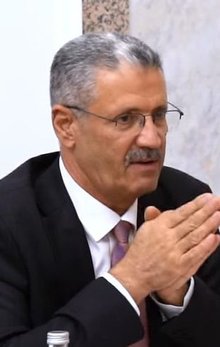
Leader: Hayyan Abdul Ghani
Employees: 3,000
Re-established in 2018 after decades of dormancy, INOC oversees one of the largest proved reserve bases on earth.
Foreign operators including bp, ExxonMobil and Chinese NOCs have, in recent years, made sizeable technical investments across the Basra supergiant fields.
However, Iraq's near-total dependence on the now-disrupted Strait of Hormuz for its exports has made the ongoing regional conflict an acute economic emergency for the company.
6. Sonatrach
Founded: 1963
Based in: Algiers, Algeria
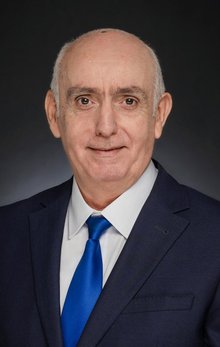
CEO: Noureddine Daoudi
Employees: 86,000
Sonatrach is Africa's largest oil and gas company by revenue. It is so big, in fact, that it funds approximately 60% of Algeria's national budget and accounts for more than 80% of its export earnings.
The firm's CEO Noureddine Daoudi, appointed in October 2025, has inherited a US$60bn investment programme running through to 2029.
Algeria's direct pipeline links to Italy and Spain give Sonatrach a decisive structural advantage over tanker-dependent rivals, and its role as a European gas supplier has grown considerably as the continent scrambles to replace disrupted Gulf LNG.
5. Nigerian National Petroleum Company (NNPC)
Founded: 1977
Based in: Abuja, Nigeria
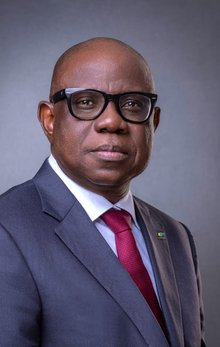
CEO: Bayo Ojulari
Employees: 15,000

Nigeria's NNPC commands one of Africa's largest hydrocarbon reserve bases, yet governance failures and infrastructure theft have long suppressed its potential.
The 2025 appointment of Bayo Ojulari signalled a renewed push for reform, with a gas-led growth strategy and improved transparency at its core.
The near-complete AKK gas pipeline promises to unlock domestic gas monetisation, while a planned partial IPO in 2028 could mark a watershed moment for both the company and African capital markets.
4. QatarEnergy
Founded: 1974
Based in: Doha, Qatar
CEO: Saad Sherida Al-Kaabi
Employees: 40,000
Under Saad Al-Kaabi, QatarEnergy has committed to upping its LNG output from 77 to 160 million tonnes per year, cementing Qatar as the world's pre-eminent gas exporter.
That ambition, however, has been severely tested in 2026.
The drone attack on Ras Laffan Industrial City knocked the world's largest LNG facility offline in early March, sending global gas prices soaring.
The crisis has simultaneously demonstrated QatarEnergy's extraordinary strategic value to global energy markets and its acute vulnerability to the regional conflict on its doorstep.
3. ADNOC (Abu Dhabi National Oil Company)
Founded: 1971
Based in: Abu Dhabi, UAE
CEO: Sultan Ahmed Al Jaber
Employees: 50,000

ADNOC has spent the past decade reinventing itself as the most technologically ambitious national oil company in the world.
Under the leadership of Sultan Al Jaber, the UAE Minister of Industry and Advanced Technology, the group has decided to deploy AI across its operations which has helped it to cut methane intensity to among the lowest of any major producer.
An approved US$150bn capital expenditure plan for 2026–2030 signals enormous confidence in hydrocarbon demand, while the US$16.3bn acquisition of German chemicals giant Covestro underscores ADNOC's ambitions well beyond the wellhead.
2. Aramco
Founded: 1933
Based in: Dhahran, Saudi Arabia
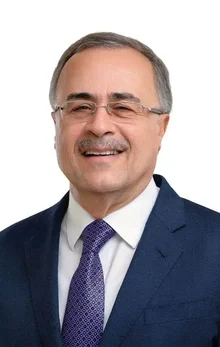
CEO: Amin H. Nasser
Employees: 76,000
With proven reserves of 247.2 billion barrels of oil, Aramco is unparalleled in terms of scale.
Under Amin Nasser, Aramco has pivoted from pure oil extraction towards a global materials enterprise built around crude-to-chemicals technology, a blue hydrogen programme anchored by the Jafurah gas field, and a venture capital arm investing in AI globally.
The current crisis has paradoxically elevated Aramco further: Saudi Arabia's East-West Pipeline, which bypasses the Strait of Hormuz entirely, has become one of the only functional export routes remaining in the Gulf.
1. NIOC (National Iranian Oil Company)
Founded: 1948
Based in: Tehran, Iran
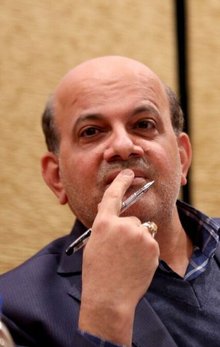
Managing Director: Mohsen Khojasteh-Mehr
Employees: 90,000
Few companies have wielded geopolitical power quite like NIOC. Sitting atop the world's second-largest natural gas reserves and fourth-largest oil reserves, the company should by any measure rank among the most powerful energy enterprises on earth.
That said, decades of US sanctions have ensured that potential remains largely unrealised.
Nevertheless, NIOC's influence on the global energy system is unquestionable, as shown by the closure of the Strait of Hormuz since 28 February 2026.
Whatever its future, NIOC sits at the epicentre of the world's most consequential chokepoint, a distinction that makes it one of the most significant energy companies on the planet.
Company portals


Executives
Amin H. Nasser
Bayo Ojulari
CEO
Dr. Sultan Al Jaber
CEO
Hayyan Abdul Ghani
Leader
Mohsen Khojasteh-Mehr
Managing Director
Noureddine Daoudi
Chairman & CEO
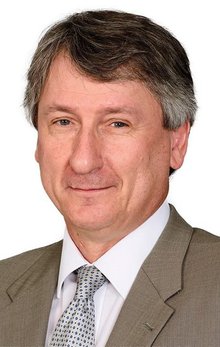
Raoul Restucci
Managing Director
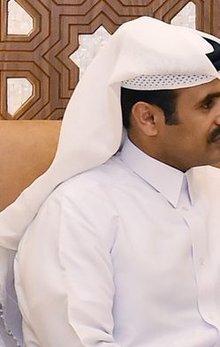
Saad al-Kaabi
CEO
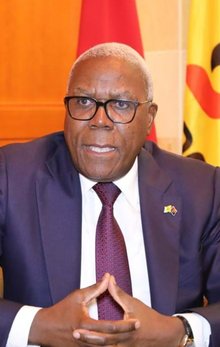
Sebastião Martins
CEO
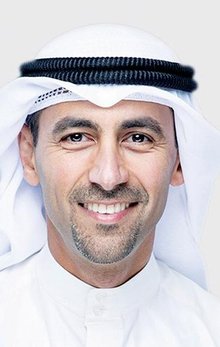
Shaikh Nawaf Saud Al-Sabah
CEO