Though the Middle East and Africa are often grouped together as one business territory, the region is far from uniform, especially when it comes to energy.
From the vast coal-burning plants of South Africa to the gleaming solar parks rising from the Arabian desert, the region is one of stark differences.
That said, you would be hard-pressed to find a MEA economy whose utilities are not in the midst of a transformation.
Fossil fuels have long underpinned the prosperity of many of the MEA nations – especially those in the Middle East and North Africa – but the conversation is starting to shift thanks to the volatility of the hydrocarbon market and the global push for net zero.
In many MEA economies, renewables targets are being set, green hydrogen is being explored and state utilities are scrambling to modernise their ageing grids.
In the near term, the main challenge is managing demand and reliability. In the long term, it is nothing less than reimagining what an energy company in this part of the world can be.
10. Kenya Power and Lighting Company (KPLC)
Founded: 1922
Based in: Nairobi, Kenya
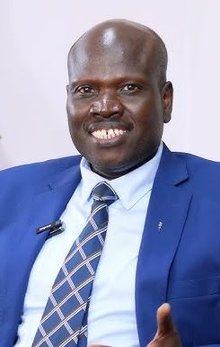
CEO: Dr Joseph Siror
Employees: Around 10,000
Kenya Power is arguably East Africa's most important electricity distributor, transmitting, distributing and retailing electricity to around 10 million customers across Kenya.
Beyond keeping the lights on, the company manages the national transmission network and oversees metering and billing services.
In 2025, it posted a significant profit after several years of governance challenges, which marked a genuine turnaround.
The firm is very future-focused too. Its AI chatbot Nuru and its revamped MyPower app suggest that it is a utility that is focused on customer experience as well as modernisation.
9. Sonelgaz
Founded: 1969
Based in: Algiers, Algeria
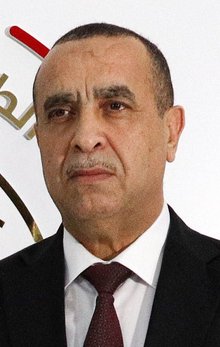
CEO: Mourad Adjal
Employees: Around 80,000

Algeria's state-owned energy giant holds responsibility for both the production and transmission of electricity and gas across a vast, geographically demanding territory.
With the Sahara right on its doorstep, Sonelgaz has made solar a strategic priority.
To this end, the firm has put out photovoltaic tenders and signed a memorandum of understanding with Germany's solar industry association to exchange expertise.
Sonelgaz’s partnerships with General Electric to develop advanced power plant technology further underscore a utility that is pushing determinedly towards modernisation after more than half a century of operation.
8. Masdar
Founded: 2006
Based in: Abu Dhabi, UAE
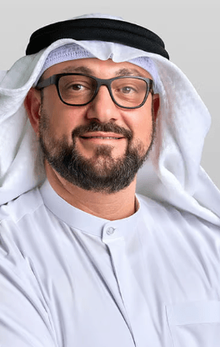
CEO: Mohamed Jameel Al Ramahi
Employees: Around 1,000
Few companies in the MEA region carry the symbolic weight of Masdar. Founded in 2006 as the UAE's clean energy champion, the company has become one of the world's most ambitious renewable developers.
Currently, its global project portfolio exceeds 51GW and spans everything from solar to wind to green hydrogen and geothermal technologies.
Masdar is backed by three of Abu Dhabi’s most powerful institutions, ADNOC, TAQA and Mubadala, with whose help it has set an ambitious target of 100GW of renewable capacity by 2030.
7. Acwa
Founded: 2004
Based in: Riyadh, Saudi Arabia
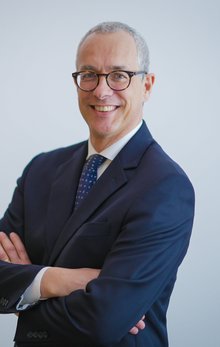
CEO: Marco Arcelli
Employees: Around 4,000
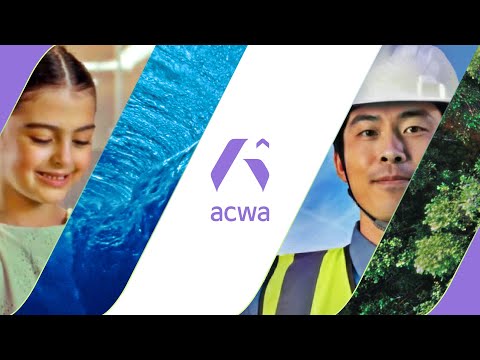
In January of this year, ACWA Power rebranded simply as Acwa – a statement of intent as it pivots from regional developer to global infrastructure platform.
At the moment, the firm manages a portfolio that is valued at more than US$115bn. That spans 100-plus projects in 15 countries and encompasses solar, wind, water desalination and green hydrogen.
Its crown jewel, the Noor Energy 1 CSP project in Dubai, is the world's largest concentrated solar power plant. With Saudi Arabia's Public Investment Fund holding a 44% stake, Acwa is inextricably linked to the Kingdom’s Vision 2030 roadmap.
6. Kahramaa
Founded: 2000
Based in: Doha, Qatar
CEO: Abdulla Bin Ali Al-Theyab
Employees: Around 1,300
As Qatar's sole transmission and distribution system owner for electricity and water, Kahramaa occupies an indispensable position in one of the world's wealthiest nations.
Operating with capital exceeding US$2.2bn, the corporation manages a nationwide grid built to serve a rapidly growing population.
Recent years have seen Kahramaa lean into digital transformation, best illustrated by its recent rollout of smart meters nationwide.
It has also started some conservation initiatives through its 'Tarsheed' energy efficiency programme, cementing its reputation as one of the Gulf's most forward-thinking utilities.
5. Emirates Water and Electricity Company (EWEC)
Founded: 2018
Based in: Abu Dhabi, UAE
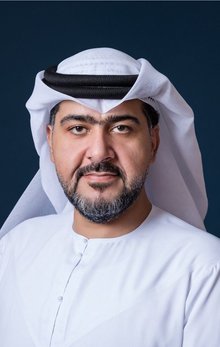
CEO: Othman Al Ali
Employees: Around 300
Though relatively young, EWEC punches well above its weight as Abu Dhabi's single buyer and long-term planner of water and electricity procurement.
Managed through long-term power purchase agreements with independent producers, EWEC has been central to formulating Abu Dhabi's clean energy agenda.
It has awarded some large solar PPA contracts and has extended its flexible gas capacity to stabilise the grid while the state’s renewables portfolio scales up.
Its strategic influence on the Abu Dhabi power market far outstrips its modest headcount, making it one of the region's most quietly consequential energy institutions.
4. Eskom
Founded: 1923
Based in: Johannesburg, South Africa
CEO: Dan Marokane
Employees: Around 40,000

No utility on the African continent carries quite the weight of Eskom.
South Africa's state-owned giant generates approximately 95% of the country's electricity – itself representing around 45% of all power consumed across Africa.
That staggering scale is both Eskom's claim to significance and the source of its profound difficulties.
Years of rolling blackouts and ballooning debt have plagued the utility, but a government debt relief package and the appointment of CEO Daniel Marokane in 2024 signal a new chapter.
3. Dubai Electricity and Water Authority (DEWA)
Founded: 1992
Based in: Dubai, UAE
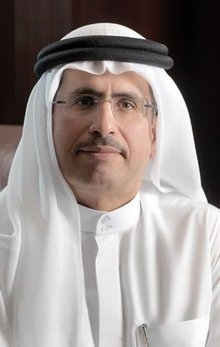
CEO: Saeed Mohammed Al Tayer
Employees: Around 11,000
Founded in 1992, from the merger of the Dubai Electricity Company and the Dubai Water Department, and guided since its inception by H.E. Saeed Mohammed Al Tayer, the DEWA has evolved from a modest municipal provider into a globally renowned institution.
In 2024, it reported revenue of US$8.4bn, installed generation capacity of 17,179 MW, and over 3,000 MW from clean sources.
The Mohammed bin Rashid Al Maktoum Solar Park is aiming to produce 5GW of energy by 2030 and sits at the heart of the UAE’s ambitions.
Then, there is also the region's first green hydrogen facility and a pumped-storage hydropower plant nestled in the Hatta mountains.
2. Saudi Electricity Company (SEC)
Founded: 2000
Based in: Riyadh, Saudi Arabia
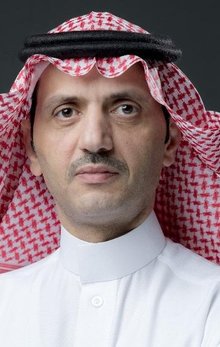
CEO: Khalid bin Salim Al Ghamdi
Employees: Around 30,600
The Saudi Electricity Company is the colossus of the Gulf's power landscape.
With revenues exceeding US$20bn and a transmission network stretching across some of the most demanding terrain on earth, SEC is the backbone of Saudi’s power infrastructure, serving residential, commercial, and industrial customers alike across the Kingdom.
The country’s Vision 2030 framework is setting some sweeping reforms in motion, including significant investment in renewables and grid digitalisation.
SEC has already installed 10 million smart electricity meters in the past 14 months, and has signed a SAR 15 billion renewable PPA with Acwa — placing it firmly at the epicentre of one of the world's most consequential energy transitions.
1. TAQA
Founded: 2005
Based in: Abu Dhabi, UAE
CEO: Jasim Husain Thabet
Employees: Around 5,000
If the story of energy in MEA has a single epicentre in the mid-2020s, it is Abu Dhabi.
TAQA, Abu Dhabi’s national energy company, is a diversified utility group with total assets of around US$54bn, operating across power, water, oil and gas in 11 countries.
It is the UAE's largest desalinated water producer, and has committed AED 52 billion to energy transition and water security investments across Saudi Arabia and Morocco.
Through its partial ownership of Masdar – which has built a global project portfolio exceeding 51GW and co-financed the landmark Al Dhafra Solar PV plant – TAQA is a direct participant in the most ambitious renewable energy programme in the region.
In a part of the world long defined by hydrocarbons, this tandem is forging the template for what an MEA energy giant can become.
Company portals
ACWA Power
Dubai Electricity and Water Authority (DEWA)
Emirates Water and Electricity Company (EWEC)
Eskom
Kahramaa
Kenya Power and Lighting Company
Masdar
Saudi Electricity

Sonelgaz
TAQA