
GlobalData: China to Reach Solar & Wind Target 5 Years Early
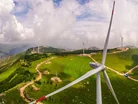
Despite being a country highly reliant on coal, oil and gas, China is expected to reach its 2030 solar and wind energy target five years ahead of schedule, according to leading data analytics and consulting company GlobalData.
It is set to surpass it by a significant margin, with the country projected to soon amass a cumulative capacity of solar PV, onshore wind and offshore wind totalling 1,104.6GW, 560.8GW, and 54.7GW, respectively.
This will mean that China will have a total of 1,720GW of solar PV and wind capacity, thereby exceeding the initial 1,200GW target set for 2030.
Is China moving away from fossil fuels to more renewable energy sources?
Although China is the world's largest greenhouse emitter, it has quietly transformed itself as a renewable energy powerhouse.
As of 2024, China still generates about 70% of its electricity from fossil fuels, but in recent years, the country has become the location of investment in solar, wind and nuclear power.

According to Global Energy Monitor, China’s solar capacity is more than the rest of the world combined, but the country still burns half the planet’s coal.
GlobalData’s latest report, China Power Market Size, Trends, Regulations, Competitive Landscape and Forecast, 2024-2035, reveals that solar PV power is expected to maintain its status as the dominant source of renewable power until 2035.
Sudeshna Sarmah, Power Analyst at GlobalData, said: “Despite considerable advancements in renewable capacity development, China continues to depend heavily on thermal power.
“The nation’s substantial reliance on coal-based power generation presents two primary challenges. First, pollution from coal-based generation has contributed to making China’s cities some of the most polluted globally. Second, domestic coal production is declining, even as the demand for power increases.
“A significant demand-supply shortfall may emerge if China cannot maintain coal imports from Indonesia, potentially compromising energy security.”
How is China transitioning away from fossil fuels?
So how will this be rectified? GlobalData says the government is endeavouring to address this challenge by concentrating on renewable energy generation. But one obstacle emerges: insufficient grid infrastructure.
GlobalData says numerous renewable energy projects have been deferred due to inadequate offtake capacity and the need for significant investment.
“China’s power sector encountered a significant shortfall in 2012, which compelled the government to embark on a process to augment capacity,” Sudeshna said.
“Transitioning to a decentralised approach may supplant the existing centralised planning process, fostering more nimble decision-making. It is imperative that the government give precedence to the development of grid infrastructure and the advancement of energy storage systems, with the objective of gradually diminishing its dependence on thermal power.”
As well as this, the Paris Agreement commitments that China submitted to the UN means it will ‘strictly limit’ coal growth as well as new coal power and has committed to reduce energy and carbon intensity by 2025. It has also stated it will increase the share of non-fossil energy sources to 20% by 2025 and to 25% five years later, as well as pledging to generate 50% of the increase in energy use from 2020 to 2025 from renewable sources.
*******************
Make sure you check out the latest edition of Energy Digital Magazine and also sign up to our global conference series - Sustainability LIVE 2024.
*******************
Energy Digital is a BizClik brand.