
Behind Rolls-Royce & Great British Energy's Landmark Deal

It has taken the best part of a year to get here, but the paperwork is finally signed.
Great British Energy and Rolls-Royce SMR have formally agreed a contract that triggers the next phase of the UK's small modular reactor (SMR) programme – an endeavour funded to the tune of US$3.3bn in public money that is expected to reshape the country's energy landscape for decades to come.
The deal, announced on 13 April, follows Rolls-Royce SMR's selection as preferred technology partner in June 2025 and unlocks site-specific design work, regulatory engagement and planning processes ahead of a future Final Investment Decision.
What the contract actually covers
The agreement commits Rolls-Royce SMR to delivering three reactor units that will generate at least 1.4GW of electricity.
That, on paper, is enough energy to power around three million homes for more than 60 years.
The project is also expected to support construction 3,000 jobs, with further jobs set to be spread across the domestic supply chain.
Critically, the programme is not being funded by one single pot.
For the project, Great British Energy's nuclear branch is drawing on the US$3.3bn allocated during last year's Spending Review, while the National Wealth Fund is separately committing up to US$760m directly to Rolls-Royce SMR to support the technology's development and boost investor confidence.
"This contract unlocks the delivery of our first three units and brings certainty to the UK SMR programme," says Chris Cholerton, CEO of Rolls-Royce SMR.
"We are transforming the way nuclear projects are delivered, to give greater cost and schedule certainty with a standardised, factory-built approach."
The industrial logic
The appeal of SMRs over traditional large-scale nuclear plants lies in their modular construction.
The components are factory-built and assembled on site, theoretically reducing both cost overruns and construction delays, which, over the years, have proven to be particularly disruptive to nuclear projects.
Whether that promise holds at scale remains to be proven, but the government is clearly willing to back the thesis.
Great British Energy – Nuclear (GBE-N) has already awarded more than US$445m in supply chain contracts this year alone, suggesting the programme is moving faster than its cautious language sometimes implies.
Simon Roddy, CEO of GBE-N, believes this project will deliver huge benefits to the UK economy, as well as the country's energy landscape.
"Working with Rolls-Royce SMR, we're bringing a significant long-term investment to the UK industrial supply chain," he says.
"Supporting skills, innovation and growing our industrial capability is essential to this partnership."
The geopolitical backdrop
Energy Secretary Ed Miliband has been unambiguous in linking the announcement to the instability that the world's energy markets are currently experiencing.
"At a time of global instability, this is a major milestone for Britain's energy security," he says, noting that the project would create "a generation of good jobs" and deliver "clean, homegrown power for decades to come".
GBE-N's own announcement noted pointedly that the ongoing conflict in the Middle East serves as a reminder of the risks of fossil fuel dependency, reflecting the broader political pressure driving the clean energy agenda as much as any commercial consideration.

Beyond the UK
For Rolls-Royce SMR, the British contract is not the only major project on the horizon. Chris noted that the company already has plans for up to six further units in Czechia, making it, in his words, "the only company with multiple commitments in Europe".
That European dimension matters for the programme's economics, as a larger order book makes the factory-built model more viable and helps dilute development costs across multiple projects rather than concentrating risk on a single deployment.
Whether that pipeline materialises will depend on factors well beyond Whitehall's control, but the UK contract provides a commercial anchor that gives the wider programme credibility with future customers and investors alike.
Company portals


Executives
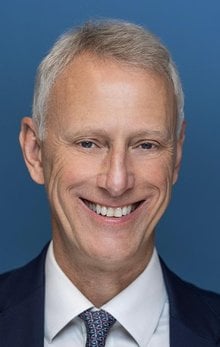
Chris Cholerton
CEO of Rolls-Royce SMR
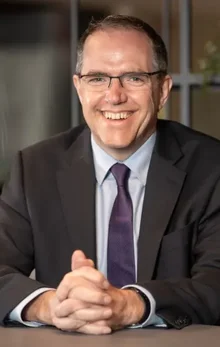
Simon Roddy
CEO of Great British Energy - Nuclear