How are Holcim & Schneider Electric using AI & Clean Energy?
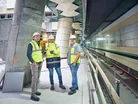
“Motors are at the heart of industrial operations, when they stop, everything stops,” says Ionut Farcas, President Central Eastern Europe at Schneider Electric.
To address this challenge, Holcim Romania has partnered with Schneider Electric to revolutionise how critical equipment is maintained.
Through the adoption of Schneider Electric's EcoStruxure Service Plan for Rotating Equipment, Holcim has shifted from a reactive “wait and fix” approach to a predictive, data-driven model.
Sensors placed on power lines, combined with AI algorithms, convert raw data into real-time insights.
The result is fewer breakdowns, longer equipment life and more reliable operations.
Advancing Holcim’s net zero strategy
Sustainability is at the core of Holcim’s global strategy to reinvent building for a low-carbon, circular and energy-efficient future.
The company’s net zero targets for 2030 and 2050 are validated by the Science Based Targets initiative (SBTi), covering all scopes across the value chain.
Holcim Romania’s actions align with this wider strategy, focusing on:
- Scaling sustainable products, with a target of 50% of net sales from ECOPlanet cement and ECOPact ready-mix by 2030
- Accelerating circular construction through 20 million tonnes of recycled construction and demolition materials via the ECOCycle platform
- Reducing net emissions to below 400kg per tonne of cementitious material
- Cutting freshwater withdrawal by 33% compared with 2020 to protect ecosystems.
“With our sustainable building solutions, Holcim is committed to building cities that work for all,” says Nollaig Forrest, Chief Sustainability Officer at Holcim, in the company’s 2024 Climate Report.
“With our seven large-scale carbon capture projects in Europe, engineered to produce eight million tons of net zero cement per annum by 2030, we are on track to make net-zero cement and concrete a reality at scale this decade.”
By embedding advanced monitoring technologies such as EcoStruxure, Holcim is also improving operational efficiency by lowering energy demand and extending equipment lifecycles, which directly supports decarbonisation goals.
Building for a growing city
Holcim Romania’s commitment to sustainable construction is evident in major infrastructure projects such as the Bucharest Metro M5 line, a 7 km expansion serving the densely populated Drumul Taberei neighbourhood.
The metro line, expected to serve around 50,000 passengers daily, addresses the city’s pressing mobility and emissions challenges.
Holcim supplied hundreds of thousands of cubic metres of conventional and specialised concrete, along with tens of thousands of tonnes of cement for soil consolidation.
Operating under difficult conditions, including 24/7 production and delivery in high-traffic areas, Holcim provided not only materials but also technical consultancy, laboratory services and on-site support.
This large-scale collaboration underscores how sustainable materials and operational excellence enable infrastructure projects that support greener, more efficient urban development.
Schneider Electric’s sustainability impact
Schneider Electric, a recognised leader in digital energy solutions, brings to the partnership its 80% impact revenue alignment, 800 million tonnes of CO₂ emissions saved and avoided for customers and its clear roadmap to achieve net zero across the value chain by 2050.

By leveraging green tariffs, renewable certificates, power purchase agreements and on-site generation, Schneider is transforming industrial energy use.
Its EcoStruxure platform provides the intelligence to enhance productivity while reducing carbon emissions, aligning with the UN Sustainable Development Goals and the company’s commitments to EP100, RE100 and EV100.