
Siemens Energy's Growing Role in the Reconstruction of Syria

The Syrian civil war was one of the defining conflicts of the 21st century.
With the UN reporting more than 580,000 casualties and 13 million displaced people, the human cost of the fighting was vast.
The damage to Syria’s built environment was also devastating. Historic cities like Damascus and Aleppo were razed, with homes and infrastructure left beyond repair.
While the toppling of the Assad regime in November 2024 marked the end of the war for many experts, Syrian society is yet to be rebuilt, with skirmishes and small insurgencies often disrupting reconstruction efforts.
One of the most important parts of these efforts is the restoration of the country’s energy sector, without which the lives of Syrians can scarcely return to normal.
With much of the national grid destroyed by the years of fighting, Syria is currently generating less than 20% of its pre-war electricity. To put a figure on the damage, the Syrian government told the UN in 2022 that its energy sector had suffered losses of US$107bn, long before the road to recovery was within sight.
It was against this backdrop that President Ahmad al-Sharaa travelled to Berlin on 30 March and, alongside a ministerial delegation, visited the headquarters of Siemens Energy – a company that has a long history in Syria's power sector.
The visit culminated in the signing of a memorandum of understanding between the Syrian Ministry of Energy and Siemens Energy, as well as a gas-fired power generation capacity reservation agreement between UCC Holding and Siemens.
What the agreements actually mean
The deals are more substantive than the typical diplomatic formalities that tend to accompany such state visits.
Speaking at a forum held alongside the visit, Syria’s Energy Minister, Mohammad al-Bashir, said the government has signed agreements to generate 5,000 megawatts of electricity, alongside solar and wind energy projects with a combined capacity of nearly 4,700 megawatts. German firms, including Siemens, expected to play a significant role.
In fact, around 2,000 megawatts of that generation capacity is set to come from Siemens-manufactured turbines.
The Berlin signing also took place in the presence of senior German government figures who, according to Siemens’ signatory Hussein Shoukry, “spoke about strengthening Syria's economic ties with Germany and emphasised the importance of supporting reconstruction efforts”.
Siemens’ track record in Syria and the Middle East
Siemens had a footprint in Syria before the war broke out in 2011, building several major facilities including the 1.5GW Deir Ali power plant, which is still the country’s largest.
The company has also drawn on comparable work in the region to inform its approach in Syria in the years to come.
In Iraq, Siemens Energy already has 11.65 gigawatts of installed capacity and plans to add around 14 gigawatts with partners as financing conditions improve.
Elsewhere in the region, the company has also secured contracts to add several gigawatts of new capacity to the Saudi Arabian grid.
Questions that remain unanswered
While the announcements made on 30 March are certainly a cause for optimism, there are several factors currently tempering expectations.
The reconstruction of Syria is up against financial constraints that no single MoU can resolve, and the country's recent history is littered with agreements that have failed to progress beyond the page.
Moreover, regional clashes in the north of the country, sectarian tensions and the unfolding crises in Iran and Syria’s direct neighbour Lebanon are creating instability across the Middle East.
Al-Bashir acknowledged the scale of the task at the Berlin forum.
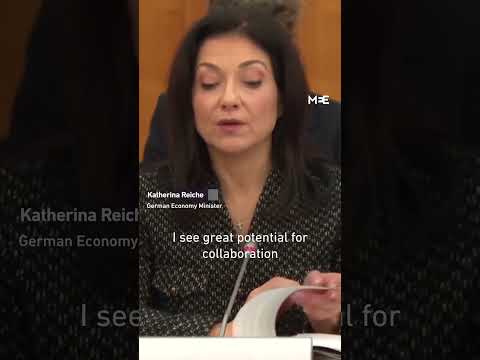
He said the sector had suffered extensive destruction in recent years, while much of the rest of the world has accelerated its transition toward renewable energy.
Siemens Energy, for its part, framed the moment in broad terms without offering specifics on timelines or investment figures.
"Syria is on a path toward recovery, and reliable access to energy will play a critical role on that journey – supporting stability, enabling economic activity and laying the foundation for future growth," Hussein explains.
Germany's broader stake in Syria
Since the civil war began, Germany has played an active supporting role in aid, asylum and reconstruction efforts. At almost 1.3 million people, Germany hosts by far the largest diaspora of Syrian refugees outside of the Middle East.
The forum in Berlin reinforced Germany's role as a key partner in Syria's broader reconstruction.
Earlier this year, Germany's special envoy to Syria announced that the suspension of a set of EU sanctions would enable Siemens to repair the Deir Ali power plant.
That development is the result of Berlin successfully negotiating with European partners to lift restrictions on Syria's energy, transportation and financing sectors.
For Siemens Energy, the MoU represents the formal beginning of what the company is billing as a long-term commitment.
"At a time of broader regional uncertainty, partnerships like this reflect the Middle East's continued resilience and confidence in the future,” says Hussein.
"We are committed to helping build an energy sector that can serve the people of Syria for generations to come."
Company portals
Executives
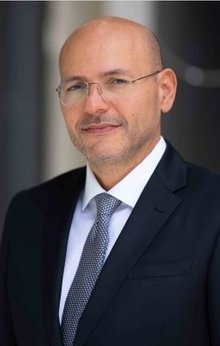
Hussein Shoukry
MD for the Middle East and Africa