Sizewell B, Geothermal & Shell: This Week's Top Five Stories
1. What Sizewell B’s New Lifeline Means for UK’s Nuclear Energy
EDF and the UK Government have agreed to extend the life of the huge nuclear plant until 2055, securing 900 jobs and a supply of clean energy for Suffolk
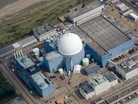
Sizewell B, one of the UK’s largest, most powerful and most efficient nuclear power plants, has received a ‘life extension’ of 20 years.
The EDF-operated facility has been operational since 1995 and had been scheduled for closure in 2035, in keeping with the general 40-year lifespan of nuclear plants.
However, the French energy giant and the UK Government have agreed to keep the site running until 2055 after Westminster offered EDF a fixed, subsidised price for its future output of electricity.
Tom Greatrex, the CEO of the UK’s Nuclear Industry Association, points out the significance of this moment.
“Sizewell B is the cleanest, most productive and most reliable plant in the whole country, so extending its life is one of the best things we can do to build an affordable and reliable clean power system,” he says.
“Nuclear makes a unique and irreplaceable contribution to our energy security, so we should also continue to deploy new nuclear projects, to renew the benefits from clean, secure and reliable electricity for decades to come.”
2. RGreen & Arverne: Investing in Europe’s Geothermal Journey
RGreen has invested US$59.7m in Arverne, backing France's geothermal and lithium ambitions and Europe's wider pursuit of energy security and sustainability
RGreen Invest is one of the most prominent sustainable investment firms operating in Europe today.
The company manages around US$3.3bn of assets and focuses entirely on investing in sustainable endeavours, including renewable energy infrastructure and climate change mitigation initiatives.
Central to the firm’s philosophy is the notion of energy sovereignty – helping companies and countries establish greater control over the power they use.
One of RGreen’s latest investments is a €52.4m (US$59m) investment in Arverne, France’s leading solutions provider for the geothermal energy sector.
Nicolas Rochon, Founder and CEO of RGreen Invest, has framed the investment in terms of energy security rather than pure financial return.
“We are delighted to partner with Arverne, a national champion that has demonstrated its ability to unlock the exceptional potential of France's geothermal resources to deliver strategic infrastructure that strengthens both French and European energy security,” he says.
3. Can CoreWeave Launch its Scottish Data Centre on Time?
CoreWeave and DataVita's Scotland AI data centre is facing doubts over its 2030 target, as supply chain shortages threaten grid infrastructure rollout
When the UK Government unveiled plans for an £8.2bn (US$11bn) AI data centre campus in Lanarkshire earlier this year, it was presented as a flagship project that would strengthen Britain's AI ambitions while showcasing Scotland's renewable energy potential.
Now, an investigation by The Guardian has cast serious doubt on whether the development, led by US cloud computing specialist CoreWeave and Scottish operator DataVita, will be able to meet its scheduled completion date of 2030.
The report argues that while debate around large-scale AI data centres has largely focused on access to clean electricity and grid connections, a more fundamental obstacle is emerging further up the supply chain: the shortage of critical electrical equipment needed to connect new demand.
The Lanarkshire development is set to become one of the UK's largest AI infrastructure projects, with plans for up to 1GW of power capacity.
For context, that is broadly equivalent to the output of a conventional nuclear reactor, which speaks to AI’s enormous appetite for energy.
4. Why is Shell Selling Gas Stations to ADNOC in South Africa?
The Abu Dhabi National Oil Company (ADNOC) is paying US$1bn for 580 Shell service stations, marking the firm's fourth overseas expansion since 2018
Shell's fuel retail history in South Africa stretches back more than 100 years, but that chapter in the company's history looks set to close.
ADNOC Distribution, the publicly listed retail arm of the Abu Dhabi National Oil Company, has agreed to buy Shell's South African fuels business in a deal worth US$1bn, according to the Financial Times.
The transaction covers 580 company and dealer-owned service stations, alongside lubricants, commercial fuels, aviation and marine operations.
It brings to an end a divestment process that Shell first flagged back in 2024, when it announced plans to exit its majority stake in Shell Downstream South Africa following a broader review of its global operations.
This marks the company's second major, national-level sale this year, after Les Échoes reported Shell planned to sell its French service stations in May.

In France, the rationale centred on thin retail margins and a decision to pivot towards higher-return upstream assets – something which was exemplified by Shell's US$16.4bn acquisition of ARC Resources.
The firm's decision in South Africa aligns with that same strategy.
Downstream fuel retail, the business of selling petrol and diesel directly to consumers through forecourts and convenience stores, tends to generate lower and more volatile margins than exploration and production.
Under the leadership of CEO Wael Sawan, Shell has been steadily trimming these kinds of assets in favour of large-scale projects.
5. Hitachi Energy: How Data Centres Can Be Better Grid Citizens
Gerhard Salge from Hitachi Energy explains how custom hardware ecosystems and collaboration with NVIDIA prevents power spikes from crashing power networks
The rise of AI has fast become one of the most pressing and intractable challenges the energy sector has ever faced, affecting every stakeholder from grid operators, to energy providers, to urban planners.
Data centres, especially AI data centres, are some of the largest and most demanding consumers of electricity that have ever been connected to the grid.
While a conventional data centre can draw as much power as 100,000 homes, the IEA estimates that some AI campuses now being built could require up to 20 times that amount.
But scale is not the only problem here. AI facilities create highly variable load patterns (sporadic fluctuations in the demand for energy) that can change dramatically depending on whether systems are training large models or serving live applications.
That kind of volatility has left the sector with some tough questions to answer.
Firstly, where should these facilities be connected? How much storage should sit on-site? What sort of infrastructure upgrades are needed? How do we make sure fluctuations in demand do not disturb the wider network?
Gerhard Salge, Chief Technology Officer at Hitachi Energy, is looking to provide answers.
“Technology providers like us with system experience can help data centres not only by supplying the technology but also to build a trustful relationship in between developers, operators and utilities,” he says.
Originally from Germany and now based in Switzerland, Gerhard brings a background in electrical engineering and three decades of industry experience to the role.
Looking back on that career, he jokes about the pace of change in the sector: “The nice thing is you learn a lot in that time, the bad thing is you’re old.”
Yet that long-term perspective is increasingly valuable as power networks adapt to the demands of AI.