Trump, Iran & Africa: This Week's Top Five Energy Stories
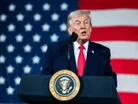
1. Trump Postpones Iran Ultimatum after 'Productive' Diplomacy
President Trump has walked back his threat to "obliterate" Iran's energy infrastructure following "productive" talks about de-escalation and resuming trade
US President Donald Trump has stepped back from the brink of striking Iranian energy infrastructure, announcing a five-day postponement of any airstrikes after what he described as "very good and productive" talks between Washington and Tehran.
The climbdown comes hours before Trump's own 48-hour deadline was set to expire.
On Saturday, Trump had threatened to "obliterate" Iran's power plants unless it agreed to reopen the Strait of Hormuz – the vital waterway through which roughly 20% of the world's oil and gas ordinarily flows.
That deadline was due to expire shortly before midnight today.
In a Truth Social post, Trump said he had instructed the defence department to stand down on all planned strikes against Iranian power plants and energy infrastructure for a five-day window, conditional on the "success" of ongoing "meetings and discussions".
He said the two sides had held "very good and productive conversations regarding a complete and total resolution of our hostilities in the Middle East".
2. IEA: Can the World Stop 'Worst-Ever Energy Crisis'?
The IEA's Fatih Birol warns the US-Israel-Iran War is causing a worse energy crisis than the 1970s oil shocks and Russia's 2022 Ukraine invasion combined
The world is currently facing an energy crisis more severe than any in recorded history.
That is the verdict of Fatih Birol, Executive Director of the IEA, who this week delivered one of the starkest public assessments yet of the economic catastrophe unfolding in the wake of the US-Israeli war on Iran.
Speaking at the National Press Club of Australia in Canberra on Monday, Fatih warned that the crisis now dwarfs even the most turbulent periods of the twentieth century's energy history.
"This crisis, as things stand, is now two oil crises and one gas crash put all together," he said.
3. Oil Crisis: What Shell, BlackRock & TotalEnergies’ CEOs Say
BlackRock's Larry Fink, Shell's Wael Sawan & TotalEnergies' Patrick Pouyanné warn that war in the Middle East could lead to global shortages and recessions
It has been four weeks since the conflict in the Middle East began and the war’s effects on the global energy market are now impossible to ignore.
Brent crude is trading solidly above US$100 a barrel and gas prices in Europe and Asia are climbing fast.
Meanwhile, some of the world's most powerful business leaders are sounding the alarm.
Speaking at CERAWeek – the world’s largest energy conference – in Houston on Tuesday, a succession of major execs delivered sobering warnings about the situation.
4. Solar & CO₂: The UK’s Response to the Iran War Energy Crisis
The UK Government and British consumers are proactively addressing the impending fuel crisis, engendered by the US & Israel's ongoing war on Iran
The conflict in the Middle East, which began when the US and Israel launched military action against Iran on 28 February, has sent shockwaves through global energy markets.
Oil and gas prices have surged as Tehran has effectively closed the Strait of Hormuz, a vital shipping corridor through which roughly a fifth of the world's oil and gas supplies typically pass.
For Britain, the fallout has been swift and significant.
Prime Minister Keir Starmer has acknowledged that there may not be a "quick and early end" to the conflict and has promised to examine "every lever that's available" to help households cope with rising energy costs.

Ministers are understood to be working on means-tested support packages ahead of the summer, when the current energy price cap expires.
The PM has indicated that this support will manifest as a fuel allowance for next winter, with the price shocks expected to continue for several months.
That said, Starmer has been careful to rule out a repeat of the blanket bailout introduced during the Ukraine crisis, which cost the government an estimated £40bn (US$53bn).
The government is also considering giving the Competition and Markets Authority additional powers to clamp down on what Starmer called "price gouging or profiteering" by companies exploiting the war.
5. What Happened at the 2026 Powering Africa Summit?
The Rockefeller Foundation & the Global Energy Alliance committed US$100m to the Mission 300 project, aiming to connect 300 million Africans to electricity
Last week, Washington DC played host to the Powering Africa Summit, where one of the headline announcements was a dramatic scaling-up of financial commitments to Mission 300 – the World Bank Group and African Development Bank's initiative to connect 300 million people across Africa to electricity by 2030.
The Rockefeller Foundation and the Global Energy Alliance for People and Planet confirmed they have now committed more than US$100m to the initiative. That is up from the US$10m the two organisations announced just 19 months ago in September 2024.
The announcement was made by Dr Rajiv J. Shah, President of The Rockefeller Foundation, during a fireside chat with Chris Wright, the US Secretary of Energy.
"The Rockefeller Foundation has made its biggest-ever bet on connecting people to electricity as the single best pathway out of large-scale poverty," Rajiv says.
"Our investment in Mission 300 reflects our commitment to the best way of advancing human well-being in the 21st century: putting countries in the lead, harnessing frontier technology and focusing relentlessly on achievable, measurable goals,” he continues.