The world as we know it could not function without utility companies. As the stewards of electricity, fuel and water, they are responsible for the basic foundations of modern life.
Increasingly, though, they are also major players in some of the biggest, most complicated issues of the day, including energy security, decarbonisation and digitalisation.
In 2026, the task for utilities is about balancing affordability for customers with big investments in things like renewables, energy storage and network upgrades.

This highwire act is most visible in Europe right now, where strict regulations from the EU and ambitious sustainability targets are ramping up the pressure on utility firms more every year.
In this Top 10, Energy Digital takes a look at some of the European utilities that are flourishing best in this climate.
10. CEZ Group
Founded: 1992
HQ: Prague, Czechia
CEO: Daniel Beneš
CEZ Group's diverse mix of nuclear, coal, gas and renewables has given it a real operational edge across Central and Eastern Europe's ever-changing power markets.
In 2025, CEZ's nuclear fleet hit a record high, generating more than 32TWh of emission-free electricity – the first time the company had ever surpassed that milestone.
The company's investments in grid modernisation and regional renewables has made it a key part of Czechia's power landscape, as well as Europe's energy transition more broadly.
9. Verbund
Founded: 1947
HQ: Vienna, Austria
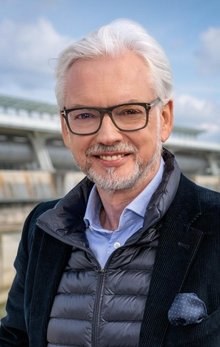
CEO: Michael Strugl
Verbund is Austria’s hydropower champion, with a generation portfolio heavily weighted to flexible hydro, which is an increasingly valuable asset in Europe's modern energy mix.
One of its flagship assets, the Reißeck power plant, held the world record for the hydropower plant with the greatest drop height for more than three decades, with a height difference between reservoir and powerhouse of 1,770 metres.
The company's strong hydro base, plus its investments in cross‑border trading, have made it a pivotal part of the Alpine region's energy story.
8. SSE
Founded: 1947
HQ: Perth, United Kingdom
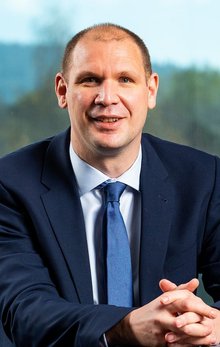
CEO: Martin Pibworth
While SSE's base is in Scotland, it has a huge footprint in power generation and management across the rest of the UK and Ireland too.
The company is known around the world for its involvements in some of the global energy sector's most ambitious offshore wind projects.
SSE is currently a partner in the construction of the world's largest offshore wind farm – the 3.6GW Dogger Bank project in the North Sea – and holds the largest offshore wind development pipeline of any company in the UK and Ireland.
7. Fortum
Founded: 1998
HQ: Finland
CEO: Markus Rauramo
The strengths of Finnish utility Fortum are primarily in low‑carbon generation, district heating and decarbonisation services.
In what is considered a big moment for the district heating sector, Fortum has partnered up with Microsoft to recycle waste heat from two hyperscale data centres in Espoo, a project that will eventually cover around 40% of the local district heating demand.
In the fullness of time, the project will be the largest of its kind anywhere in the world.
6. EDP (Energias de Portugal)
Founded: 1976
HQ: Lisbon, Portugal
CEO: Miguel Stilwell d’Andrade
EDP is a renewables powerhouse, with rapid wind and solar capacity growth and a global offshore pipeline. Its merchant‑scale approach to green generation and active investment in storage and digital customer services make it a standout exporter of clean power all across the Iberian peninsula.
By 2024 the company had reached a remarkable milestone, with 95% of its global electricity generation sourced from renewable resources. The results were a staggering 64% reduction in CO₂ emissions compared to the year before.
5. ENGIE
Founded: 2008 (merger of Gaz de France and Suez assets)
HQ: Paris, France
CEO: Catherine MacGregor
ENGIE has repositioned itself in recent years, moving from its position as a gas champion to a decentralised renewables and services group, responsible for scaling renewables, energy‑as‑a‑service and large-scale decarbonisation projects.
In February, ENGIE announced a deal to acquire UK Power Networks, the British electricity distributor. This move send shockwaves through the European energy market, as it made the UK ENGIE's second-largest market.
The company's focus on distributed energy and industrial customers reflects the shift toward system integration and local solutions.
4. Iberdrola
Founded: 1992 (merger of Hidroeléctrica Española and Iberduero)
HQ: Bilbao, Spain
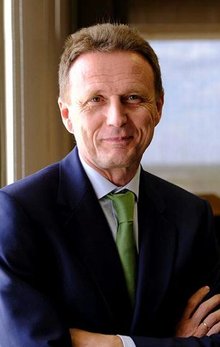
CEO: Pedro Azagra Blázquez
Iberdrola is a global leader in the deployment of large‑scale renewables projects, grabbing headlines on an almost monthly basis thanks to its ambitious investment strategy. Its project pipeline and capital allocation to renewables and networks have made it one of Europe’s most influential decarbonisation investors.
2025 was a record year for the company, with its net profit rising 12% to US$7.4bn as its strategy of prioritising grid investment paid off. Its moves through 2025 pushed Iberdrola's regulated asset base to around US$60bn and its market cap to a record US$158bn.
3. Enel
Founded: 1962
HQ: Rome, Italy
CEO: Flavio Cattaneo
Enel is notable for scale and transformation. The company's huge renewables portfolio, extensive retail presence and advanced smart‑meter rollout have made it a top-tier operator across the continent.
Its Enel X services and storage investments accelerate electrification and demand flexibility, while global scale lets it deploy capital quickly into greenfield renewables and grids.
Between 2025 and 2027, Enel is channelling US$13.8bn into renewable energy, including innovative hybrid projects such as its first floating solar park at Venaus in Italy, which uses double-sided photovoltaic modules to harness the natural reflection of the water surface.
2. RWE
Founded: 1898
HQ: Germany
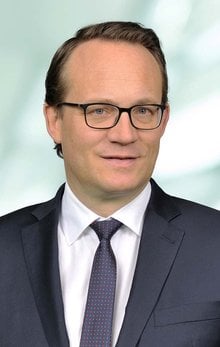
CEO: Markus Krebber

RWE has reshaped itself into a renewable‑first generator in recent years, becoming a go‑to builder of large offshore projects and utility‑scale batteries.
An illustration of RWE's ambition and prowess came in April this year, when it installed the world's first offshore wind turbine featuring both a recyclable rotor blade and a low-carbon steel tower at its Thor wind farm off Denmark's coast.
Its industrial partnerships and merchant market expertise make RWE central to Europe’s energy transition.
1. EDF
Founded: 1946
HQ: France
CEO: Bernard Fontana
EDF became such a dominant player in Europe's energy landscape because of its nuclear fleet, its extensive R&D on low‑carbon technologies and its state-of-the-art grid network.
France's nuclear output reached 373TWh in 2025, rebounding strongly from the disruption of recent years, with EDF now also planning a new generation of EPR2 reactors at the Penly site in Normandy – the first new French nuclear build programme in decades.
EDF’s scale in generation, nuclear expertise and investments in storage and grid modernisation position it as a strategic anchor for Europe’s energy transition.
Company portals




Executives
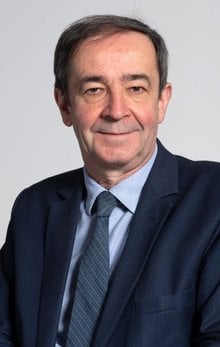
Bernard Fontana
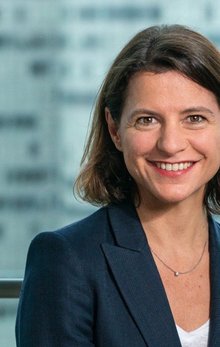
Catherine Fiamma MacGregor
CEO
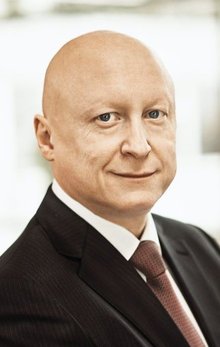
Daniel Beneš
Chairman & CEO
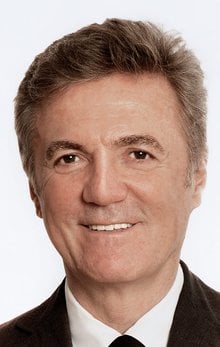
Flavio Cattaneo
CEO
Markus Krebber
CEO
Markus Rauramo
President and Board Member
Martin Pibworth
CEO
Michael Strugl
CEO

Miguel Stilwell d'Andrade
CEO
Pedro Azagra Blázquez
CEO