Trump’s Deadline: Will the US Destroy Iran’s Energy Systems?
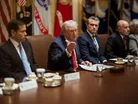
Two weeks ago, US President Donald Trump issued an ultimatum to the Iranian government in which he threatened to “obliterate” the country’s energy infrastructure and transport links unless it reopened the Strait of Hormuz by 7 April.
The strait, through which 20% of the world’s oil and gas supplies ordinarily pass, has been effectively closed since the US and Israel began bombing Iran on 28 February.
The deadline expires at 8pm (EST) on 7 April.
If Tehran fails to comply and take proactive steps towards the resumption of shipping, Trump has threatened to destroy every bridge and power plant in the country.
"They're going to have no bridges. They're going to have no power plants," he said at a White House press conference on 6 April.
"The entire country can be taken out in one night – and that night might be tomorrow night."
Iran's position
Iran has shown little willingness to bend to Trump’s demands.
Tehran rejected a proposed 45-day ceasefire on Monday, insisting instead on a permanent end to the conflict which is now entering its sixth week.
The Iranian Government also insisted on the lifting of all sanctions, as well as reconstruction guarantees and assurances against future attacks.
"We only accept an end of the war with guarantees that we won't be attacked again," said Mojtaba Ferdousi Pour, an Iranian diplomat currently working on negotiations in Cairo.
Iran's state news agency IRNA confirmed that Tehran had conveyed a ten-point response to Washington via Pakistan, which has been a key intermediary in the negotiations.
Unless these terms are met, Iran will likely continue to reject the offer of an outright ceasefire.
A regional official familiar with the discussions told the BBC that meaningful progress remained deeply unlikely without a cessation of hostilities first.
The official added that a communications blackout inside Iran had severely hampered diplomacy efforts.
"To convey messages to Iran, getting a response in a reasonable time is not possible. The average time of response has been a day or so," the official said.

The fallout across the global energy sector
The economic consequences of the closure of the Strait of Hormuz are already becoming apparent.
West Texas Intermediate crude topped US$115 a barrel on Tuesday – its highest level in a month – while Brent hovered around US$111, as markets prepared for the prospect of further escalation.
Meanwhile, the International Monetary Fund (IMF) warned that the war will result in higher inflation and slower global growth should it continue.
In the Philippines, inflation jumped to 4.1% in March, driven largely by surging transport costs linked to the energy disruption.
South Korea, which relies on the Strait of Hormuz shipping route for around 61% of its crude imports, has dispatched a special envoy to Kazakhstan, Oman and Saudi Arabia to secure supply, with 26 South Korean-flagged vessels currently stranded inside the strait.
Australia, meanwhile, depends on imports for around 90% of its refined petroleum. Prime Minister Anthony Albanese plans to travel to Singapore this week to negotiate emergency fuel supplies.
In other regions of APAC, including Thailand and Vietnam, workers are now being urged to work from home in order to conserve energy in workplaces.
Trump’s position
President Trump's threats to target civilian infrastructure have drawn heavy condemnation from international legal experts and humanitarian organisations.
The UN Secretary-General's spokesman said international law bars attacks on civilian infrastructure, even where military justification exists, if the risk of civilian harm is disproportionate.
The Iranian Red Crescent said 17 civilian targets were struck this morning alone, calling the attacks war crimes.
Trump was unequivocal when asked whether he was concerned about that designation.
"I'm not worried about it. You know what's a war crime? Having a nuclear weapon," he said.
Tess Bridgeman, who was a legal advisor to Barack Obama, was blunt in her assessment.
"Obliterating all power plants, threatening coercive actions against the civilian population to try to bring a government to the negotiating table – those kinds of things are all flatly illegal," she told CBS.
The deadline approaches
Trump, who acknowledged that anything destroyed would eventually need to be rebuilt – potentially with American assistance – appeared acutely aware of the contradiction at the heart of his position.
"Do I want to destroy their infrastructure? No," he said.
Yet he has now publicly committed to doing exactly that if no deal materialises by his administration's deadline.
With Iran's ten-point rejection on the table and mediators struggling to get messages through, the gap between the two sides remains wide and the deadline is just hours away.