Strait of Hormuz & Rolls-Royce: This Week's Top Five Stories
1. Prolonged Energy Crisis on Cards as US-Iran Talks Break Down
Peace talks between the US, Israel and Iran in Islamabad have broken down, with Trump saying the US Navy will now start a blockade of the Strait of Hormuz
Things have been far from quiet on the Middle Eastern front since Iran, the US and Israel agreed to a last-minute two-week ceasefire on 8 April.
Since then, Israel has continued its bombardment of Lebanon, while the Trump administration has remained infuriated by the lack of progress in the Strait of Hormuz.
Meanwhile, peace talks have taken place in Islamabad, with each of the involved parties laying out their terms for a lasting end to the war.
But after 21 hours of negotiations in the Pakistan capital on 12 April, diplomacy efforts ended without agreement. The markets have wasted little time in passing judgement.
By this morning, the price of Brent crude had risen 7% to US$102.29 a barrel and US crude jumped 8% to US$104.24, as traders digested what the breakdown in negotiations meant for a strait through which, in normal times, up to 140 vessels sail daily.
The talks, brokered by Pakistan, had been the best and perhaps only realistic near-term path to reopening the Strait of Hormuz, which has been effectively closed since the war began on 28 February with US and Israeli airstrikes on Tehran.
US Vice President JD Vance, who left Islamabad on Sunday morning, blamed the collapse on Tehran's refusal to abandon its nuclear weapons programme, while Iranian sources hit back at what they described as excessive demands from Washington.
2. Will the US Military Blockade Have Any Effect on Iran's Oil?
A US naval blockade of the Strait of Hormuz could force Iran to slash oil output within weeks, but analysts warn it will not assuage the energy crisis
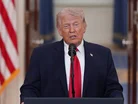
On 13 April, US President Donald Trump announced he was sending the US Navy to form a blockade of the Persian Gulf, with the intention of suffocating imports to and exports from Iran.
Since the war began in late February, with joint US-Israeli airstrikes on Iran, shipments of oil and gas leaving the Gulf have all but dried up, leaving the world without 20% of its ordinary fuel supply.
This has been a result of Iran threatening to retaliate against the US and Israel by targeting ships, but the hesitance of insurers to cover boats in the region has also played a role.
But while shipping had slowed considerably across the Middle East, reports suggest that Iranian tankers had still managed to export millions of barrels of oil through the Strait of Hormuz.
Now, with the blockade in place, Iran's ability to offload its fuel will be all but impossible.
3. Behind Rolls-Royce & Great British Energy's Landmark Deal
After years of build up, the nuclear branch of Great British Energy has awarded Rolls-Royce SMR a contract to build the UK's first small modular reactors
It has taken the best part of a year to get here, but the paperwork is finally signed.
Great British Energy and Rolls-Royce SMR have formally agreed a contract that triggers the next phase of the UK's small modular reactor (SMR) programme – an endeavour funded to the tune of US$3.3bn in public money that is expected to reshape the country's energy landscape for decades to come.
The deal, announced on 13 April, follows Rolls-Royce SMR's selection as preferred technology partner in June 2025 and unlocks site-specific design work, regulatory engagement and planning processes ahead of a future Final Investment Decision.

The agreement commits Rolls-Royce SMR to delivering three reactor units that will generate at least 1.4GW of electricity.
That, on paper, is enough energy to power around three million homes for more than 60 years.
The project is also expected to support construction 3,000 jobs, with further jobs set to be spread across the domestic supply chain.
4. Water, Waste & Energy: Inside Veolia's Data Centre Offering
On 14 April, Veolia announced its Data Center Resource 360 offering, which helps operators achieve energy efficiency, carbon neutrality & water positivity
The data centre industry has a resource problem, and Veolia believes that it has the answer.
The French environmental services firm, best known for managing water and waste infrastructure across five continents, held an event in the heart of London on 14 April where it set out its ambition to make the sector more sustainable.
At the capital’s Outernet venue, the firm unveiled its brand new Data Center Resource 360 offering, a suite of services designed to help hyperscalers manage the water, energy and waste demands of their facilities.
Veolia says that its newest offering will help data centre operators to achieve three main goals: carbon neutrality, water positivity and circularity.
According to the firm’s estimates, Data Center Resource 360 could help operators achieve a reduction in water footprint of up to 75%, energy efficiency improvements of up to 20% and waste recycling rates of up to 95%.
5. BNP Paribas & Carrier: Expediting Sustainable HVAC Adoption
Carrier and BNP Paribas Leasing Solutions are teaming up to make energy-efficient HVAC systems accessible through flexible finance across Europe
Carrier and BNP Paribas Leasing Solutions have joined forces to expedite Europe’s shift towards energy-efficient heating and cooling systems.
Across the continent, businesses face mounting energy costs alongside tougher emissions targets. With these challenges mounting, this new partnership between Carrier and BNP Paribas is looking to drive the uptake of sustainable HVAC technologies by lowering the financial barrier to entry.
The agreement spans several European markets and is designed to fast-track adoption of energy-efficient heating, ventilation and air conditioning (HVAC) systems that reduce consumption and emissions.
Under the partnership, BNP Paribas Leasing Solutions will deliver bespoke lease and hire-purchase options for Carrier’s commercial HVAC portfolio.
This includes high-performance heat pumps, chillers, boilers and air handling units – all engineered to optimise energy use and ease the transition away from fossil fuels.